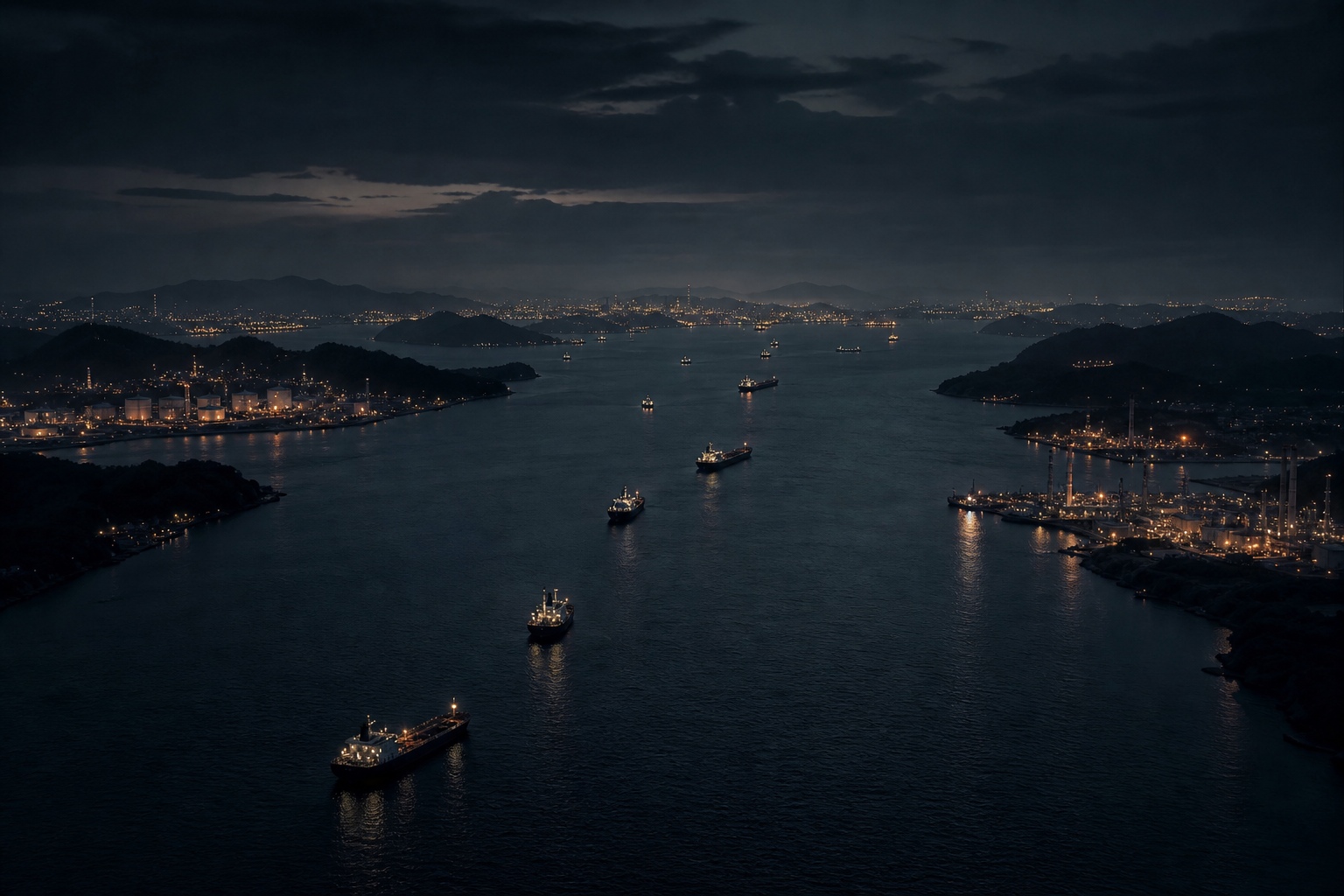
Hormuz looked, at first glance, like a Middle East story. Tankers, missiles, insurance rates, naval escorts: industrial modernity discovering again that it still runs through a handful of narrow corridors. But the deeper lesson may land somewhere else entirely. It may land in Southeast Asia, where the energy transition is being reclassified from climate virtue to strategic necessity.
The region is too often discussed in sentimental or developmental language, as though it were merely a fast-growing market full of future consumers and not one of the decisive energy theaters of the century. According to the International Energy Agency’s Southeast Asia Energy Outlook 2026, Southeast Asia contains about 9% of the world’s population and 4% of its GDP, but under today’s policy settings it is responsible for nearly 20% of global energy-demand growth through 2035. That is not peripheral. It is systemic.
And yet the system it has been growing on is uncomfortably exposed. Before the current crisis, around 60% of the region’s crude-oil imports and about one-third of its gas imports came from the Middle East. Once refinery feedstocks and indirect product trade are counted, around 45% of oil-product supply was linked to Middle Eastern crude. That is the real architecture beneath the headlines: imported molecules, long sea lanes, and a large zone of political life built on the assumption that those lanes will remain open cheaply enough, quietly enough, and long enough.
When geography disciplines ideology
Once that assumption weakens, the story changes. It is easy enough to say that chokepoints raise energy prices. The more serious point is that fuel risk becomes inflation risk; inflation risk becomes subsidy pressure; subsidy pressure becomes fiscal and social fragility. A narrow piece of water far away begins rearranging domestic budgets, industrial expectations, and the political mood of governments that like to talk about sovereignty more than they like to admit dependence.
The IEA estimates that without structural change the region’s energy import bill could rise from over USD 80 billion in 2024 to around USD 245 billion by 2035. Its more immediate crisis framing is harsher still: the region’s import bill is projected to hit USD 160 billion this year, and on current settings could reach USD 400 billion by mid-century, or roughly 5% of the region’s economy. Those numbers are not merely accounting. They describe a transfer of political leverage outward. A state can announce whatever noble ambitions it likes, but if its daily functioning still depends on distant cargoes moving through contested channels, then the outer world retains a vote inside the domestic order.
This is why the energy transition in Southeast Asia is ceasing to be mainly a moral project. Or rather, moral language is being disciplined by geography. Grids, storage, rooftop solar, interconnection, and efficiency stop looking like badges of virtue and start looking like exposure-reduction tools. They become instruments for compressing imports, limiting vulnerability, and buying back a little room for maneuver.
What seriousness looks like in wires
The clearest example is the ASEAN Power Grid, which the IEA treats not as decorative regionalism but as strategic infrastructure. The planned cross-border interconnections are expected to require around USD 27 billion in investment through 2040. In the lazy language of policy conferences, that sounds like a technocratic integration project. In the sterner language of power, it is an attempt to translate fragmented national electricity systems into a more resilient regional architecture, one less exposed to the tyranny of imported fuel moving through someone else’s corridor.
The same reclassification applies further down the stack. Electric vehicles, for instance, are usually sold either as consumer modernity or as climate righteousness. But nearly half a million EVs were sold in Southeast Asia in 2025, almost 20% of total sales, according to the IEA. In one register that is an environmental milestone. In another, it is a crude but real attempt to shift part of the mobility system away from imported refined fuels and toward a grid that, however imperfectly, can eventually be supplied by a wider and more flexible mix of sources. The distinction matters. A moral technology can be delayed when budgets tighten. A strategic technology acquires a different seriousness.
Electricity itself is moving into that category. The IEA notes that electricity demand in the region is already growing twice as fast as overall energy use, and that over the next decade alone the increase will amount to something equivalent to Japan’s total electricity generation today. That is an absurdly large fact, and it clarifies the real stakes. The question is no longer whether Southeast Asia will electrify more deeply. It will. The question is whether it will do so with the infrastructure, coordination, and domestic realism required to make electrification a source of resilience rather than just a new dependency in smarter packaging.
The false refuge and the delayed bill
There is, naturally, a false refuge waiting in the wings. When fuel security tightens, coal begins to reappear in the imagination of practical men as the adult answer, the unsentimental fallback, the thing that actually keeps the lights on while everyone else plays with their ethical adjectives. But this is a refuge only in the short sense in which a leaking shed can count as shelter in a storm. The IEA estimates that coal use contributed to around 330,000 premature deaths in the region in 2024. More to the point, doubling down on coal does not solve the deeper problem. It simply exchanges one form of exposure for another while dragging a public-health burden behind it like a chain.
And the chain grows longer when one looks beyond the fuel headline. A corridor does not reopen equally for all goods. Even when the immediate shock begins to ease, priority cargo tends to move first. Oil is waved through; fertilizer waits outside; and food inflation arrives later wearing the costume of bad luck. That is the more complete systems story. Chokepoints do not merely shock energy markets. They create hierarchies of restoration. They decide which sectors return first to normality and which are left to absorb the residue more quietly, more slowly, and often more politically dangerously.
The region that may learn it first
This is why the Southeast Asian case deserves more attention than it usually receives in European or American strategic commentary. The region is being forced into a form of energy realism that is less rhetorical than Europe’s and less protected than America’s. Europe still talks strategy while writing disclosure rules and congratulating itself on its moral literacy. Southeast Asia, by contrast, may end up learning the harder lesson sooner: that in an age of brittle corridors and selective restoration, resilience lives in wires, storage, interconnection, local generation, and demand discipline, not in climate piety or slogans about innovation.
The larger pattern is already visible. Frictionless globalization is over, though many institutions continue speaking as if it were merely resting. Regions that remain structurally dependent on distant fuels traveling through contested maritime passages will either build harder forms of resilience or keep importing instability along with their cargoes. In that world, the energy transition stops being a sermon. It becomes statecraft.
Sources
International Energy Agency, Southeast Asia Energy Outlook 2026.
iea.org / Southeast Asia Energy Outlook 2026
International Energy Agency, Executive Summary.
iea.org / executive summary
International Energy Agency, Southeast Asia’s energy challenges and emerging opportunities.
iea.org / challenges and opportunities
International Energy Agency, Strait of Hormuz crisis reinforces need for Southeast Asia to tackle major energy vulnerabilities.
iea.org / press release
Associated Press, reporting on downstream effects on groceries, flights, and fertilizer flows after the Hormuz shock.
apnews.com / Hormuz downstream effects
MarketWatch, Oil may move through the Strait of Hormuz first, leaving fertilizer supplies stranded.
marketwatch.com / oil first, fertilizer stranded
Image: original editorial image generated for HW, June 2026.