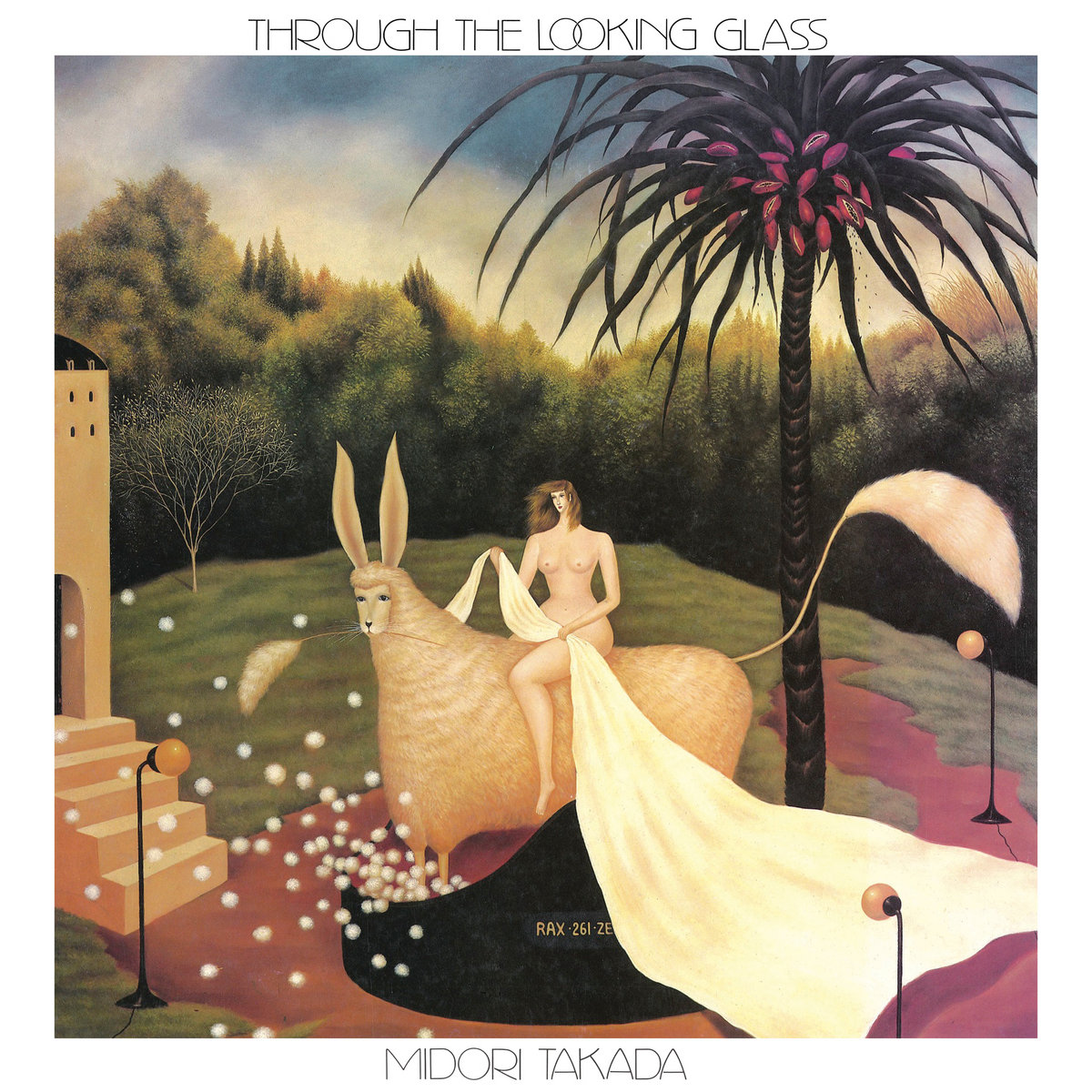
Midori Takada recorded Through the Looking Glass in 1983 over two days at RCA’s Aoyama studio in Tokyo. She played every instrument herself: marimba, vibraphone, gongs, ocarina, cowbells, glass bottles, reed organ. She was thirty-two, classically trained at Tokyo’s national music university, fresh from years inside the Berlin Philharmonic’s orbit, and already done with the European concert apparatus. She wanted, in her own phrase, to find ‘the rhythm of the body and of nature’. RCA Japan pressed it on Red Seal in a small run. A few thousand copies sold. The record sank.
For three decades it stayed unreissued, a cult object for percussionists and Japanese-ambient obsessives. Then in 2017 YouTube’s recommendation system began pushing it at people who had not asked for it. Palto Flats and WRWTFWW reissued the LP. Pressings sold out. Takada, in her late sixties by then, suddenly found herself touring the West to silent rooms. Which says more about us than about the record.
Mr. Henri Rousseau’s Dream opens the album. It is built almost entirely from marimba: a low, cyclical figure that does not develop so much as breathe. Cowbells come in like distant cattle. A reed organ holds one chord open. Nothing announces itself. The piece simply continues, the way a forest continues, until you notice that your attention has rearranged itself around it.
The lineage is deliberate. Takada had absorbed Steve Reich and Terry Riley and the West-African polyrhythmic tradition through her work with the Mkwaju Ensemble. The underlying patience, and the exactness with which each timbre is allowed to live and die, are Japanese: gagaku court music, Buddhist temple percussion, the long discipline of treating silence as a material rather than a wait. She had set Reich and Riley next to gagaku and given the result a room.
The title is the key. Henri Rousseau, the Sunday painter mocked by the Paris academy and later championed by Picasso, painted jungles he had never seen, with a steady amateur conviction that gave them more presence than any Salon canvas of the period. Takada heard in him what she wanted from her own playing: an inner landscape, made by someone who refused to be ashamed of being unfashionable. The track is, quite literally, music for a painter’s dream of a place the painter has never been.
What strikes you, listening now, is how unlike current ambient this music sounds. No synthetic pad smeared over the silence. No ten-minute drone built for someone else’s sleep app. Every sound is struck, allowed to ring, and let go. The piece assumes you will stay. That is now a rare thing for music to assume of you.
There is something off, then, about the fact that Through the Looking Glass became a streaming hit. The same audience that will not sit through a forty-minute concert without checking a phone has happily filed the record under study, sleep, work-from-home, lo-fi. It has been turned into wallpaper. That is a misuse. The record was made for one room, one chair, one stretch of unbroken time, and it gives back exactly what the listener brings to it.
Begin with this one track. Eight and a half minutes. Sit. Do nothing else. Let the marimba teach the room how slow a Monday is allowed to be.