Bohren & der Club of Gore formed in 1992 in Mülheim an der Ruhr, a post-industrial city wedged between Duisburg and Essen, the sort of place where the sky has always been more chemical than romantic. The four founders had spent their adolescence in hardcore and grindcore bands with names like 7 Inch Boots and Chronical Diarrhoea. The decision to abandon all of that for an instrumental, almost ceremonial slowness was, on paper, an act of cultural defection. Their own description of the project, drily filed for the record, was ‘an unholy ambient mixture of slow jazz ballads, Black Sabbath doom and down-tuned Autopsy sounds’. That sentence is the entire programme.
The breakthrough, and the still point of the catalogue, is Sunset Mission, released by Wonder in February 2000. By then the founding guitarist Reiner Henseleit was gone and Christoph Clöser had arrived with a tenor saxophone — a substitution that decides everything. Morten Gass moved to piano and Hammond, Robin Rodenberg’s upright bass colonised the bottom of every bar, Thorsten Benning learned to walk a drum kit in brushes. Whatever aggression the band had once carried like a hardcore permit was dissolved; only its mass remained, redistributed across keys, brass and air.
The opening track, Prowler, runs just over five minutes. A slow ostinato in the bass. A tenor saxophone that does not so much develop as patrol. The piece moves at the metabolic rate of someone walking home through a city he no longer entirely trusts. Nothing happens, and yet by the end something has been said. It is the sound of European night made literal: rain-blurred lights, an industrial skyline, a refusal to brighten the room before it is honest with you.
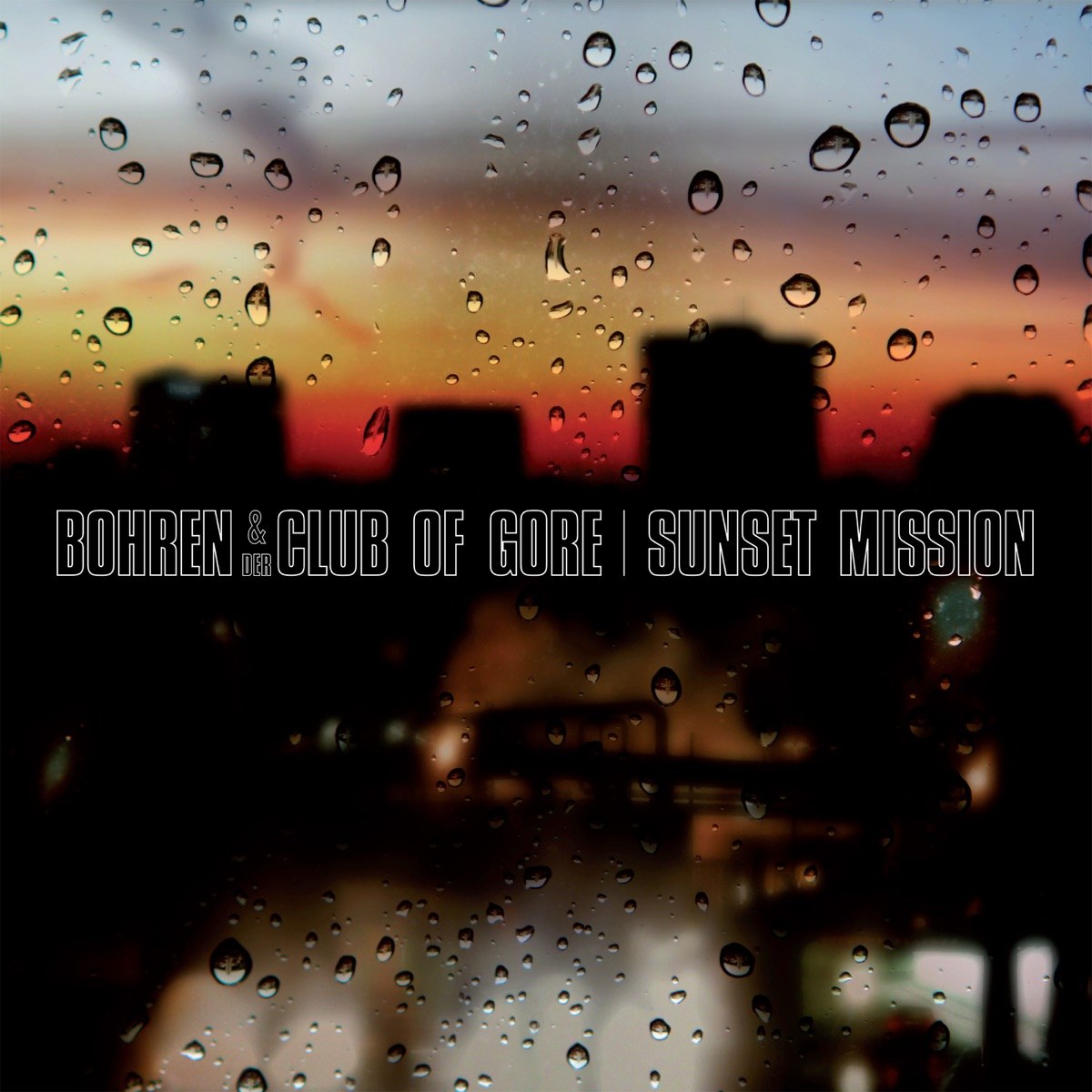
The cover is exact about all of this. A city silhouetted at dusk through a rain-spattered window, sodium light bleeding upward into the next morning’s promise of more sodium light. No portrait of the band, no studio cleverness. The image asks one question: do you intend to keep looking out the window or not. The music asks the same question.
This sound has since been retro-labelled ‘doom jazz’ or ‘noir jazz’ by people who needed a marketing handle, and copied — with diminishing returns — by The Kilimanjaro Darkjazz Ensemble, The Mount Fuji Doomjazz Corporation, Dale Cooper Quartet, half of post-rock, and most film composers reaching for a Lynchian shorthand. Bohren built the room. The mistake the imitators make is to add: smoke, synthetic pad, atmosphere by the litre. Bohren subtract instead. The first thing they take away is the acceleration everyone else has been trained to mistake for safety.
The reason to publish Prowler now is that it rebukes, without ever raising its voice, the way most people now listen. It refuses to play background. The dopamine economy gets nothing from it. The European city it carries is not a nostalgic set; night and slow melancholy still arrive here as serious adult materials, the way a continent that takes itself seriously should treat them. It also quietly reminds the listener that Germany, once one steps away from the export brochure and the talk-show panel, still makes work of this kind of seriousness — and almost no one bothers to listen.
Wait until the apartment is mostly dark. Put one lamp on. Do not check the phone. Five minutes is small enough that pretending you don’t have time would be embarrassing. Let the bass walk in. Notice that you have stopped breathing badly.