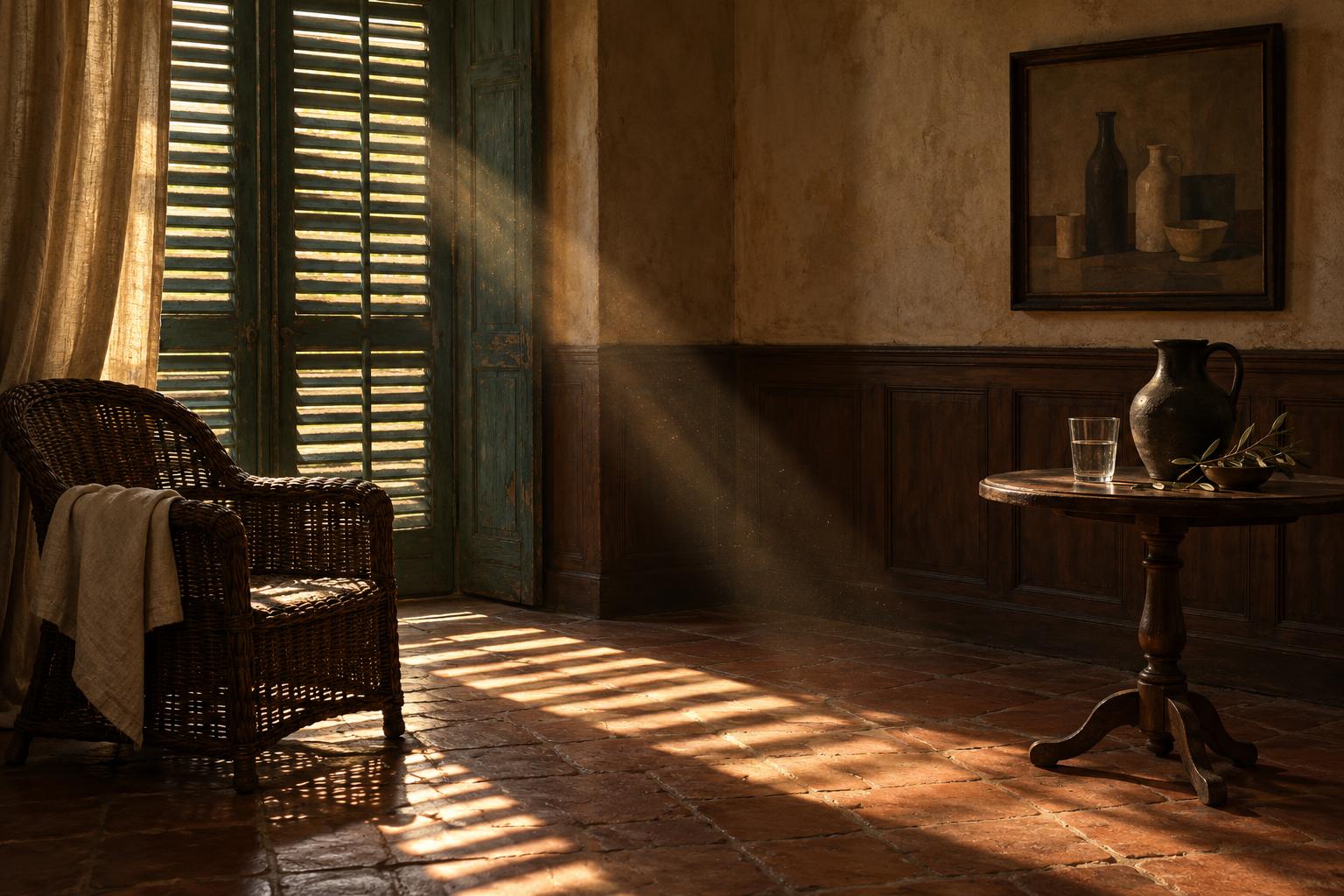
A traveller who moves through southern Europe, the Mediterranean rim, Latin America, and large parts of East Asia between roughly one and four in the afternoon notices something the official economic data does not quite record. The shutters are closed. The small shops are shut. The children are at home. The grandparents are napping. The streets are, for an hour or two, in a quiet that is neither early morning nor late night but a third thing, a deliberate softness in the middle of the day, defended not by law but by habit older than any law.
The North Atlantic has mostly decided this is a problem. It has been treated for a century as a Mediterranean quirk, a tropical laziness, a developing-country inefficiency, a drag on productivity, a scheduling embarrassment. The International Monetary Fund does not write policy briefs about it, but the ambient Davos consensus is unmistakable: a serious economy runs through the afternoon.
It is worth asking, soberly, whether that consensus is right. The empirical answer is more interesting than the ideological one.
The Spanish Case
Begin where the word begins. The Spanish siesta — from the Latin hora sexta, the sixth hour after sunrise — is a daily rhythm, not an occasional luxury. In its classical form it was a long midday break of two to three hours, from roughly two to five in the afternoon, during which workers returned home for the main meal of the day, slept for twenty to forty minutes, and returned to work until eight in the evening.
This rhythm has been under institutional pressure for decades. In 2016, the Spanish prime minister Mariano Rajoy proposed ending the long midday break and moving Spain back to the GMT zone (from which Franco removed it in 1940 in solidarity with Berlin), shortening the working day and killing the siesta as a scheduling fact.[1] The reform was framed as a productivity measure, a work-life balance correction, and a European alignment. Spain, in this telling, would finally become a normal country.
What is quietly striking is what happened next: not much. The office hours of the large Madrid firms contracted. The two-hour lunch became, in many corporate settings, a shorter break. But in small towns across Andalucía, Extremadura, Castilla, and much of the rural centre, the shutters still close at two and open again at five. The pharmacies still rotate. The bakers still bake twice. In the summer, especially during the ola de calor, the siesta is not a cultural indulgence; it is a public-health instrument. Spain had 2,191 heat-related deaths in the summer of 2022 and over 3,000 in 2023, according to the Carlos III Health Institute.[2] A country that abolishes the shuttered hour in a climate that regularly crosses forty degrees Celsius is a country that is intensifying its own mortality curve.
The lesson is instructive. A reform-minded ministry can issue circulars. A climate can veto them.
The Mexican Long Comida
Mexico does not call its midday pause a siesta. It calls it la comida, and treats it as the principal meal of the day, usually eaten between two and four in the afternoon, often in multiple courses, often with the extended family, often slowly enough that the hour after it collapses naturally into rest. The civilisational function is the same. The nomenclature is politer.
Mexico’s formal working day is European on paper. In practice, in large parts of the country, the morning is intense until around two, the comida empties the office or the shop until four or five, and the late afternoon runs until seven or eight. In Mexico City, where the commute has made the long midday return home logistically impossible for millions, the comida has survived by moving into the fonda, the cocina económica, the local restaurante: a cheap, hot, three-course meal eaten in roughly an hour, defended by habit against the North American sandwich-at-the-desk.[3]
The comida is not merely nutritional. It is anthropological scaffolding. It is where parents still see their children on weekdays. It is where business is actually negotiated. It is where a city still remembers that eating is a social, not a logistical, act. If one wants to understand why the Mexican household has, through forty years of neoliberal reform, remained a sturdier social unit than its North Atlantic counterpart, one of the quiet answers is: the comida never surrendered.
The Chinese Wǔjiào
In China the midday nap — wǔjiào (午觉) or wǔshuì (午睡) — is not a Mediterranean import. It is one of the oldest documented health practices in the country, discussed in medical texts of the Han and Tang, and preserved in the modern working day with a seriousness that would astonish an American HR department.
The relevant political-cultural fact is that the right to rest, including midday rest, is enshrined in the Labour Law of the People’s Republic of China (1994, articles 3 and 36), and the midday break is formalised in the operating norms of state-owned enterprises, hospitals, universities, and schools.[4] In practice this means that at roughly twelve-thirty across much of the country, lunch is eaten quickly, and from one to two or two-thirty the lights are off, the desks are repurposed as pillows, and a state-sanctioned silence falls over offices and classrooms. Secondary school students have scheduled nap periods; university dormitories observe the midday quiet; even in the aggressively marketised private sector the wǔjiào survives, often in the form of inflatable mattresses, folding cots, or ergonomic recliners quietly installed under desks.
This is a civilisation with absolutely no sentimental attachment to the Mediterranean. It takes rest at the sixth hour not because of Latin tradition, but because it has concluded, correctly, that an organism which refuses the midday pause is an organism quietly subsidising its own decline.
The Japanese Inemuri
Japan has no formal siesta. It has something stranger and in some ways more revealing: inemuri (居眠), roughly “sleeping while present.” The anthropologist Brigitte Steger, now at Cambridge, spent a decade documenting the practice: the Japanese salaryman sleeping in a meeting without social penalty; the student sleeping at a desk; the commuter sleeping standing on a train; the civil servant sleeping during a parliamentary session.[5]
The practice is not what it appears to a Western observer. It is not laziness. It is a culturally recognised form of fatigued virtue: the inemuri sleeper is understood to have worked so hard that the body has demanded rest in situ, and the social contract permits that rest without demoting the sleeper’s standing. A Japanese executive who falls asleep in a meeting is not shamed. A Japanese executive who never falls asleep anywhere is suspected of not working.
It is a curious civilisational compromise. Japan refuses the Spanish solution (a shuttered afternoon), but it also refuses the American one (a stimulant-driven denial of fatigue). It permits the body to insist on itself, in public, in the middle of the day, and treats the insistence with discretion. The result is a working culture that is, by Western standards, overworked almost to the point of pathology — karōshi, death from overwork, has its own ministry file — but which has nonetheless preserved a social room for the sleeping body that the North Atlantic has entirely closed.
The Greek Cohort
This file would be mere ethnography if the medical literature did not point in the same direction.
The most-cited piece of evidence is a 2007 prospective cohort study by Dimitrios Trichopoulos, Androniki Naska, and colleagues at the Harvard T.H. Chan School of Public Health and the University of Athens Medical School, following 23,681 Greek adults for an average of 6.3 years. The researchers found that systematic midday napping (at least thirty minutes, at least three times a week) was associated with a 37% reduction in coronary mortality, controlling for diet, physical activity, and other confounders.[6] The effect was strongest in working men, where occupational stress is highest — precisely the population to which the North Atlantic denies the midday pause most aggressively.
The effect size is extraordinary. For comparison, statin therapy in primary prevention delivers roughly a 15 to 25% relative-risk reduction in major coronary events in healthy adults. A free, zero-pharmaceutical, five-thousand-year-old habit, cross-validated in a serious cohort, outperforms a pill the industry has spent fifty billion dollars marketing.
The Trichopoulos finding is not solitary. Lahl and colleagues at the University of Düsseldorf showed in 2008 that even a six-minute nap improves declarative memory performance.[7] Mednick, Nakayama, and Stickgold at Harvard documented in 2003 that a 60- to 90-minute midday nap can produce learning gains comparable to a full night of sleep for perceptual tasks.[8] NASA’s long-running fatigue countermeasures programme has recommended short cockpit naps for airline pilots since the 1990s, after Mark Rosekind’s studies showed a 34% improvement in performance and a 54% improvement in alertness.[9] The literature is not shy.
The Taoist Layer
Behind the policy and the data there is an older argument, and it does not come from Harvard.
The organism, Lao Tzu would say, has a rhythm. The sun has a rhythm. The afternoon has a rhythm. A civilisation that refuses to arrange its day in accordance with the rhythm of the organism and the sun is not a sophisticated civilisation; it is a civilisation that has mistaken coercion for competence. The midday pause is wu wei written into the clock: a hour given back to the grain of the body, during which neither the market nor the ministry is permitted to extract.
This is why the shuttered afternoon has such emotional density in the societies that still practise it. It is not merely a nap. It is a daily, embodied refusal of the Taylorist premise that the human is a continuously extractable resource. The shutters are a civic statement. They say: this household, this town, this country does not consent to be worked through the hottest hour of the day. The silence of a Spanish village at three in the afternoon is a political silence as much as a biological one.
McGilchrist would add his own gloss. The left hemisphere, in his schema, prefers continuous activity, measurable output, uninterrupted engagement with its own representations. The right hemisphere requires pause, embodiment, open attention, the dissolution of agenda. A culture that abolishes the midday pause is a culture that systematically starves its right hemisphere, and will eventually find that its left hemisphere, triumphant, is unable to tell when it has lost touch with reality. The afternoon nap is a small, repeated return to the body — and to the kind of knowing that only arrives when the agenda stops.
What the Pause Buys
In practical terms, the midday pause buys four things that modern life has largely forfeited.
First, cardiovascular protection. The Greek cohort is now joined by Chinese, Japanese, and Mediterranean replication studies: regular short naps correlate with lower blood pressure, lower cortisol, lower inflammatory markers, and lower all-cause mortality in middle age. The hour between two and four is cardiologically expensive to work through.
Second, cognitive performance. The post-lunch dip is a measurable circadian phenomenon, not a cultural excuse. Attention, reaction time, and working memory all deteriorate between roughly two and four in the afternoon in sleep-deprived adults, which is now most adults. A twenty-minute nap recovers more of that function than a double espresso.
Third, family continuity. The societies that preserved the long midday break preserved the midday family meal, and the midday family meal preserved the daily domestic conversation. A culture in which parents and children do not share a weekday meal is a culture in which the household has been quietly replaced by the schedule. The siesta is partly a biological habit. The comida that precedes it is a civilisational one.
Fourth, the right to be slow. This is the hardest to defend in a spreadsheet and the most important over a human lifetime. A society that permits its members to be slow at the hottest hour of the day is a society that has not forgotten that the human is an animal before it is an economic input. A society that forbids this is slowly producing a population that cannot distinguish exhaustion from identity.
The Hard Limits
The honest counter-arguments are three.
First, the long midday break is not a long nap for most people. In its contemporary form in Spain, Latin America, and Mediterranean Europe, the pause is often a long lunch, errands, a brief lie-down, and a return to work. The pure physiological nap is rarer than the romantic image suggests. The health effects are nonetheless real, because what is being bought is a longitudinal reduction in sustained workload, not strictly a sleep intervention.
Second, the siesta extends the working day. The classical Spanish schedule — work until two, pause, work until eight — keeps families eating late, children sleeping late, and sleep debt accumulating at the back of the clock. Rajoy’s 2016 reform was not wrong to notice this. The question is whether the correct response is to abolish the pause or to compress the second half of the day. Portugal and much of Italy have been quietly experimenting with the latter.
Third, not every culture can import it. The wǔjiào works in China partly because every office observes it; the inemuri works in Japan partly because the body politics are shared. An American manager who tries to install a nap room in a Chicago office without changing anything else has produced a prop, not a practice. The pause is institutional before it is personal.
Watchpoint
Three things to watch over the next decade.
The Mediterranean heat response. Whether southern Europe formalises a seasonal shuttered afternoon in response to rising summer mortality. Spain, Portugal, Italy, and Greece are moving, under climate pressure, toward some version of a mandated midday pause in outdoor labour. The 2023 Spanish royal decree on heat-exposure labour protection is already pushing in this direction. The siesta may return not as nostalgia but as adaptation.
The Chinese export. Whether the wǔjiào becomes a soft-power lever as Chinese firms open offices across the Belt and Road. The Chinese nap room is quietly being installed in East African, Central Asian, and Southeast Asian subsidiaries. If one wants to notice an institution travelling, the ergonomic recliner is as revealing as any treaty text.
The Northern reversal. Whether Scandinavian and Dutch workplaces, having discovered the handwriting file, now rediscover the midday pause. Finland experimented in 2023 with scheduled nap rooms in several ministries. The Netherlands is lukewarm. Germany is sixteen different conversations. But the direction is visible, and the direction is southward.
The afternoon is slow. It does not care about the news cycle, the quarterly report, or the KPI. It will outlast the current ministers and the current apps. The civilisations that remember the midday hour will retain a quiet form of sovereignty over their own bodies. The ones that do not will have to learn, in the harder way, that a people which cannot shutter its window at two o’clock has agreed, without quite noticing, to work through its own life.
Sources
[1] The Guardian, Spanish prime minister proposes ending working day at 6pm (3 April 2016): records Mariano Rajoy’s proposal to shorten the Spanish working day, abolish the long midday break, and return Spain to GMT.
https://www.theguardian.com/world/2016/apr/03/spain-ponders-end-to-10-hour-working-day-and-return-to-gmt
[2] Instituto de Salud Carlos III, MoMo Daily Mortality Monitoring System, Summer 2022 and 2023 Reports: records attributable heat-related mortality in Spain of 2,191 excess deaths in 2022 and more than 3,000 in 2023, concentrated in the afternoon hours of the ola de calor.
https://momo.isciii.es/panel_momo/
[3] Jeffrey M. Pilcher, Planet Taco: A Global History of Mexican Food, Oxford University Press (2012), and ongoing ethnographic work on the Mexican fonda and cocina económica as institutions of urban midday eating: documents the persistence of the long comida as the backbone of Mexican daily rhythm, including in megacity conditions.
https://global.oup.com/academic/product/planet-taco-9780199740062
[4] Labour Law of the People’s Republic of China (adopted 5 July 1994, in force 1 January 1995; amended 2009), articles 3 and 36 on the right to rest and the statutory working-time limits; and Ministry of Education of the People’s Republic of China guidance on scheduled midday rest for primary and secondary school pupils (periodically revised): establish the legal and operational basis for the wǔjiào in Chinese workplaces and schools.
https://www.gov.cn/banshi/2005-05/25/content_905.htm
[5] Brigitte Steger, (Keine) Zeit zum Schlafen? Kulturhistorische und sozialanthropologische Erkundungen japanischer Schlafgewohnheiten, LIT Verlag (2004), and subsequent English-language work including Sleeping in public: a comparative perspective, University of Cambridge (2017): documents inemuri as a culturally sanctioned form of public sleep in Japanese professional and civic life.
https://www.ames.cam.ac.uk/people/dr-brigitte-steger
[6] Naska, A., Oikonomou, E., Trichopoulou, A., Psaltopoulou, T., & Trichopoulos, D., Siesta in healthy adults and coronary mortality in the general population, Archives of Internal Medicine 167(3): 296–301 (February 2007): the Greek EPIC cohort finding of a 37% reduction in coronary mortality associated with systematic midday napping in 23,681 adults followed for 6.3 years.
https://jamanetwork.com/journals/jamainternalmedicine/fullarticle/411720
[7] Lahl, O., Wispel, C., Willigens, B., & Pietrowsky, R., An ultra short episode of sleep is sufficient to promote declarative memory performance, Journal of Sleep Research 17(1): 3–10 (March 2008): demonstrates measurable improvement in declarative memory consolidation after a six-minute nap at the University of Düsseldorf.
https://onlinelibrary.wiley.com/doi/10.1111/j.1365-2869.2008.00622.x
[8] Mednick, S. C., Nakayama, K., & Stickgold, R., Sleep-dependent learning: a nap is as good as a night, Nature Neuroscience 6(7): 697–698 (July 2003): shows that a 60- to 90-minute midday nap can match a full night of sleep for perceptual-skill learning.
https://www.nature.com/articles/nn1078
[9] Rosekind, M. R. et al., Crew Factors in Flight Operations IX: Effects of Planned Cockpit Rest on Crew Performance and Alertness in Long-Haul Operations, NASA Technical Memorandum 108839 (1994): the foundational NASA study documenting 34% performance and 54% alertness improvements following planned in-flight cockpit naps.
https://ntrs.nasa.gov/citations/19950006379