A reasonable visitor from another century, dropped into a 2026 grocery aisle or a corporate annual report, would conclude that the West had recently been conquered by a single typographic regime. The conquest was bloodless. It went by the name of a brand refresh.
The regime’s preferred soldiers are easy to identify. Sans-serif. Geometric where possible. Slightly rounded at the corners, as if to apologise in advance. Carefully drawn to survive the brutal physics of a phone screen at small sizes. Pepsi, simplified in 2023, now stands shoulder to shoulder with Heinz, Pringles, Cadbury, Toblerone (the Matterhorn quietly removed in 2023 once production left Switzerland, the silhouette being a Swissness claim too inconvenient to keep), Volkswagen, BMW, Nokia, Renault and the entire Pfizer pharmacopoeia.[1] Twitter, in April 2023, surrendered its bird for an ‘X’ so generic that the only thing visible was what had been deleted.[2] Jaguar, in late 2024, presented a wordmark in alternating cases on pastel backgrounds, surrounded by androgynous figures in vinyl, and produced something so widely mocked that the campaign briefly outperformed every car the company actually sold.[3]
What unites these gestures is not local bad taste. Each, alone, has the quiet competence of a Pentagram pitch. The unifying feature is convergence: a continent of distinct corporate biographies, products, scales and customers, all arriving simultaneously at the same neutral, friendly, slightly compressed sans-serif, like delegates to a conference at which everyone has been told to wear the same suit.
I want to call this what it is. It is not minimalism, and it is not the late inheritance of Helvetica, whatever the design-school sermons that connect the dots back to Miedinger and Hoffmann at Haas in 1957.[4] Helvetica had a thesis: public information should be legible, neutral and democratic; signage was a civic art; the Swiss railway and Bauhaus pedagogies pointed toward a typographic ethics. What we are looking at now is the absence of a thesis dressed in its costume.
The Mechanism Is Material
Three forces have eaten the corporate face simultaneously, and none of them are mysterious.
The phone. Most logos are now seen primarily inside a 32-pixel app icon or a 200-pixel header. Detail loses to legibility, and legibility means a thick, geometric, monoline sans-serif with no historical complication. The Apple icon grid has become the most powerful taste constraint on earth. It rewards uniformity and punishes anything that survived the print century.
The consultancy oligopoly. A small handful of firms — Pentagram, Wolff Olins, Interbrand, Landor, the Chermayeff and Geismar heirs — supply identity systems to a remarkable share of the global Fortune 500. Each is staffed by talented designers, each genuinely tries, and yet a profession that shares the same conferences, the same case studies and the same software produces the same answers, in the same way that medical schools teaching from a shared textbook produce similar diagnoses.
The CMO contract. The average Chief Marketing Officer keeps her job for under four years. A rebrand is the cleanest legible deliverable inside that window. It creates a board narrative, a press cycle, a case study and a future CV line. The cost — several million at the boring end, fifty at the showy end — is invisible against quarterly revenue. The reputational risk is asymmetric: only mockery hurts, so the safest output is a refinement of whatever the consultancy class is currently calling refined. Brand identity has therefore become procyclical. It is now what every other brand is doing, with one degree of variation as the polite gesture toward distinctness.
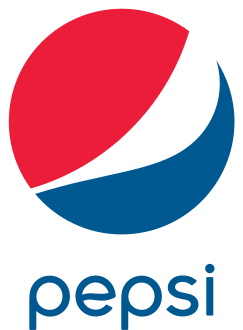
Pepsi, 2008–2023
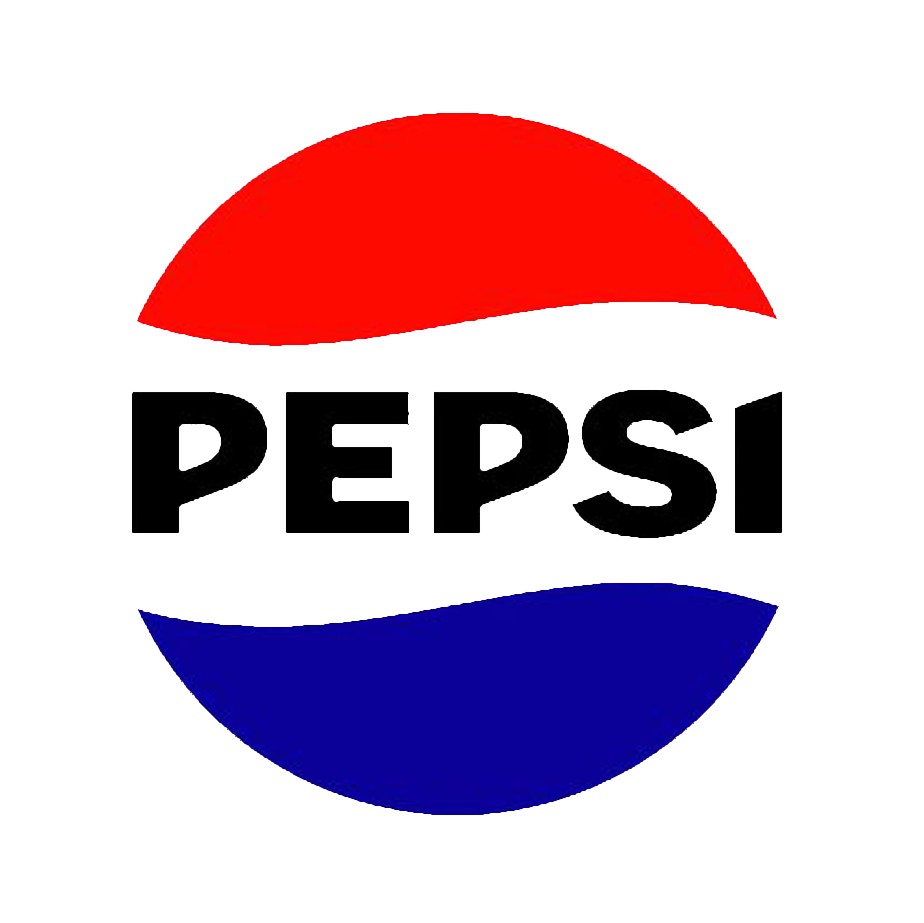
Pepsi, 2023–

Twitter, 2012–2023

X, 2023–

Jaguar, 2012–2024

Jaguar, 2024–
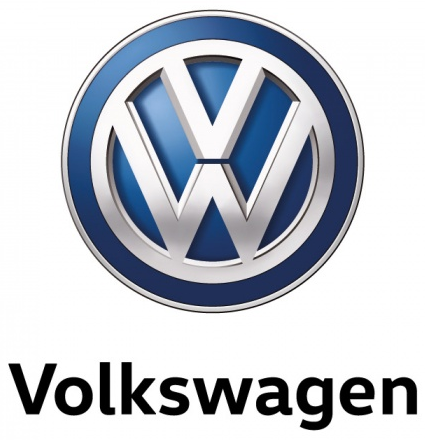
Volkswagen, 1999–2019
Volkswagen, 2019–
A Confident Company Decorates
Underneath the mechanism, something more interesting is happening, and it deserves naming. A confident company decorates. An uncertain company simplifies.
The first half of the brand-refresh decade — roughly 2017 through 2024 — coincided with a period of unusual institutional doubt at the heart of the Western corporate order: pandemic, supply-chain shock, ESG drift, AI panic, the collapse of cheap money, the discovery that growth was now contested rather than ambient. Each of those pressures rewards caution, which in design language reads as flattening. The wordmark cannot afford to assert anything an investor, a TikTok mob or a regulator might dislike on a Tuesday. So it asserts nothing. It presents instead an infinitely defensible surface, the institutional equivalent of speaking only in well-lit corridors.
This is why “blanding,” a useful coinage from Bloomberg in 2018, did not age into a phase but hardened into a regime.[5] It serves a class of organisations that no longer trust their own product to do the work an emblem used to do. Fashion houses still draw difficult monograms because they retain at least the memory of a charismatic designer. Newspapers keep their gothic mastheads because the mast is the last piece of the building they own. Niche consumer companies — On, Aesop, Le Labo, Off-White, Nigo’s labels — still play with serifs, condensation, asymmetry, archive references, custom drawing, because they sell the idea that something specific is happening behind the typography. Everyone else, everyone who has lost the nerve, defaults to the sans-serif empire and hopes the product will pick up whatever moral weight the lettering has been instructed to drop.
The Honourable Exceptions Are Diagnostic
Burger King returned in 2021 to its 1969 roundel — fatter, browner, more confidently American — and made the rest of the fast-food register look like it had been sterilised. The MIT Media Lab’s 2014 identity system still feels alive because it accepted the indignity of being slightly difficult to use. The Champions League, oddly, still draws stars and shields because European football has not yet been told it is a software product.
These exceptions share a property: the institution behind them believes it is something specific. It can therefore afford an emblem that is also specific, and risk readers who do not immediately understand it.
The Confession
It is worth saying plainly. The blanded brand is a confession dressed as a strategy. It announces, in geometric monoline with carefully balanced negative space, that the company in question is no longer sure what it is, and is therefore unwilling to say. The new logo is a pre-emptive shrug. To replace your inheritance with a typeface that could equally belong to a regional bank, a payments app, a mid-tier supplement company and the car you once made beautiful is to admit that you are protecting yourself from your own customers.
The prediction is not difficult. The first companies to rediscover identity will be those with renewed product confidence and competitors willing to look strange. Watch where sharp lettering returns — to small audio brands, to a few engineering-proud car houses, to publishers, to the Asian retail and beauty firms (Aesop’s serif, Beams’s wordmark, Muji’s red square) that long ago stopped accepting the consultancy class’s compliance package. The trailing companies will keep refreshing on a six-year cycle, because their boards continue to confuse the press release with the design.
Helvetica, in its way, was an act of civic generosity. The current wave is not. It is design language deployed to mask weakness, polished to hide the absence of a thesis. To dignify it as minimalism is to flatter it. The honest description is sumptuary cowardice with a typeface licence.
The interesting question is not whether the empire will fall. Empires of insecurity always do. The interesting question is what its successors will look like — and which of the present crop will admit, when the cycle ends, that the rebrand was the moment they ran out of things to say.
Sources
[1] Pepsi adopted its current logo in 2023 (a return to the late-1990s monogram simplified for digital surfaces). PepsiCo press release, March 2023.
https://en.wikipedia.org/wiki/Pepsi
[2] Twitter, Inc. was succeeded by X Corp. on 4 April 2023; the platform’s bird logo was replaced by the ‘X’ glyph in July 2023.
https://en.wikipedia.org/wiki/Twitter,_Inc.
[3] Jaguar unveiled its new wordmark and visual system in November 2024 as part of its electric repositioning by Jaguar Land Rover.
https://en.wikipedia.org/wiki/Jaguar_Cars
[4] Helvetica was developed in 1957 at the Haas’sche Schriftgiesserei in Münchenstein by Max Miedinger and Eduard Hoffmann; originally Neue Haas Grotesk, it became the central typeface of the International Typographic Style.
https://en.wikipedia.org/wiki/Helvetica
[5] The term “blanding” entered wide circulation through commentary in Bloomberg Businessweek and Eye on Design from 2018 onward, used to describe the convergence of corporate identity onto a single geometric sans-serif aesthetic.