
Begin with a fact almost no senior politician in Europe says out loud. The order book at Hitachi Energy, the world’s most consequential maker of large power transformers, is already booked solid through 2028. Lead times for standard power transformers have stretched to around 128 weeks. Generator step-up transformers run nearer 144 weeks. The most critical assets — the units that hold an entire HVDC corridor open or anchor a new nuclear reactor to the grid — reach 210 weeks. In ordinary language, four years. Every gigawatt of electrification that European and American planners have penciled in for 2030 needs a transformer ordered today; whoever did not place that order has been quietly removed from the list of countries that will participate.
This is not a supply chain inconvenience. It is the visible face of a deeper rearrangement. In the long late-twentieth century, the binding constraint of a serious state was capital. Whoever could borrow most cheaply, mobilise the largest savings pool, allocate the most patient money to the longest-dated project, could buy the future. That game is essentially over. Real capital is now abundant; pension funds are starving for duration; sovereign debt finds buyers even when the buyers know better. The constraint has moved. The binding factor of the next quarter-century will be administrative throughput: the capacity to convert intention into installed concrete, copper, and silicon at a speed the world will reward.
What the West has actually lost
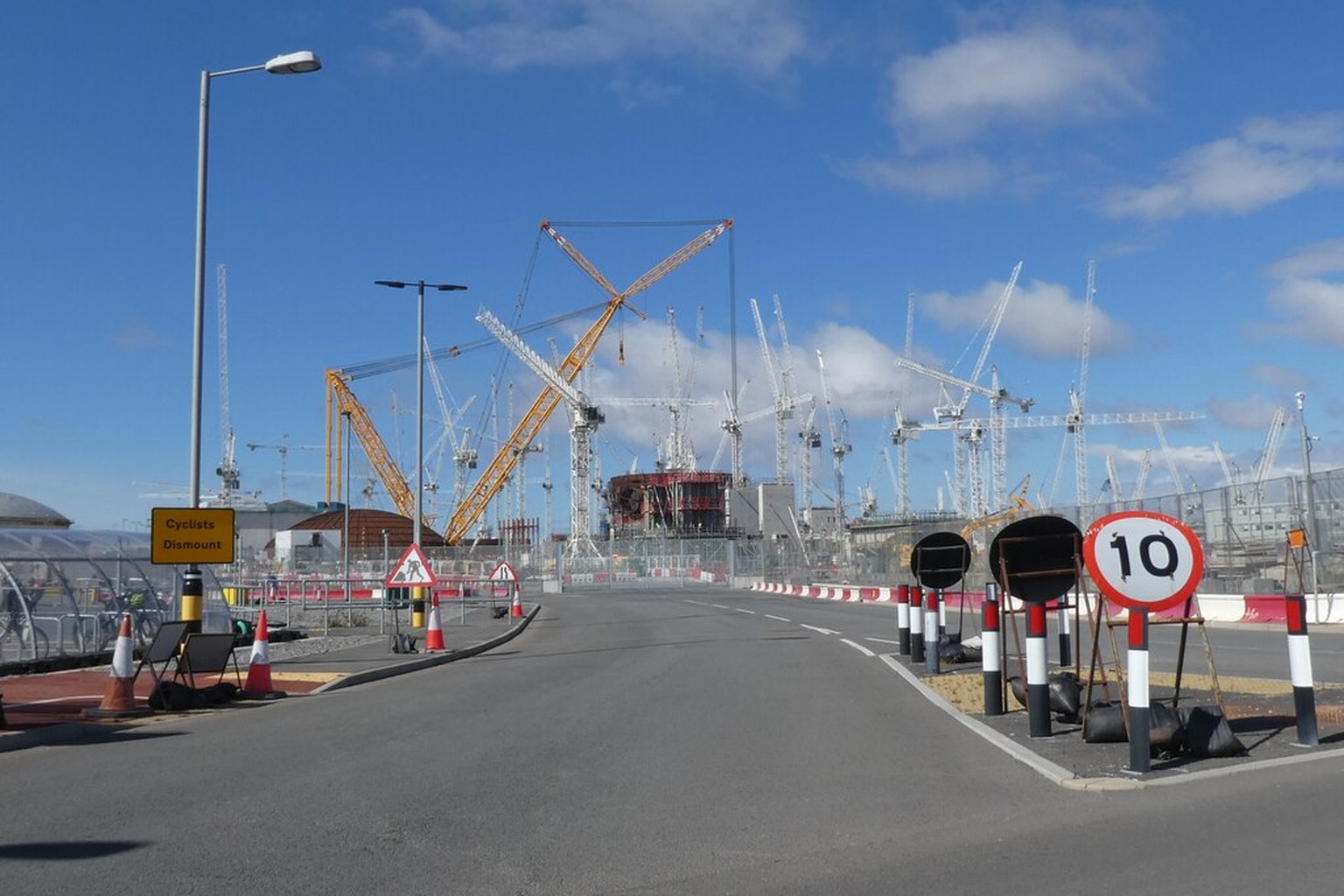
The texture of this is best seen up close. Hinkley Point C in Somerset was promised for 2017, then 2025, then 2027. EDF’s own base case now runs to 2030, with a credible slip to 2031; the project cost, once advertised at up to £26 billion, has been revised to between £41.6 and £47.9 billion in 2024 prices. Two reactors. Both behind. TSMC’s second Arizona fab, the most strategically important factory ever built on American soil, has been pulled forward to late 2027, which is presented as triumph because earlier reporting put it in 2028; the first Arizona fab, originally promised for 2024, slipped to 2025 for an unsentimental reason that prefigures everything else — not enough qualified workers, not enough cleared permits, not enough functioning bureaucracy at speed.
On the European side the numbers are worse and more humiliating because they are domestic. Onshore wind farms in most EU countries take between five and seven years to permit, with some projects waiting nine. More than 500 gigawatts of wind capacity, more than twice the entire installed fleet, currently sits in grid-connection queues. The European Commission has opened infringement procedures against 26 of its 27 member states for failing to implement a Renewable Energy Directive that itself only asks for a two-year permitting ceiling. The Commission, in other words, has formally accused the continent of being unable to do what the continent told itself to do. There is no language elegant enough to disguise that.
Where the new state lives
Now compare the other end of the table. In Vietnam, an investment registration certificate clears in 10 to 15 working days. Design approval is another two to three weeks. Industrial-park factory shells in Bac Ninh and Hai Phong are routinely built, commissioned, and producing within three to six months from a green-field start. Hitachi Energy is opening a transformer plant in South Boston, Virginia, in 2028; the Chinese state grid, in the same window, will absorb half a dozen ultra-high-voltage DC corridors that physically didn’t exist five years earlier. The United Arab Emirates routinely turns around large-scale industrial permits inside weeks. Saudi Arabia, despite its more theatrical adventures, is delivering refinery and petrochemical capacity at a rhythm no European country has matched since the late 1970s. Singapore has spent two decades quietly perfecting the bureaucratic equivalent of a Swiss watch.
The pattern is not about culture, and it is not about authoritarianism. China is administratively fast in some sectors and grindingly slow in others. The United States in 1942 was an execution machine; the same country in 2026 cannot widen a port channel inside a decade. Administrative speed is a built artefact, like a road or a navy. It is constructed by particular legal forms, by a deliberate ranking of what may be challenged and for how long, by the political settlement on who has the right to slow whom down. It is also destructible, like any other artefact, by neglect, by accretion, by the slow capture of the procedural commons by everyone who finds delay profitable.
The class interest hiding inside the procedure
This is the part of the story that polite analysis prefers to skip. The permitting thicket is not, in the main, a failure of the state. It is an achievement of a faction within the state. Environmental review, judicial standing, public consultation, statutory clocks that can be stopped by any motivated plaintiff — these were not invented to slow development; they were invented to slow development the speaker disagreed with. Over forty years they have hardened into a class instrument. They protect incumbents who already hold land or capacity. They generate guaranteed billings for the lawyers, planners, and consultants who staff the apparatus. They give a permanent cultural advantage to the educated professional class, whose comparative advantage is precisely in navigating procedure and writing memoranda about it.
There is no point being sentimental about this. The continental version of itself that Europe likes to display — refined, deliberative, careful, mature — is in significant part a polite name for an inability to act. The Americans, who at least admit that they have an institutional problem, are now visibly trying to dismantle parts of their own environmental-review state, with mixed and ugly results. The Europeans, who do not admit it, are losing their industrial base in slow motion while explaining to one another why the loss is dignified. The IRA in the United States and the various European industrial strategies share one buried assumption: that the missing factor is subsidy. It is not. The missing factor is throughput.
What this means for the next ten years
Read forward from here, and several things become predictable. Capital will continue to migrate to wherever permits clear in months rather than years, regardless of the labour cost. “Friendshoring” will quietly converge on the small handful of friends — Vietnam, Mexico in parts, Morocco, Poland, the UAE — that combine a permissive regulatory regime with adequate political alignment. The rhetoric of supply-chain security in Brussels and Washington will continue to outrun the physical capacity of either bloc to build a supply chain; that gap will be filled, by definition, by whoever can.
Inside Europe, the political consequence is harder to admit. A continent that cannot widen a railway tunnel inside fifteen years, cannot connect an offshore wind farm to its own grid inside nine years, and cannot build a new substation without litigating it for half a decade has effectively withdrawn from the future market in heavy industry, regardless of how many strategy papers it issues. The choice is real and binary. Either the procedural state is reformed at the constitutional level — standing tightened, timelines clocked, appeals consolidated, statutes overridden when they collide with strategic infrastructure — or production migrates permanently to states that can still pour concrete. There is no third door.
The honest measure of a country in 2026 is not its debt-to-GDP, not its central-bank reserves, not even its technology stack. It is the median time from a binding political decision to a functioning physical asset. In the United Kingdom, that interval is now somewhere north of a decade and rising. In Germany, the same. In France, slightly better, occasionally heroic, structurally unwell. In China, two to four years for an HVDC corridor of a kind that does not exist anywhere west of Suez. In Vietnam, a quarter. The currency of the new era is the cleared signature, the lifted objection, the executed contract. Empires used to be measured in fleets. They will now be measured in calendars.
The border, in this period, is no longer the line on the map where one tariff schedule ends and another begins. The border is the desk where a permit is finally signed. Cross it, and the future arrives. Stop short of it, and explain yourself, with great elegance, for as long as the cranes will stand.
Sources
IndustrialSage / NPC Electric, on Power Transformer Lead Times in 2025 and 2026 (128 / 144 / 210 weeks; tier-one backlogs visible to 2028).
industrialsage.com / power transformer lead times
POWER Magazine, Transformers in 2026: Shortage, Scramble, or Self-Inflicted Crisis?
powermag.com / transformers 2026
WindEurope, Permitting and grid-queue position (more than 500 GW awaiting connection assessment; 5–7 year permitting; 26 of 27 member states under infringement).
windeurope.org / permitting
Strategic Energy Europe, Wind energy in crisis: Grid and permit shortages halt its progress in Europe.
strategicenergy.eu / wind energy crisis
World Nuclear News and NucNet, on Hinkley Point C delay and cost revision (operational date 2029–2031; cost £41.6–47.9 billion in 2024 prices).
world-nuclear-news.org · nucnet.org
Manufacturing Dive and TrendForce, on TSMC Arizona Fab 2 production timeline (now 2H 2027, advanced from 2028).
manufacturingdive.com · trendforce.com
Source of Asia and KTG Industrial, on Vietnam factory commissioning timelines in industrial parks.
sourceofasia.com · ktgindustrial.com
Image: “A forest of cranes, at the Hinkley Point C power station construction site” by Roger Cornfoot, geograph.org.uk via Wikimedia Commons, CC BY-SA 2.0. Cropped and resized for HW. Sourced raster used because OpenAI image generation was unavailable at the time of publication.