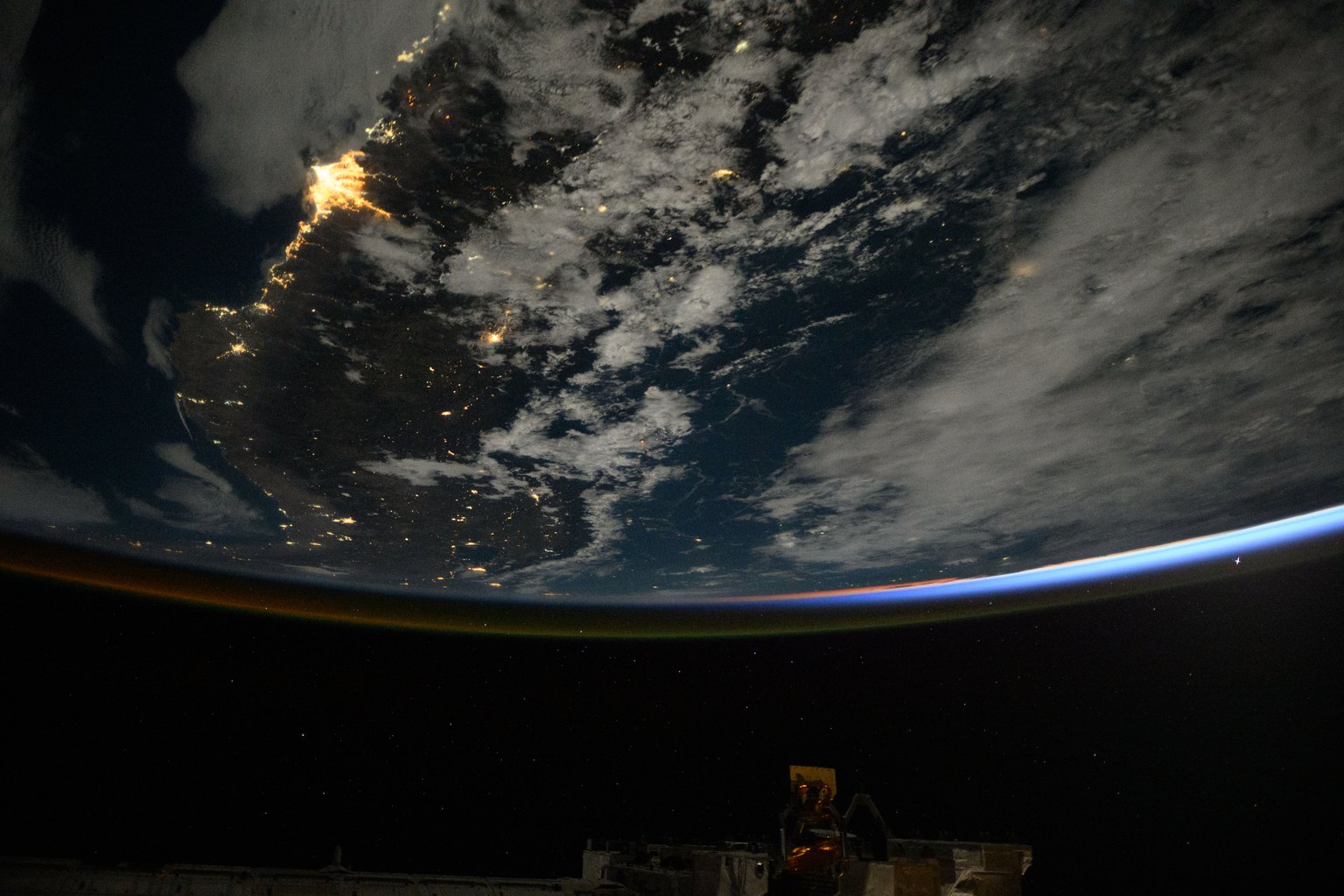
This is a note on a port most readers have never named, a route reorganisation most Atlantic chancelleries noticed late, and a particular lesson about how a continent changes direction without anyone passing a law.
What Chancay actually is
The Terminal Portuario Multipropósito de Chancay sits on a shallow bay in the Peruvian coastal desert, roughly eighty kilometres by road north of Lima and sixty kilometres north of the historic port of Callao. The bay was unremarkable until, in 2019, Volcan Compañía Minera, a Peruvian zinc producer short of cash, sold a majority stake in its small private harbour project to China’s COSCO Shipping Ports. By 2020 COSCO held sixty percent of the project and the operator was a Chinese subsidiary; by 2022 Peru’s port regulator had, under domestic pressure, published a legal note stipulating that the operator would be granted exclusive rights to the terminal’s services for an initial thirty years. In November 2024 Xi Jinping and Dina Boluarte, then Peru’s acting president, inaugurated the first phase by remote link from an APEC summit room in Lima.[1][2]
The physical plant is modest and sober. A main breakwater of one and a half kilometres, a secondary breakwater of nearly a kilometre, four initial berths with sixteen metres of dredged depth, four ship-to-shore gantry cranes designed for vessels of 18,000 TEU, a tunnel of nearly two kilometres carrying containers under the coastal highway and under the town of Chancay to an inland yard the size of a hundred and fifty football fields. The design capacity of phase one is one and a half million containers and six million tonnes of general cargo per year. The full built-out capacity, after four phases, is roughly fifteen million containers — comparable to the current throughput of the port of Shanghai’s Yangshan deep-water terminal when it opened in 2005.[3]
None of this is extraordinary engineering. What is extraordinary is where it sits. South America has no other deep-water Pacific port of this draft between Buenaventura in Colombia and San Antonio in Chile. The 18,000-TEU class of vessel — the standard working ship of the Asia–Americas trade since the mid-2010s — cannot enter Callao, cannot enter Guayaquil, cannot enter Valparaíso with full load. It can enter Chancay. Nowhere else on the eastern Pacific rim, between Long Beach and the Chilean fjords, can a modern Chinese-built megaship berth, discharge, and load South American cargo in one stop. That is the thesis of the port, and it is already true.
The ten-day arithmetic
Nothing in logistics is as persuasive as a shorter voyage.
Callao to Shanghai, through the old Pacific route via the Panama Canal and across the North Pacific, is a passage of roughly forty days by a 10,000-TEU vessel at commercial speed, with the usual Panama queue overhead included. Callao to Shanghai, for a Panamax that cannot take the direct South Pacific crossing because it has to cover the Caribbean leg first, has lengthened in each of the past four years as Panama drought cycles have thinned the daily lock allocation. Chancay to Shanghai, direct across the South Pacific, is a passage of roughly twenty-three days by an 18,000-TEU vessel on a shared Pacific loop with Mexican and Chilean calls, with no canal transit at all. The published COSCO schedule names twenty-three days nominal. Early operational data from 2025 and 2026, read against the standard AIS traces, suggests twenty-two to twenty-five depending on the Chilean call. Ten days off a thirty- to thirty-five-day South American westbound voyage is not a tweak. It is a different market.[4]
Add the pricing. A Chancay container to Shanghai lists at between twenty and thirty percent less than the equivalent box through Callao plus Panama, before Panama drought surcharges and before the Caribbean canal queuing fee that most Atlantic shippers have come to treat as a quiet feature of a world that still assumes the canal is a stable asset. Ten days of ship time and twenty-five percent of a freight bill is the sort of margin that reorganises supply contracts between a Brazilian soy exporter and a Chinese crushing plant without needing a press release.
This is why the port’s own operator calls it, with some justice, “from Chancay to Shanghai” — a nine-syllable slogan that is also an accurate description of a geography the global shipping industry had not quite understood. For roughly thirty years after the Panama Canal was handed back to Panama in 1999, the canal was quietly the hinge of South American seaborne trade. For the next thirty years, that hinge will be challenged by a landlocked Peruvian desert bay the hinge nations do not control.
What flows through it
The commodities moving through Chancay are not a surprise. They are the ordinary cargoes of a continent whose balance sheets have, since 2000, run on Chinese demand.
Copper. Chile and Peru together produce roughly thirty-eight percent of the world’s mined copper. Chinese smelters and refineries consume roughly fifty percent of the world’s refined copper. The arbitrage has existed for twenty years. What was missing was a Pacific port close enough to the mines of southern Peru and northern Chile to carry concentrate at megaship scale. Chancay is now that port for the Peruvian half of the belt and, within a short truck-and-rail logistic, for the mines of Antofagasta that currently route north by rail or coastal shipping. Antofagasta Minerals has already begun routing part of its Centinela concentrate through Chancay in direct container-of-concentrate form, bypassing the historic bulk route via San Antonio and Valparaíso.[5]
Soybeans and soy meal. Brazil’s soy belt in Mato Grosso and the Cerrado has for twenty years exported overwhelmingly through the Atlantic ports of Santos, Paranaguá, and the Northern Arc (Barcarena, Itaqui, Santarém). The Chinese buyer of that soy — COFCO, Sinograin, Yihai Kerry — has for twenty years paid the Panama Canal fee and the Suez-length voyage time. The 2022 opening of the bi-oceanic road corridor from the Brazilian state of Acre through Pucallpa and across the Peruvian Andes to Callao, and the subsequent 2024 extension to Chancay, puts Brazilian soy within three to five truck days of a Chinese megaship. The volumes are still small — a few hundred thousand tonnes a year moving by the Pacific route in 2026 against sixty million tonnes a year through the Atlantic ports — but the direction is unambiguous. A Chinese buyer able to shift ten percent of its Brazilian soy to a two-week shorter voyage will do so.[6]
Lithium carbonate. Argentine lithium from the Salta and Jujuy brines, now the world’s fastest-growing source outside Australia, has historically moved out through Buenos Aires or by rail across to the Chilean Pacific. Chancay offers an alternative route via the Jama pass or via Bolivia’s Pacific concession. Ganfeng, Zijin, and the smaller Chinese operators moving into Argentina’s lithium triangle have begun negotiating multi-year through-handling agreements at Chancay. The current volumes are modest. The expected 2030 volumes are not.
Vehicles, inbound. The ship does not return empty. The second volume now moving through Chancay is the Chinese-built vehicle — electric and otherwise — destined for the Peruvian, Ecuadorian, Chilean, and Bolivian markets. BYD, Great Wall, Chery, SAIC, and GAC have each announced regional distribution hubs centred on the Chancay inland yard. The share of new vehicle sales in Peru taken by Chinese brands has moved from roughly fourteen percent in 2022 to roughly thirty-two percent in the first half of 2026, with Chile and Ecuador on similar curves. The Pacific route is also a vehicle route, and the vehicle flow is accelerating faster than the commodity flow.
Agricultural counter-cargo. Peruvian blueberries, Chilean cherries, Ecuadorian shrimp, Peruvian avocados and asparagus — the agricultural export complex that has grown on the Pacific coast of South America since the free-trade decade — now has a Pacific box option it did not have before. Blueberry season at Chancay in July and August of 2026 saw a tangible compression of the Chinese retail window, with Lima-to-Shanghai transit of fresh fruit at twenty-two days against a historical thirty-four.
What Panama loses
The second-order loss is Panama’s.
The Panama Canal, by the volume of South America–Asia trade routed over its locks, has been quietly for two decades the busiest shipping chokepoint of the eastern Pacific–Atlantic traffic. Roughly five percent of global seaborne trade passes through it. A persistent water-allocation crisis has, since 2023, repeatedly thinned the lock throughput by roughly a third. The Panama Canal Authority has absorbed a sequence of restructurings, surcharges, and queue regimes under which a ship that cannot afford the auction fee waits three weeks and the ship that can pays several hundred thousand dollars extra per transit.[7]
Chancay is not the only, or the fastest, canal substitute. The Suez route via the Cape of Good Hope has absorbed the European-leg Asia trade that could not price its way past the Houthi-era Bab el-Mandeb. The Northern Sea Route has begun absorbing a sliver of the Asia–Europe east–west trade. The Peruvian port absorbs the piece Panama was most dependent on: the North and South Pacific–Asia leg carrying Latin American commodity flows. A South American cargo now has two routes to Asia that do not touch the Caribbean, and the choice between them is a cost-of-time calculation that favours Chancay for everything west of a line drawn roughly through central Brazil.
Panama’s revenue in 2026 is already perceptibly lower than its own 2023 projections, and the gap is widening. A canal is an asset that depends on being used. A canal that is used less also commands less diplomatic rent. The United States’ renewed attention to Panama — the Trump administration’s 2025 and 2026 declarations about “taking back” the canal, the Hutchison port concession reshuffle, the SOUTHCOM visits, the audit of lock-management operators — is partly a response to a canal whose share of the trade it was built for is quietly declining.
The ownership question
The question Atlantic capitals keep almost asking is: can Chancay be unbuilt, or at least un-Chinesed? The answer is: not easily, and not quickly, and probably not without breaking the thing being contested.
The ownership structure is sixty percent COSCO Shipping Ports, forty percent Volcan Compañía Minera. Volcan’s own forty percent is in play in a bankruptcy proceeding whose main bidder, by late 2026, is a Peruvian industrial group with its own Chinese financing lines. The operating licence is held by Cosco Shipping Ports Chancay Perú S.A. The exclusive-services provision is written into the Peruvian port regulator’s 2023 statute. A Peruvian government minded to disturb that structure would be disturbing the only piece of infrastructure that has delivered multi-billion-dollar investment to the country’s coast in two decades. No Peruvian government, left or right, is going to do that absent a shock on an order of magnitude larger than any that has yet appeared.[8]
The second question is whether the United States can offer a counter-port. The honest answer is that it did not do so when the land was free and the Peruvian coast was open to tender twenty years ago, and that it is not plausibly going to do so now, from an industrial base that no longer builds megaport cranes at scale, with a sovereign-wealth posture that cannot credibly deploy multi-decade concession financing against a Chinese operator who already owns the terminal. The Americans can slow Chancay through friction. They cannot replace it.
The deeper question is whether this matters strategically. A terminal is a terminal. Containers move through many terminals. The strategic asset is not the quay. It is the sum of (a) the vessel on the water, (b) the crane on the quay, (c) the distribution yard behind, (d) the port management software, (e) the financial-settlement layer underneath, (f) the state that signs the licence, and (g) the schedule-setting authority inside the shipping conference. In Chancay’s case, items (a) through (e) are Chinese, item (f) is Peruvian under a Chinese-dominant contract, and item (g) is set from COSCO’s Shanghai headquarters. The result is a port the United States cannot dock a Navy ship at without permission from a company it does not control, and a trade route the Atlantic alliance cannot interdict without a shooting act. For most purposes, that is a strategic asset.
The quiet reorientation of a continent
The deeper structural lesson is not a shipping lesson. It is a geography lesson that most Atlantic observers were slow to notice because the compass had been set east for two centuries.
South America’s Pacific coast was, through almost the entire nineteenth and twentieth centuries, a secondary coast. The great exports moved east: Argentine beef, Brazilian coffee, Venezuelan oil, Colombian coffee, Guyanese sugar. The ports that mattered were Atlantic ports — Buenos Aires, Santos, Montevideo, Rio, Recife, Maracaibo. The Pacific coast had Callao, Valparaíso, Guayaquil, Buenaventura, and the Chilean nitrate harbours of the dry north, and nothing of the Atlantic scale. The three largest cities of modern South America are all within an Atlantic hundred kilometres: São Paulo, Buenos Aires, Rio.
The quiet work of the last twenty-five years has been to reverse this. The copper flows, the lithium flows, the iron ore flows, the soy flows, the fruit flows, the fishmeal flows, the vehicle flows — each of them, year on year, has oriented more heavily toward the Pacific side of the continent. In 2000, roughly thirty-five percent of Peru’s exports went to China or Hong Kong. In 2025, that figure was over fifty percent. Brazil’s exports to China — the single largest source of Brazilian trade surpluses — have moved by sea by the Atlantic route not because that was efficient, but because the Pacific infrastructure to send them did not exist. Now it does.
A port is a slow instrument. It does not transform a continent in a cycle. But a port with the right draft, the right scale, the right operator, and the right political embedding will, over fifteen or twenty years, reroute the commerce around it as surely as a river reroutes a valley. The valley does not vote on it. The valley simply, after a certain number of flood seasons, runs the other way.
What this says about the next phase of trade
Pull out from Chancay and the pattern repeats itself in a half dozen other geographies the Atlantic world is still indexing as peripheral.
Deep-water ports migrate upstream of ownership regimes. The real strategic question in global trade is no longer where the sea lanes run. It is who built the quay, who owns the crane, who writes the port software, and who signs the concession. Rotterdam, Antwerp, Hamburg, and Los Angeles are European and American ports because they are embedded in European and American law. Piraeus, Haifa Bayport, Hambantota, Gwadar, Djibouti Doraleh, Kribi, Lobito, Chancay — each of these is a different kind of embedding. The question each of them answers is: which state’s rules apply to the goods, the data, and the dockworkers inside the fence?
The canal era is softly ending. The twentieth century ran on three canals: Suez, Panama, Kiel. The twenty-first century is running on route alternatives: Cape, Chancay, Northern Sea, Middle Corridor, Khorgos, Belt-and-Road rail segments. Every one of these alternatives is political before it is logistical. The canal era’s neutrality fiction — that a canal is a universal public good, open to all flags on equal terms — was never entirely true, and it is now visibly less true.
Continental orientation is a function of port investment. If one wanted a precise instrument to measure which direction a continent faces, one would not watch its foreign ministers. One would watch which coast its deep-water ports are being built on. Africa’s eastward turn is Lamu, Mombasa, Doraleh, Beira, Dar es Salaam, Nacala. South America’s westward turn is Chancay, San Antonio, Posorja, Buenaventura’s container expansion. These port maps are more honest than any policy document.
The Chinese operator model is being imitated. COSCO Shipping Ports, China Merchants Port Holdings, and Shanghai International Port Group between them now operate or hold concessions in roughly a hundred terminals across six continents. The model is not simply ownership. It is integration: ship + crane + software + customs interface + inland rail + settlement layer, provided as a bundle, at terms a thirty-year concession can carry. European and Japanese operators (Hutchison, DP World, PSA, APM Terminals, MOL, Yusen) still hold more total throughput globally. The Chinese operator is the one adding scale fastest, and the one willing to be political when the alternative is deferral.
The Pacific is becoming more interesting than the Atlantic. This is not a prediction. It is a measurement. The share of global container trade moving on Pacific routes has, since 2015, grown at nearly twice the rate of Atlantic routes. The share of global energy trade routed through Pacific-adjacent chokepoints — Malacca, Lombok, the Hormuz-to-China run — is now larger than through Atlantic-adjacent chokepoints. The great European-Atlantic diplomatic apparatus still orients its attention eastward out of habit. The commerce is moving west, and the ports are following.
The quiet shape of the next decade
Take Chancay seriously, and the picture becomes concrete.
Phase two is finished around 2028. Four more berths, more depth, and a doubling of annual container capacity. The 2029 throughput is probably on the order of three to four million containers, more than Callao’s current total and comparable to a mid-sized European port.
The bi-oceanic corridor through Brazil, Bolivia, and Peru is upgraded. The road from Rio Branco in Acre to Chancay is rebuilt in sections, and the Bolivian paving fills in. The Chinese financing of the corridor is, by 2029, more or less uncontroversial inside the three capitals. Rail options are studied. Rail options are not yet built.
San Antonio in Chile responds with a competing deep-water expansion. The Chilean port authority announces, and perhaps breaks ground on, its own megaport project, with Japanese or Korean financing, in part as a hedge against single-source dependency on a Chinese operator. The expansion is slow. The gap, through most of the decade, remains.
Panama restructures its tariffing. The canal authority raises transit prices on the segments where it still has pricing power, and lowers them on the segments where Chancay has eroded them. The United States continues to apply political pressure. The pressure is largely rhetorical. The Panamanian canal is not reclaimed. The lost traffic is not recovered.
Washington attempts a counter-concession somewhere on the eastern Pacific. Candidates discussed in 2026 and 2027 include Posorja in Ecuador (DP World-operated, open to recapitalisation), Buenaventura in Colombia (American-friendly, physically constrained), and the Chilean Pacific north (Mejillones, Angamos). None of these matches Chancay for draft, scale, or hinterland reach. The Americans end up with a politically coherent set of smaller ports and no megaport equivalent on the continent.
The data layer becomes the next contest. Chancay’s container-tracking, berth-allocation, customs-interface, and vehicle-dispatch systems are operated by COSCO’s software stack, tied back to Shanghai. By 2028 the Peruvian port authority asks for mirrored data or shared-sovereignty data access. The negotiation is slow. By 2030 the question of who owns the port’s digital shadow becomes more consequential than who owns the quay.
The hidden piece, again
A continent reorients slowly. It does not look like a reorientation while it is happening. It looks like a bay in the Peruvian desert being dredged out and a container crane being bolted to a quay. It looks like a Brazilian truck driver taking a longer route west through Bolivia for the first time. It looks like a Chilean mine routing its concentrate through a Peruvian port it never used before because the arithmetic finally works. It looks like a Chinese megaship captain filing a Shanghai-Lima-Shanghai itinerary that the Panama Canal is simply not part of. Each of these is a small event. The pile of small events, over fifteen or twenty years, is a continent having turned its face.
The twentieth century treated South America as a southern appendix of the Atlantic world — its countries written about from Washington, its finances cleared through New York, its wars studied from the European capitals that had colonised them. The treatment survived the end of empire by inertia. It did not require anyone to decide to maintain it. The pattern was simply the pattern.
The pattern is now being replaced by a different pattern, one piece of concrete and one container at a time. The replacement is not loud. There is no treaty, no summit, no doctrine. There is a berth sixteen metres deep in a desert bay, a tunnel under a Peruvian coastal town, a shipping schedule twenty-three days long, a fleet of Chinese-flagged 18,000-TEU vessels on a route that did not exist in 2020. There is the quiet discovery, inside every chancellery south of the Equator, that the shortest route to the growth market is westward now.
Eighty kilometres north of Lima. Sixteen metres of water. Four cranes, then eight, then twenty. Ten days off the voyage. Twenty-five percent off the freight. Fifty percent of Peru’s exports already west-bound. A continent, in the quiet way these shifts happen, has begun to face the other ocean. The Atlantic world has not yet caught up with the fact that the Pacific coast of South America has stopped being its southern suburb and has started being someone else’s nearest shore.
Sources
[1] COSCO Shipping Ports, annual report and investor materials on the Chancay terminal: ownership structure, phase-one capacity, berth depth, and projected build-out through phase four.
ports.coscoshipping.com
[2] Autoridad Portuaria Nacional del Perú (APN) and Ministerio de Transportes y Comunicaciones, Peruvian legal and regulatory filings on the Terminal Portuario Multipropósito de Chancay concession and the exclusive-services provision.
gob.pe / apn
[3] Reuters coverage of the November 2024 Xi–Boluarte inauguration, the APEC summit context, and the initial throughput numbers for phase one during 2025 and 2026.
reuters.com / americas
[4] Caixin Global and SCMP coverage of COSCO’s Chancay–Shanghai Pacific loop schedule, container pricing comparisons against the Callao–Panama route, and the operational impact of Panama Canal drought cycles.
scmp.com / china business
[5] Comisión Chilena del Cobre (Cochilco) and Sociedad Nacional de Minería, Petróleo y Energía (SNMPE) data on Chilean and Peruvian copper production, concentrate flows, and routing through Pacific ports including Chancay from 2024 onward.
cochilco.cl
[6] Instituto Brasileiro de Geografia e Estatística (IBGE) and the Ministério da Agricultura on Brazilian soy exports to China, the bi-oceanic corridor from Acre through Pucallpa to Callao and Chancay, and the comparative transit arithmetic against Atlantic-route exports.
gov.br / agricultura
[7] Panama Canal Authority (ACP) water-allocation reporting, 2023–2026 drought surcharges and auction regimes, Neopanamax lock throughput, and revenue data on the South America–Asia segment.
micanaldepanama.com
[8] Nikkei Asia and the Diálogo Chino (Dialogue Earth) reporting on the Volcan Compañía Minera minority stake, the COSCO exclusivity statute, and the subsequent Peruvian Constitutional Tribunal review in 2023–2024.
asia.nikkei.com
[9] AIS vessel-tracking data (MarineTraffic, VesselFinder) on the Chancay–Shanghai Pacific loop as operated during 2025 and 2026, with transit times, vessel sizes, and port-call sequencing.
marinetraffic.com
[10] United States Southern Command (SOUTHCOM) and Congressional Research Service reporting on Chinese port investments in Latin America, including the 2024–2026 policy discussion on Chancay’s dual-use potential and the United States’ counter-concession options in Ecuador, Colombia, and Chile.
southcom.mil