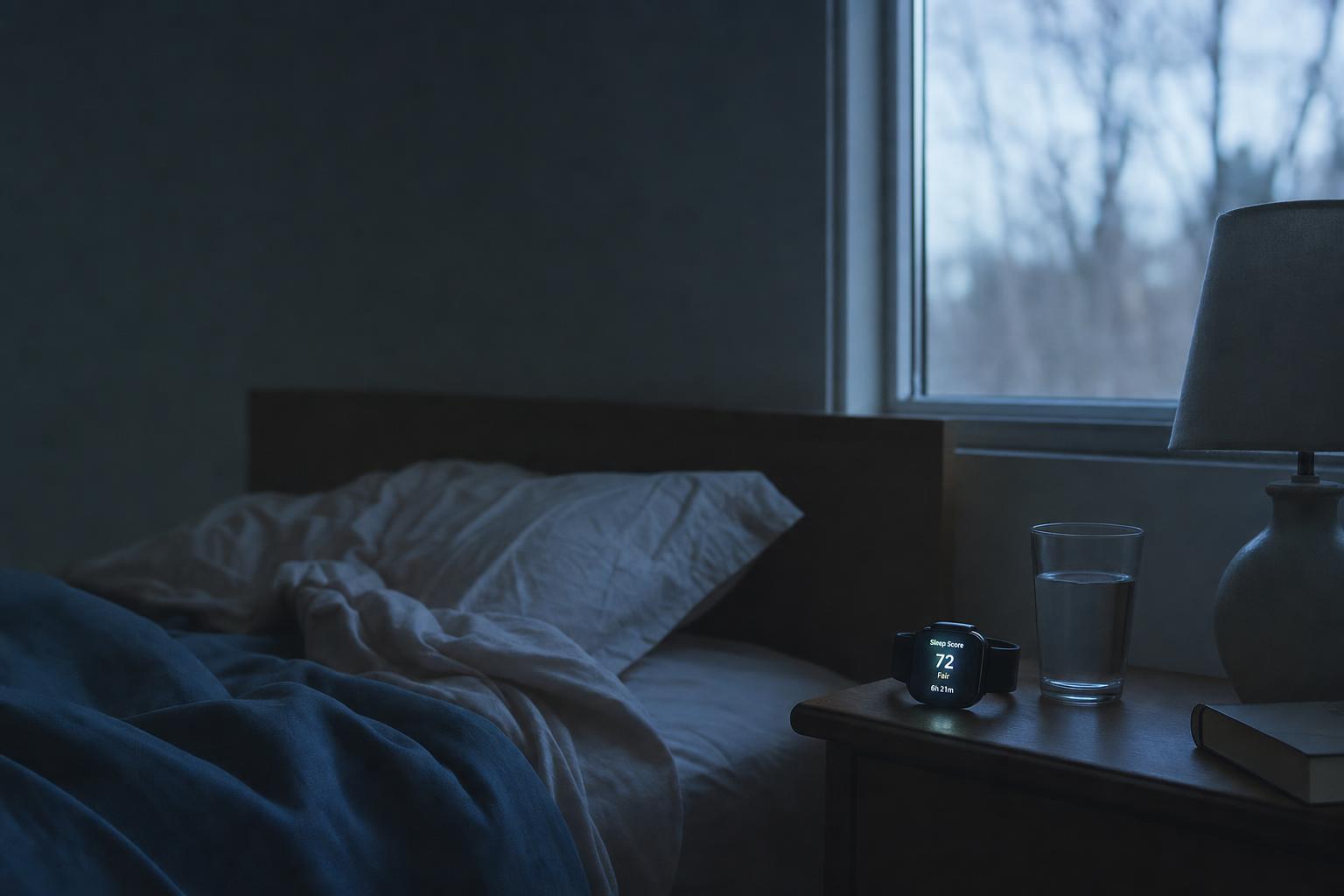
Apple has now given sleep a score. Oura has been doing it for years. The deeper story is not that wearable devices can estimate patterns in your nights. Of course they can. The deeper story is that a society trained to optimize everything is now learning to wake up and ask a ring or a watch whether the night was good enough to count as rest.
That is a cultural development before it is a medical one.
The hardware is real enough. Apple now issues a Sleep Score from 0-100, weighted across sleep duration, bedtime consistency, and interruptions. Oura has long built its user experience around a similar daily grade, supported by sleep stages, restfulness, heart rate, temperature, timing, and motion. The message is not subtle. You do not merely sleep anymore. You perform, the device evaluates, and the morning arrives with a number.
The comfort of the dashboard
One can see why people like it. Longitudinal data is not worthless. A person who consistently sleeps too little, wakes often, or keeps drifting into disorderly hours may genuinely learn something from seeing a pattern formalized. The devices can notice repetition better than moods can. They can also make sleep feel less vague, which is a great comfort to a culture that distrusts anything it cannot turn into a dashboard.
But that comfort has a price. The score begins to outrank the experience. You wake feeling tolerably restored, then glance down and find a 61. Or you slept badly, by any plain human standard, but the device offers an 84 and a little digital pat on the head. Which authority wins? That is the real shift. The score does not just describe the night. It starts competing with the body for the right to interpret it.
The industry now warns against its own habit
Even the industry has to speak carefully around the pathology it helped create. Oura has published about orthosomnia, the increasingly common habit of obsessing over sleep metrics, checking scores compulsively, and treating consumer data as though it were sovereign judgment. That contradiction is worth staring at. The same companies that trained people to receive a nightly grade must now explain that one should not become too attached to the nightly grade. It is rather like a casino hanging a sign about responsible gambling above the brighter machines.
Signal is not sovereignty
The clinical world is plainer about the hierarchy. Consumer sleep technology can help people notice habits, improve routines, and bring useful context into a conversation with a doctor. It is not a replacement for clinical judgment, diagnosis, or treatment. That distinction sounds dull, which is precisely why it matters. Reality is often dull at the point where culture becomes deranged. A wearable can estimate proxies. It cannot adjudicate the whole meaning of a night, still less the wider reasons a person is tired, anxious, ill, overstimulated, or simply living badly.
So the oddity is not that sleep is being measured. Industrial societies measure what they fear they cannot govern. The oddity is that something as intimate and involuntary as sleep is being drawn into the same permission structure as steps, calories, focus blocks, productivity streaks, and readiness metrics. We no longer merely sleep badly. We wake up waiting to be graded. The old question was whether one had rested. The new question is whether the score will allow one to believe it.
The bedside clerk
This is what optimization culture does when it runs out of obvious territory. It enters the bedroom, sits beside the bed like a polite clerk, and informs you in the morning whether the unconscious hours were acceptable. A useful device is one thing. A nightly authority is another. The score can remain a signal if it knows its place. The trouble begins when the number starts speaking with more confidence than the sleeper.
Sources
Apple Support, Track your sleep on Apple Watch and use Sleep on iPhone.
support.apple.com / track your sleep
Oura Member Care, Sleep Score.
support.ouraring.com / sleep score
Oura blog, Stressed About Sleep? How to Ditch Data Anxiety & Reclaim Your Rest.
ouraring.com / orthosomnia
University of Miami, Consumer Sleep Technology Can Support Better Sleep, With Limits.
news.med.miami.edu / sleep technology with limits