Europe and the United States have, for several years now, congratulated themselves for noticing rare earths. Mines are being permitted. Old workings are being reopened. Defence stockpiles are being topped up like the wine cellar of a household that has just remembered it has guests. None of this addresses the actual problem. The problem was never in the ground.
The problem is in the tank farm. The unglamorous middle step — the chemical separation of the seventeen rare earth elements into the pure oxides that magnet makers, electric motors, optics, radar arrays, and turbine generators actually require — sits almost entirely inside China. Mining is the romantic statistic. China accounts for around 60 per cent of world rare earth ore. The same country accounts for an estimated 85 to 90 per cent of global refining and separation capacity. The first number is a problem you can solve with permits. The second is a problem you can solve only with chemistry, water, waste, and roughly forty years of patient industrial discipline.
Mines are the lagging indicator
Pull rare earths from the lithosphere and you have a low-value concentrate of mixed lanthanides bound up with thorium and uranium. To turn that mess into the dysprosium, neodymium, and terbium oxides that an electric motor or an F-35 actuator can actually be built around, you need solvent extraction: hundreds of sequential mixer-settler stages cycling organic and aqueous phases through one another until each element drops out of the chain at the right point. The cascade is long, the chemistry is unforgiving, and the recovery margin is decisive. Chinese plants reportedly achieve recovery rates north of 95 per cent. Older Western installations sit closer to 80 to 85. In a market where the price per kilogram is thin and the energy bill is enormous, that gap is not cosmetic. It is the difference between competing and writing press releases.
The expertise behind that gap took decades to build. Senior solvent-extraction process engineers in China carry careers of fifteen to twenty years of plant time. Outside China that profession barely exists as a critical mass. Capital is now plentiful and the West has finally noticed. The people who can run a kilometre-long mixer-settler farm without poisoning the watershed are not.
This is why the April 2025 Chinese export controls on seven heavy rare earth elements, and the broader October 2025 expansion onto processing equipment, technical documentation, and operational know-how, should be read in their own grammar. Beijing did not weaponise the ore. It weaponised the chemistry, the kit that performs the chemistry, and the engineers who can teach the kit to behave. The current partial suspension of the October regime, scheduled to lapse in November 2026, is a diplomatic furlough. The licensing architecture has been built. It will not be unbuilt.
The Western response confuses motion with progress
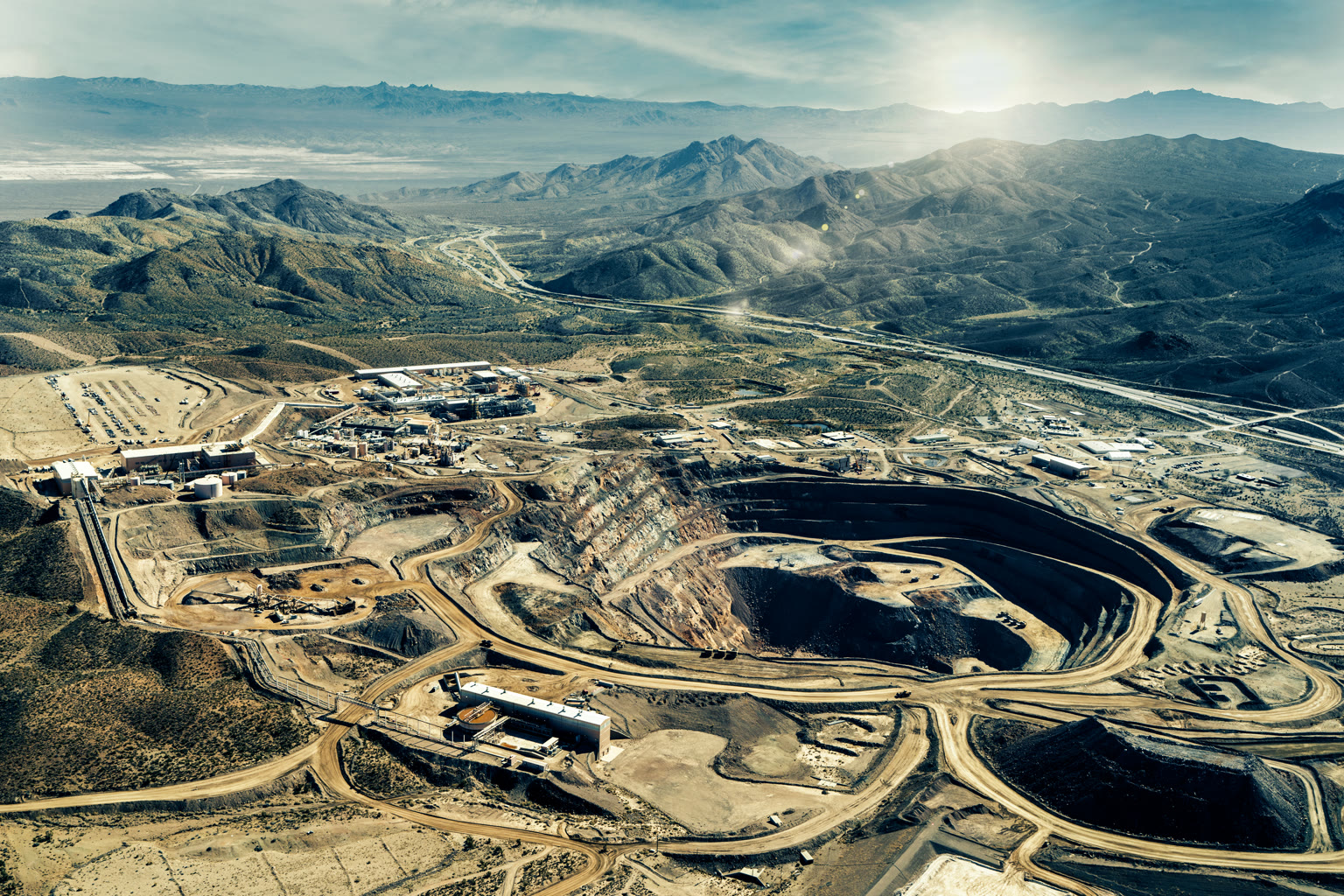
The Mountain Pass mine in California is producing again, MP Materials has commissioned its Independence magnet facility in Texas, and the corporate language has moved confidently from “ore” toward “fully integrated supply chain.” Lynas, the Australian operator, runs the largest non-Chinese separation plant in Malaysia and is bringing its Kalgoorlie cracking and leaching facility on line. Solvay opened a rare-earth processing plant in France in April 2025, with much of the initial output earmarked for American magnet customers. Neo Performance Materials has started magnet production in Estonia. Brussels selected forty-seven strategic critical-minerals projects in March 2025 for streamlined permitting and finance.
These are real. They are also small, relative to the gap. The Critical Raw Materials Act sets a 2030 European refining target of 40 per cent of annual EU needs across strategic raw materials, which is the right benchmark for the problem and almost certainly out of reach on the stated timetable. Independent analysis from Brussels-adjacent think tanks suggests that even in the best case, roughly 60 per cent of European processing will still happen overseas at the end of the decade. That is not strategic autonomy. That is dependency with a smaller chart.
Worse, much of the current Western activity is concentrated downstream of separation: magnet making, motor assembly, finished-product integration. All useful work. None of it touches the separation step itself, which is where China actually keeps the door. A magnet factory in Texas or Estonia that has to go shopping in Jiangsu province for its oxide feedstock is a different kind of independence than the press release suggests.
The chemistry is morally inconvenient
There is a reason solvent extraction has not relocated despite forty years of warning. Heavy rare earth refining requires large continuous water draws, generates significant radioactive thorium tailings, demands serious energy intensity, and runs best at a scale that does not fit gracefully next to a housing development. China built its capacity in a regulatory environment that did not invite long public consultation on tailings ponds. Europe and the United States have built theirs precisely to make exactly this kind of plant difficult.
That is a defensible posture, until the same political class demands strategic autonomy and a green industrial base. Those two preferences are not necessarily reconcilable on the existing terms. Either Europe accepts heavy chemistry back onto European soil, with its noise, its waste, its workforce, and its accident curve, or it accepts that the magnets in its turbines, the alloys in its missiles, and the motors in its cars will continue to be separated in chemical parks the European political class would not personally tour. Both choices are defensible. Pretending the dilemma does not exist is the only choice that guarantees defeat.
This is the McGilchrist problem in industrial form. A culture that has decided refining is beneath it eventually discovers that its sovereignty is also beneath it. The post-Cold War West built a service economy around the conviction that the dirty middle steps of industry could be permanently exported as a matter of taste. The middle steps did not consent to remain exported. They acquired political weight. The country that retained them is now the country that decides whether your wind farm gets built, whether your munitions plant keeps producing, and whether your car company has motors next year.
What seriousness would look like
A serious European response would do four things and accept that they require political nerve rather than another communiqué.
First, treat ore extraction as an entry condition rather than as a victory. A mine without an attached separation circuit is a colonial supply node for someone else’s industry, regardless of which flag flies over the pit.
Second, direct the largest single block of CRMA funding into solvent-extraction chemistry at industrial scale: tank farms, wastewater treatment, radioisotope handling, continuous-process engineering, the unromantic kilometre of mixer-settlers. The boutique demonstrator plant has had its decade. The vehicle now required is the unfashionable industrial complex of several hundred hectares with its own rail spur, its own dedicated grid connection, and an engineering school close enough to feed it people.
Third, take the human bottleneck seriously. China spent four decades training process engineers in this discipline while Europe and the United States spent the same period closing chemistry departments and discouraging anyone clever from working in heavy industry. The talent gap will not close through immigration filters and culture-war complaints about engineering schools. It will close only if Western states treat industrial chemistry as a strategic profession on the same footing as medicine or law.
Fourth, plan as though the November 2026 expiry of the partial Chinese suspension is real, and as though any negotiated extension is a tactical pause rather than a return to a frictionless market. It is.
The mines, in some hopeful sense, are coming home. Until the chemistry comes with them, sovereignty is a press release with a hard hat in it. The empire of the next decade will not live at the pit head. It lives in the tank farm, in the patient career of the process engineer, and in the regulatory courage of states willing to admit that real autonomy is also real dirt.
Sources
IEA, With new export controls on critical minerals, supply concentration risks become reality — on the April 2025 Chinese export controls covering seven heavy rare earth elements and the broader pattern of weaponised processing dependence.
https://www.iea.org/commentaries/with-new-export-controls-on-critical-minerals-supply-concentration-risks-become-reality
Global Policy Watch (Covington), Heavy Rare Earth Elements: Rising Supply Chain Risks and Emerging Policy Responses — on the October 2025 expansion to processing equipment, technical documentation, and operational know-how, and the partial suspension running to November 2026.
https://www.globalpolicywatch.com/2026/02/heavy-rare-earth-elements-rising-supply-chain-risks-and-emerging-policy-responses/
CSIS, Developing Rare Earth Processing Hubs: An Analytical Approach — on the structural difficulty of replicating Chinese separation capacity, the long lead times for Western processing build-out, and the limits of mine-only thinking.
https://www.csis.org/analysis/developing-rare-earth-processing-hubs-analytical-approach
European Commission, Critical Raw Materials Act — for the 2030 EU benchmarks: 10 per cent extraction, 40 per cent processing, 25 per cent recycling, and no more than 65 per cent dependence on a single third country at any stage.
https://single-market-economy.ec.europa.eu/sectors/raw-materials/areas-specific-interest/critical-raw-materials/critical-raw-materials-act_en
Jacques Delors Centre, The EU’s critical raw materials predicament: ReSourceEU to the Rescue? — for the assessment that even under best-case CRMA execution roughly 90 per cent of extraction and 60 per cent of processing will still occur overseas in 2030.
https://www.delorscentre.eu/en/publications/detail/publication/the-eus-critical-raw-materials-predicament
Image: Mountain Pass Rare Earth Mine & Processing Facility (2022) by Tmy350, via Wikimedia Commons. Licensed under CC BY-SA 4.0; cropped from the original.
https://commons.wikimedia.org/wiki/File:Mountain_Pass_Rare_Earth_Mine_%26_Processing_Facility.jpg
