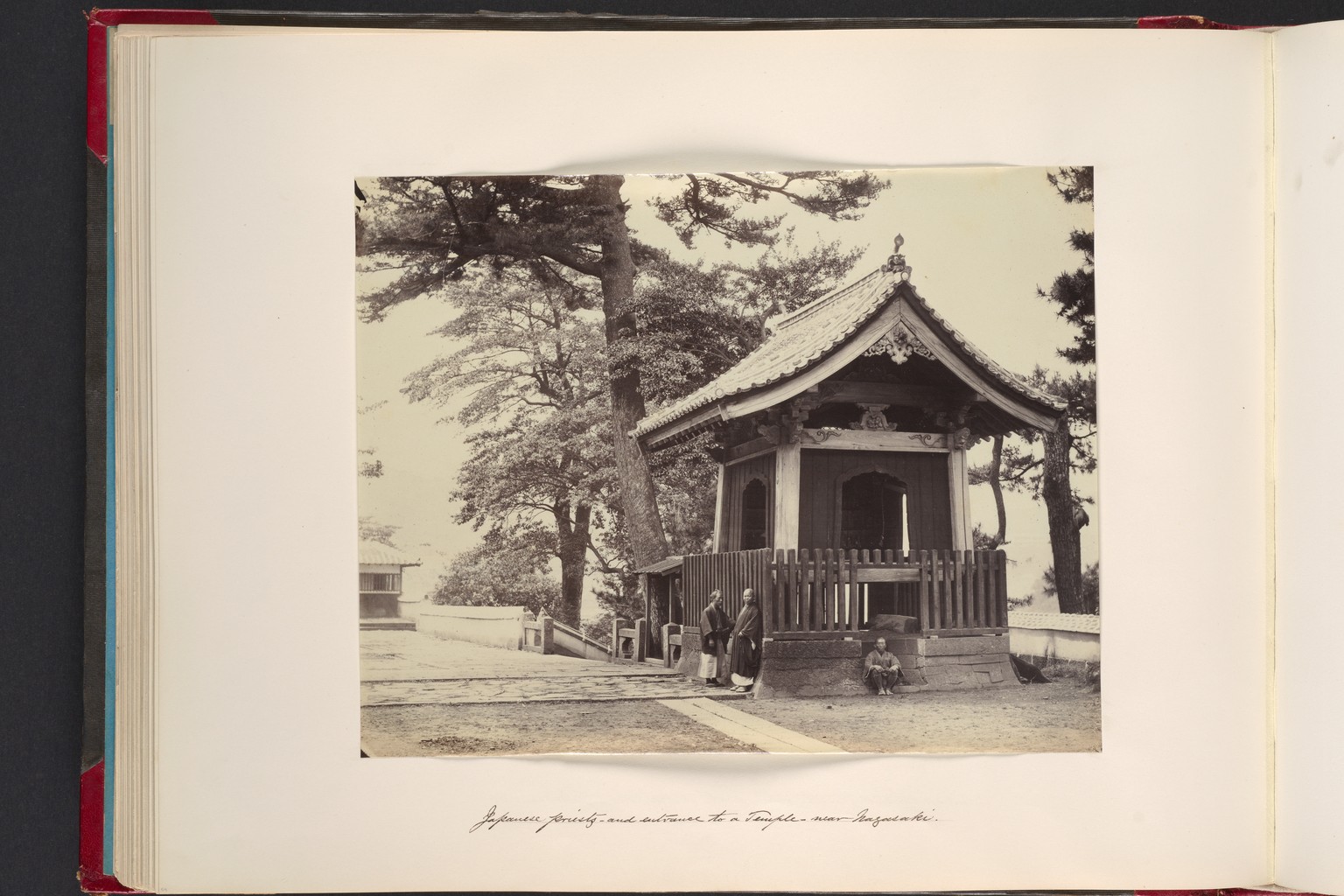
There is a small failure built into the contemporary European flat. One comes in from the rain, the bicycle, the tram, the supermarket, the office, the various portable humiliations of the day, and immediately one is in the house. The shoes continue. The bag is dropped. The phone is still talking. A child asks a question while the key is in the lock. The interior receives the whole weather system of the street without even the decency of a customs desk.
Japan kept a better piece of equipment. The genkan is the lowered entrance at the front of a house or apartment: a hard-floored area where shoes are removed before one steps up into the living floor. Its dimensions vary wildly, from a narrow metropolitan ledge to an ample country vestibule. Its grammar does not. Outside remains below; inside begins above. The body has to make a small, literal adjustment before the household receives it.
That step is doing more work than a shoe rack. It is a boundary without a lecture.
A Floor Level Is a Sentence
Traditional Japanese domestic plans made the distinction physically clear. The earthen or hard-floored doma belonged to work, weather and practical traffic; the raised rooms, often tatami-floored, belonged to domestic life. The genkan developed as the formal entrance, first with a particularly legible role in elite and samurai houses, and then as a ubiquitous part of the modern home.[1] The exact history is more complicated than the tourist brochure, as histories usually are. The spatial proposition is not: clean floor, dirty shoe. It is: different actions deserve different ground.
Architecture understood this before efficiency discovered that all transitions were friction. Churches have narthexes. Roman houses had an atrium before their inner rooms. The Islamic iwan and the Chinese screen wall both slow the direct gaze from street to household. An old Amsterdam voorhuis once mediated between trade and family. A threshold is the little jurisdiction where the public world loses its first claim on you.
The modern cult of open plan erased much of this. It mistook uninterrupted sightline for generosity and uninterrupted access for freedom. The result is not freedom. It is a house with no immune system: shoes beside the sofa, work spilling into the kitchen, deliveries and notifications arriving in the same visual field as supper. We have made the front door a USB port.
Inside and Outside
The Japanese distinction between uchi and soto — inside and outside — is social as well as spatial. It helps organise address, obligation, belonging and the calibrated manners of a society that does not pretend every relation is the same relation.[2] The genkan gives this distinction a floor level. A visitor is greeted there. A delivery is received there. Shoes are aligned there. One does not have to make a speech about intimacy; the house has already made one in timber and tile.
To flatten this into a national character would be silly. Japan has overcrowded apartments, exhausted commuters, ghastly property speculation and more vending machines than any civilisation strictly requires. A genkan will not save a society from overwork, nor turn a badly designed apartment into a monastery. But it preserves an intelligence many wealthy societies have misplaced: arrival is not instantaneous.
One takes off shoes not because a nation has become hysterical about dust, but because the body needs a small rite of translation. Outside shoes carry pavement, speed, obligation and other people’s demands. Indoor slippers, socks or bare feet are not purer. They are simply differently addressed. Even the minor choreography — turning shoes toward the door, not leaving them pointing into the room — says that departure and return are real acts, not glitches between calendar events.
The Lost Fifteen Seconds
There is a predictable objection: surely this is an exquisite cultural detail being inflated into lifestyle theology. Fair. The wellness industry has ruined enough ordinary gestures already, and it is perfectly capable of selling a “mindful arrival station” for six hundred euros, probably in oat-coloured felt. Damn its little scented heart.
The point is plainer than that. A house needs about fifteen seconds in which nothing productive is asked of the person entering it. Put down the bag. Sit briefly. Remove the shoes. Hang the coat. Place the phone somewhere that is not your hand. Notice who is already in the room. These are not productivity hacks. They are the sequence by which a person becomes available again.
Habits survive better when the room carries them. A hook beats a resolution. A bench beats a motivational podcast. A shallow drawer for keys and phone is more morally serious than another essay about attention, including this one. The room does not nag; it merely makes the better action easy enough to occur before the worse one has put its shoes on.
The Minimum Viable Threshold
No one in Amsterdam needs to reconstruct a Meiji house in a nineteenth-century stairwell. That would be cosplay, and bad cosplay has already taken enough prisoners. The useful question is smaller: what would make the boundary between street and home legible in the space one actually has?
Give the door a landing place. It may be no more than a metre of clear floor, but it must not be storage overflow. The entrance is where one changes state; do not make it a landfill.
Provide a seat. A low stool or bench makes shoe removal, waiting and helping a child ordinary rather than cumbersome. The body understands furniture faster than it understands intentions.
Let the coat and bag finish their journey. A proper hook, one drawer, one place for wet shoes. The apartment should not force its inhabitants to carry the street through three rooms before it permits them to set it down.
Keep one surface empty. Emptiness is not a luxury here. It is the usable part of the object, as the hollow is the useful part of a cup. An entrance covered in unopened parcels tells the nervous system that the day has no edge.
None of this requires money worth mentioning. It requires attention, which is harder to finance because the market cannot put it on a monthly plan.
The First Room
Our age is obsessed with the performance of interiority. It buys lamps, throws, espresso machines, scented candles, plants that will die in corners, and then wonders why the house still feels like a work annex. But domestic life is not created by the middle of the room. It starts at the edge.
The genkan offers a stern little lesson in hospitality. To be home is not to own a sealed volume of private real estate. It is to cross a threshold and become, for a while, a different kind of person: less available to the street, more available to those within. The first room need not be handsome. It need only be honest enough to ask for the transition.
Put a bench by the door. Take off the shoes. Let the phone wait a moment. The century will survive without immediate access to you. It has, regrettably, survived much worse.
Sources
[1] Sato, Masao, “Genkan (the Main Entrance) in the House of Samurai,” Journal of Architecture and Building Science, 1959.
https://doi.org/10.3130/aijsaxx.63.2.0_581
[2] Takie Sugiyama Lebra, Japanese Patterns of Behavior (University of Hawai‘i Press, 1976); Jennifer Meagher, “Constructing an Interior Public: uchi and soto in the Japanese Sharehouse” (2017).
https://doi.org/10.1080/17406315.2017.1373442
[3] Japan Guide, “Japanese Homes,” on the entrance area, shoe removal and the distinction between hard-floored entry and raised living space.
https://www.japan-guide.com/e/e2025.html
[4] The Metropolitan Museum of Art, John Thomson, Japanese Priests and Entrance to a Temple, Near Nagasaki, 1865, Open Access collection record and source image for this essay’s lead visual.
https://www.metmuseum.org/art/collection/search/728170