Contemporary design has acquired a vulgar habit. It no longer wants merely to make the object. It wants to narrate it, moralize it, eroticize it, and wrap it in such a dense fog of founder feeling that by the time the thing reaches the table it is carrying more biography than use.
The cup suffers from this especially. A cup used to be allowed a modest life. It held coffee, tea, water, perhaps soup if the household had a little peasant intelligence left in it. It did not need to announce a values framework. It did not need a launch campaign. It did not need to promise that the morning would become more intentional because a creative director in Copenhagen had once rediscovered clay after burnout.
Now even the simplest vessel is expected to arrive trailing a small liturgy. The glaze must come with a worldview. The handle must imply ethical refinement. The packaging must suggest a life conducted at the exact altitude between wellness and erotic scarcity where expensive people like to imagine themselves living.
The object that knows how to keep quiet
The tragedy is not merely that this is silly. Plenty of commerce is silly. The deeper problem is that narration has started replacing judgment. People are asked to buy the atmosphere around an object because they no longer trust themselves to see the object directly. Design, in other words, increasingly assumes that perception has collapsed and must be bribed with story.
But a decent cup requires no such bribery. Its intelligence is legible in silence. One sees immediately whether it sits properly on the table, whether the lip is right, whether the wall is too thick, whether the handle invites fingers or merely poses for them, whether the thing will age with dignity or chip like a vain little liar. These are not mystical questions. They are questions of proportion, weight, and service.
Service is the word contemporary design culture dislikes most, because service implies hierarchy. The object is not the star. The object is there to support a human act. To hold warmth. To make a morning easier. To enter the room without demanding applause. This is humiliating for an industry drunk on self-expression, because it suggests that the highest form of design may be not performance but tact.
Domestic life is not a branding surface
The home has paid dearly for this confusion. Domestic life is now treated as a stage set onto which companies project identity packages for anxious buyers. Every shelf becomes content. Every breakfast becomes an aesthetic declaration. Every ordinary household rhythm is invited to imagine itself under soft commercial lighting.
This is one reason so many interiors now feel both expensive and curiously exhausted. They are full of objects that have already explained themselves too much. A room becomes restful partly through reticence. The best domestic forms leave spare attention in the air. They do not occupy every inch of the psychological field with story, posture, and implied membership.
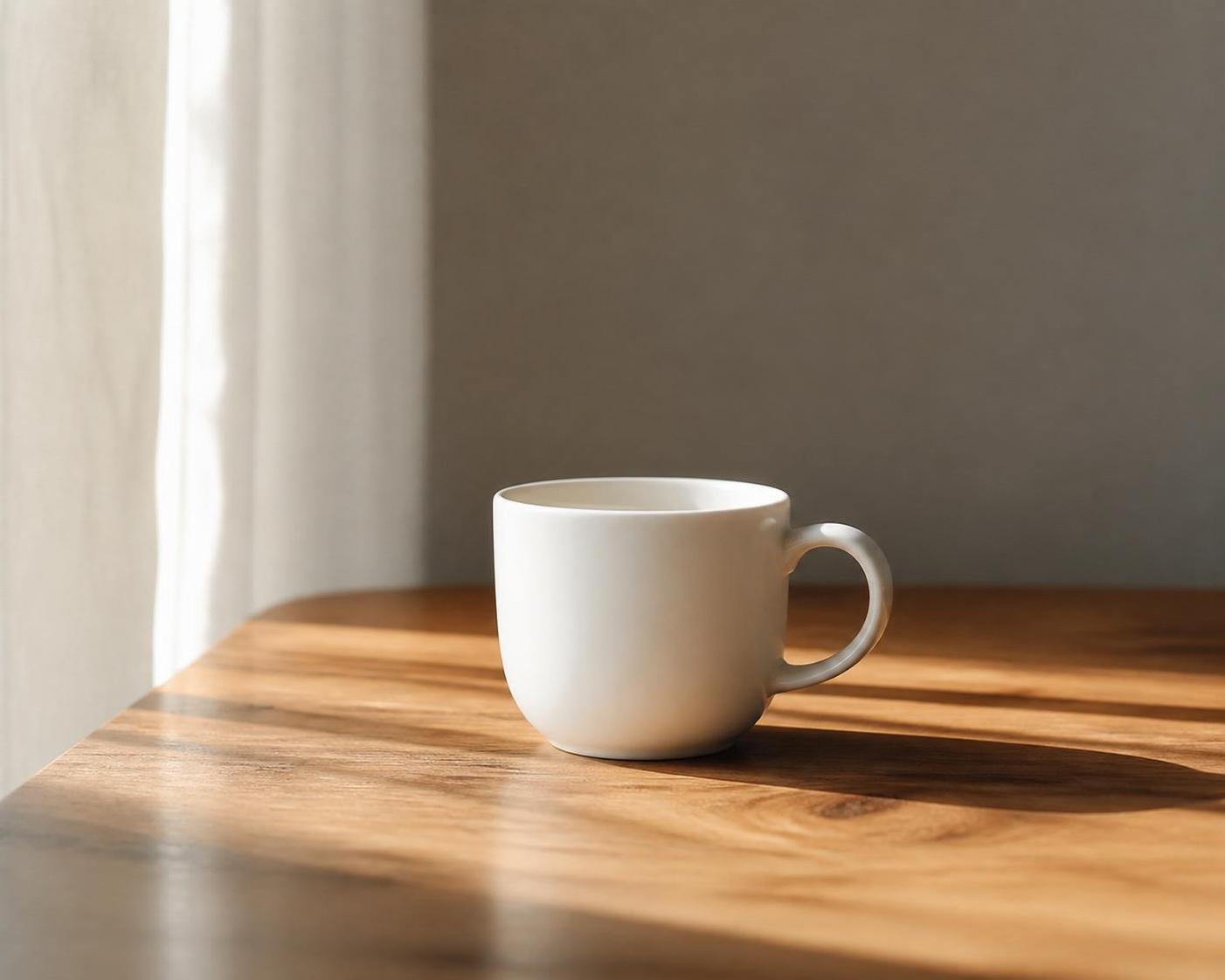
The white cup in morning light still belongs to the older civilisation of use. It does not ask to become personal branding. It does not try to turn hydration into an identity. It performs a tiny act of discipline instead: it confines function neatly enough that the mind can move on to more important things.
Against the founder cult of ordinary things
One of the uglier symptoms of our time is the migration of entrepreneurial vanity into objects that ought to remain ordinary. A mattress, a towel, a lamp, a spoon, a cup: each must now be accompanied by a visionary voice explaining why this category has been disrupted at last by radical care. It is as though the market cannot tolerate a simple household form unless some immaculate pilgrim in cashmere has suffered publicly on its behalf.
The point here is not to despise new companies on principle. Some make excellent things. The point is to restore the correct scale of reverence. A cup is not redeemed by a pitch deck. It is redeemed, if that word may be used at all, by surviving daily handling without becoming ugly, awkward, or tiresome. It earns affection the old way: through long obedience to function.
This is also why truly good objects often look slightly anonymous. They are not empty. They are disciplined. They do not insist on a signature where a proportion would do. They do not treat the user as an audience member. They behave as if life outside the frame still matters, which immediately makes them more civilised than half the contemporary design economy.
The moral advantage of enough
There is a larger lesson here. A culture unable to let simple objects remain simple becomes spiritually noisy. It turns every corner of life into message traffic. It forgets the dignity of enough. The ordinary white cup rebukes this without rhetoric. It says: here is the vessel, here is the table, here is the light, now get on with living.
That sentence, if one listens carefully, contains more design wisdom than a month of branded discourse. Restraint is not emptiness. Silence is not lack. The household object at its best does not impoverish experience. It protects experience from being overmanaged.
This is why I still trust modest forms more than designed personalities. The modest form knows what it is for. The designed personality usually does not. It compensates with language, campaigns, and ceremonial self-importance. The cup simply holds.
That may be the most adult quality an object can possess.
Image: original editorial still life generated for HW, June 2026.