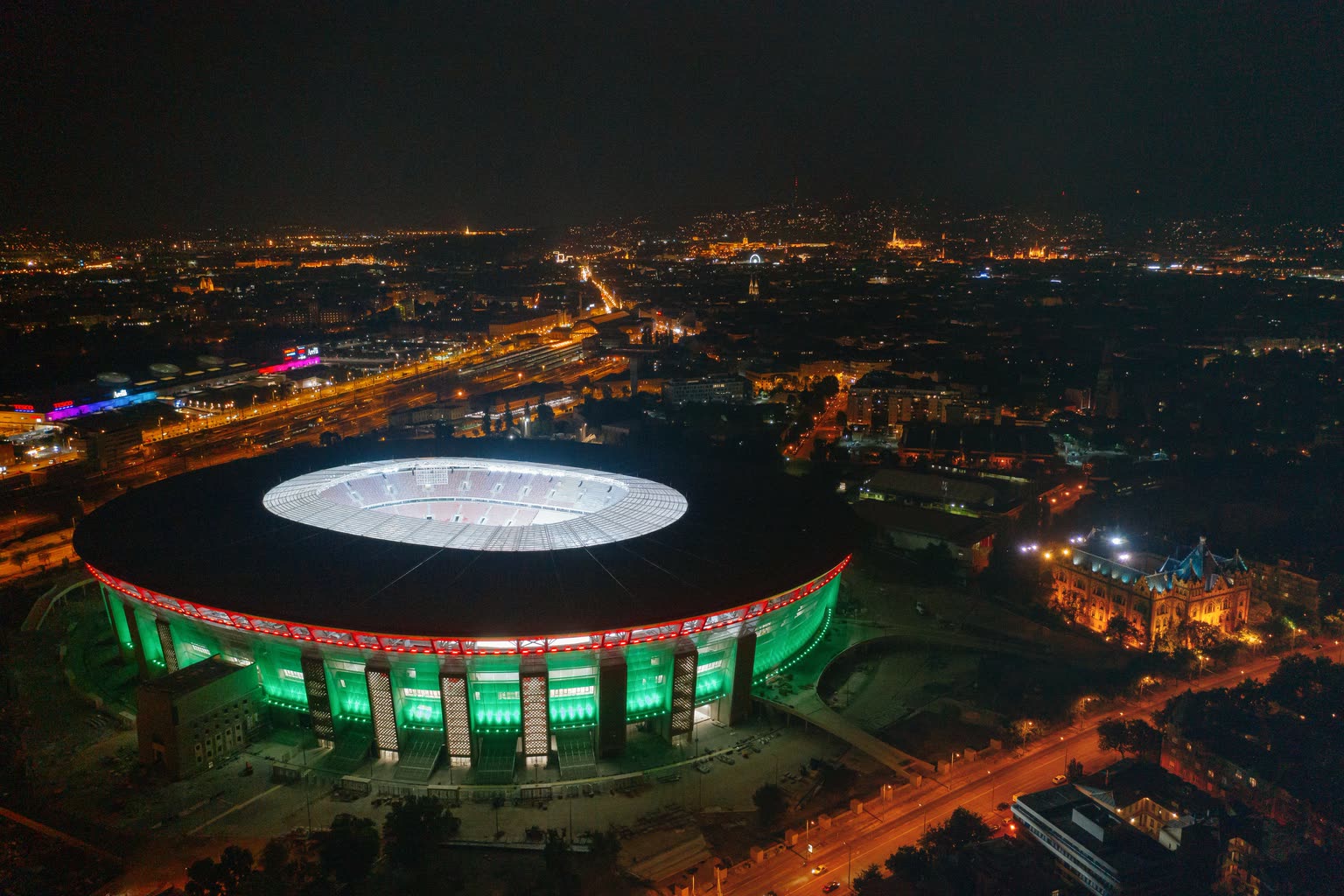

Paris Saint-Germain beat Arsenal 4–3 on penalties at the Puskás Aréna, after a 1–1 draw in extra time.[1] Kai Havertz scored after five minutes. Ousmane Dembélé equalised from the spot. Gabriel Magalhães missed the last kick. PSG joined Real Madrid as the only club in the modern era to win back-to-back Champions League titles.[1] The Parisian flag is at the top of the European pyramid for a second consecutive year.
This was a perfectly happy story for the players, who will be celebrated and paid accordingly. It was also a happy story for the Qatar Investment Authority, whose sporting subsidiary, Qatar Sports Investments, has owned PSG since 2011. The losing club, Arsenal, is controlled by Kroenke Sports & Entertainment, a Denver holding company belonging to the American billionaire Stan Kroenke. Neither principal lives in the city whose name is on the front of the shirt. Both regard their respective clubs as components in a larger asset book. The final was, in the strict sense, structurally external to its own continent.
The Big Five no longer belong to the Big Five
This is no longer an exotic situation. Multi-club ownership groups now hold stakes in roughly 48% of clubs across the Big Five leagues in the 2025–26 season, up from about 42% the year before, with around 125 such groups overseeing close to 380 clubs worldwide.[2] Approximately 47% of those investment groups originate in the United States.[2] The continent that gave the world the modern football club has substantially outsourced their ownership to capital pools managed in New York, Greenwich, the Gulf, and a small number of Asian sovereign vehicles.
The English Premier League is the most visible specimen. Newcastle United is 85% owned by Saudi Arabia’s Public Investment Fund, the same sovereign wealth vehicle that manages around $940bn in assets and is building a parallel domestic league on the side.[3] Manchester City is the flagship of City Football Group, which owns thirteen clubs across five continents and is ultimately controlled by Sheikh Mansour bin Zayed of Abu Dhabi.[2] Chelsea was sold in 2022 to a consortium led by Todd Boehly and Clearlake Capital for £4.25bn.[3] Liverpool belongs to Fenway Sports Group of Boston. Manchester United is owned by the Glazer family of Florida, with INEOS now holding around a quarter of the football operation. Aston Villa belongs to Wes Edens of Fortress Investment and Nassef Sawiris. Even Leeds, until recently a textbook regional club, is the property of 49ers Enterprises, the investment arm of the San Francisco NFL franchise, on an internal valuation of £527.5m with a stated £1bn target by 2030.[4]
Italy is in the same place. AC Milan is held by the American group RedBird Capital. Internazionale was taken over by Oaktree Capital, also American, after the Chinese Suning group defaulted on its loan. France is built around Qatar’s permanent interest in PSG and a long tail of clubs owned by Saudi, Bahraini, and American investors. Germany, still partly protected by its 50+1 rule, remains the awkward exception that proves the pattern. The Bundesliga has not collapsed into the same arrangement for the simple reason that its legal architecture makes hostile capture difficult, which is also why the financial press considers German football quaintly underexploited.
This is not really about football
The pattern is not a coincidence. Football is one of the few remaining objects on the planet that combines mass cultural reach with permanent emotional captivity and minimal local substitutability. Manchester United supporters do not switch to Manchester Citizens when prices rise. PSG fans do not migrate to Lille. The customer cannot leave. That is what every other industry calls a moat, and what the people writing the cheques call an underpriced asset.
For the sovereign funds, the logic is brand reach and soft power. Qatar paid a few billion for PSG, hosted a World Cup, and bought itself a recurring presence in every Sunday afternoon on every continent that watches Ligue 1 highlights. Saudi Arabia bought Newcastle and is staging the expanded FIFA Club World Cup with the same instinct. The UAE bought Manchester City and reproduced its house style across thirteen brand outlets from Mumbai to Montevideo. These are not financial trades. They are foreign policy expressed through fan loyalty.
For American private equity, the calculus is different but no less material. European football is treated as an undervalued media-and-property asset, ripe for the same financial engineering already practised on NBA franchises, regional sports networks, and minor-league baseball. The model is to buy the club, restructure its commercial rights, exploit the stadium real estate, refinance through a sale or a holding-company recapitalisation, and exit at a higher multiple. The trophy lifted in Budapest is, on this view, a marketing event in support of a future leveraged buyout.
The supporter has been quietly reclassified
The consequence at street level is small in any given week and enormous over a generation. The supporter, in the older European arrangement, was a member of an institution. He paid a season ticket, he stood in his usual place, he had a vote of sorts in how the club was run. In the new arrangement, he is a renewable resource: a unit of ambient atmosphere whose noise is required for the broadcast product, and whose price tolerance is tested at the start of every season. Liverpool’s recent climbdown on a three-year ticket-price escalation, after sustained supporter pressure, made the underlying assumption visible: fan resistance is a friction to be managed, not a constituency to be respected.[5]
The same logic flattens the sporting product itself. American owners want fewer relegations, more guaranteed inventory, longer windows, bigger TV bundles. Gulf owners want the championship at any cost. Both want some version of the European Super League, sooner or later, because both want their asset insulated from sporting risk. The continental football architecture, with its promotion and relegation, its small-town romance, its uncertainty about who will be in next season’s competition, is precisely the part that confuses a balance sheet. It is the part that will be steadily shaved off.
UEFA is policing the wrong corner of the field
UEFA has a multi-club ownership rule, Article 5 of the Champions League regulations. It forbids one owner from holding control or decisive influence over more than one club entered in the same competition.[6] In practice, UEFA has spent the last three years issuing exceptions, blessing blind trusts, and adjusting deadlines. In December 2025 it confirmed there would be no substantial change to Article 5 for 2026–27, and that the 1 March assessment date was “strict and absolute”.[7] The integrity rule survives intact on paper. The phenomenon it was meant to address now sits at nearly half of the Big Five and is climbing.
The deeper failure is conceptual. Article 5 is concerned with the competitive integrity of two clubs meeting in a knockout. It is not concerned with the civilisational integrity of the continent’s most popular cultural form being transferred wholesale to capital pools that do not live in the city, do not pay tax in the city, and do not particularly care about the city. That second question is, properly speaking, a political question. Europe’s political institutions have so far decided it is not theirs.
Football as cultural policy, if anyone still wants to try
The Bundesliga’s 50+1 rule is not perfect, but it works for precisely the reason it irritates investors. France, Spain, Italy, the Netherlands, and Britain could, in principle, adopt some version. UEFA could insist on local-supporter representation on every club board, on hard caps for multi-club exposure, on real transparency over ultimate beneficial ownership, on dividend restrictions, on stadium-naming controls, on minimum reinvestment thresholds inside the host city. None of this requires inventing a new regulatory grammar. It only requires deciding that football is, in fact, a cultural institution and not an alternative-assets bucket with terrace songs attached.
I do not expect this to happen, because the continent’s political class has spent the last decade demonstrating that what it considers untouchable is mostly whatever has not yet been monetised. The cup will spend the year in Paris. The dividends will spend the year elsewhere. The competition called the Champions League is increasingly a tournament in which European cities supply the songs, the stadiums, the unpaid emotional labour, and the postcards, while the trophy itself sits on the desk of someone whose stake in their continued existence is purely instrumental.
The next final will be the same. The one after that will be the same. At some point Europe will notice that the last popular institution it had left has been quietly sold while the broadcast was on.
Sources
[1] Olympics.com, “Paris Saint-Germain retain 2026 UEFA men’s Champions League by beating Arsenal on penalties”: result, scoreline, scorers, and back-to-back distinction.
https://www.olympics.com/en/news/football-uefa-mens-champions-league-final-2026-arsenal-psg-results
[2] PitchBook / UEFA European Club Finance and Investment Landscape: multi-club ownership share of Big Five clubs (2024–25 and 2025–26), global MCO group and club counts, US share of MCO investment, and City Football Group portfolio.
https://pitchbook.com/news/articles/private-equity-european-football-dashboard
[3] Premier League ownership snapshots for 2025–26, including Newcastle United (PIF stake and PIF AUM) and Chelsea (Boehly / Clearlake purchase price).
https://whoistheownerof.com/top-10-premier-league-club-owners-2026/
[4] Yorkshire Evening Post, “How much are 49ers Enterprises worth?”: Leeds United’s internal valuation, the £1bn 2030 target, and the Rangers takeover.
https://www.yorkshireeveningpost.co.uk/sport/football/leeds-united/how-much-are-49ers-enterprises-worth-leeds-united-owners-net-worth-amid-rangers-takeover-deal-agreed-5015297
[5] Goal.com / BBC, Liverpool’s revised ticket-price plan for 2026–27 after supporter protests.
https://www.goal.com/en/lists/liverpool-scrap-three-year-ticket-price-plan-after-fan-protests-premier-league/bltc6d4851406fe1c2d
[6] UEFA, Regulations of the UEFA Champions League 2025/26, Article 5 (“Integrity of the competition / multi-club ownership”).
https://documents.uefa.com/r/Regulations-of-the-UEFA-Champions-League-2025/26/Article-5-Integrity-of-the-competition/multi-club-ownership-Online
[7] LawInSport, “UEFA’s Multi-Club Ownership Rule Before CAS: The 1 March Deadline”: UEFA’s December 2025 confirmation that Article 5 would not be substantially revised for 2026–27 and that blind trusts are not a permanent safe harbour.
https://www.lawinsport.com/topics/item/uefas-multi-club-ownership-rule-before-cas-the-1-march-deadline-and-the-drogheda-united-decision-part-1