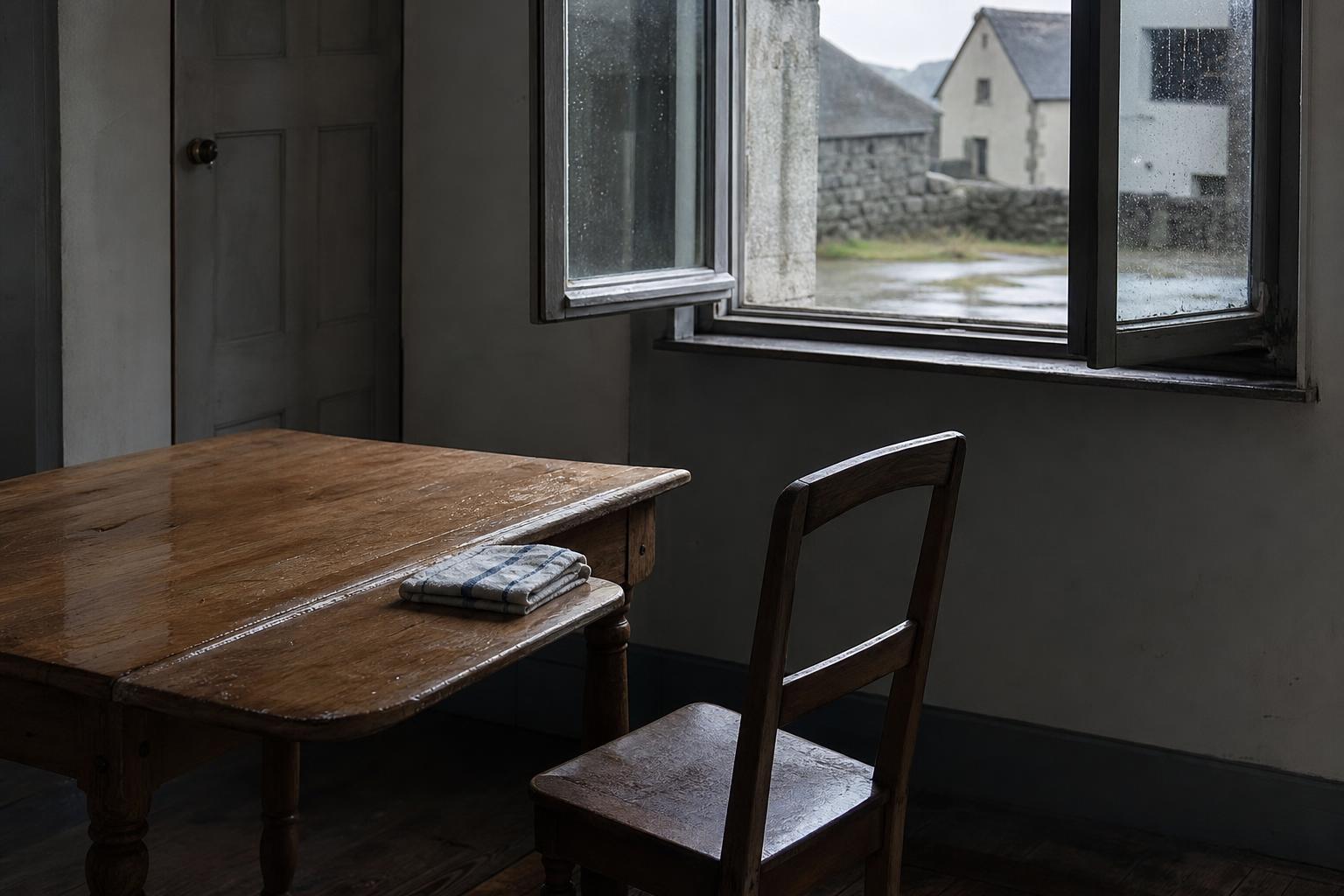
Rain leaves traces even indoors. The air grows heavier. A sleeve or tea towel stays faintly damp longer than it should. A chair drifts out of position. Glasses gather on the sill. Paper softens a little at the edges. Nothing dramatic has happened, exactly. The room has simply absorbed the day and begun, in its quiet way, to wear it.
The room after rain is diagnostic. It shows whether the people living there still understand the difference between occupying a place and keeping one. Many do not. They imagine that because the roof held, order held too. Shelter is not the same thing as stewardship. A room can stay dry enough and still fall into a low-grade atmospheric surrender: stale air, surfaces half-abandoned, cloth slung where it last landed, the whole place feeling not ruined but slightly defeated.
Modern domestic culture offers two equally bad responses. The first is to leave everything as it is and allow dampness, clutter, and mild disorder to settle into background climate. The second is to perform a decorative reset, all candlelight and scented consolation, as if atmosphere were something one bought in a jar. Atmosphere is not a product category. It is a maintenance task.
The better domestic instinct is simpler and older. Crack the window. Let the room exchange itself with the day for a while. Clear the surface. Rinse the cup. Wipe the wood. Hang the cloth properly. Return the chair to its line. Move the curtain back into place. None of this is grand. That is why it matters. Civilisation survives less often in heroic gestures than in the refusal to let conditions turn gummy.
People now speak far too romantically about mood and far too little about sequence. They wait for the mind to improve before improving the room, when the traffic often runs the other way. Wipe a table, open a window, set one thing back where it belongs, and the weather inside the head begins to alter with the weather inside the house. This is not mysticism. Human beings are porous creatures, and thought decays faster in neglected conditions than vanity likes to admit.
The room after rain asks for restoration rather than display. One is not trying to create coziness for a photograph, nor to stage some upholstered little myth of slowness. One is trying to make the room legible again. To let it stop carrying what the day no longer needs. The adult skill here is modest but rare: correcting atmosphere without turning the house into a spa for idiots.
That is why I distrust both domestic negligence and domestic theatre. The first produces rooms that feel vaguely given up on. The second produces rooms that seem arranged for an audience no one likes. Better the middle way: a room that has been used, then restored; lived in, then returned. A room with enough discipline to recover without ever seeming embalmed.
Before the evening closes in, then, open the window, wipe one surface, return one chair, and let the room stop carrying what the day has already spent.