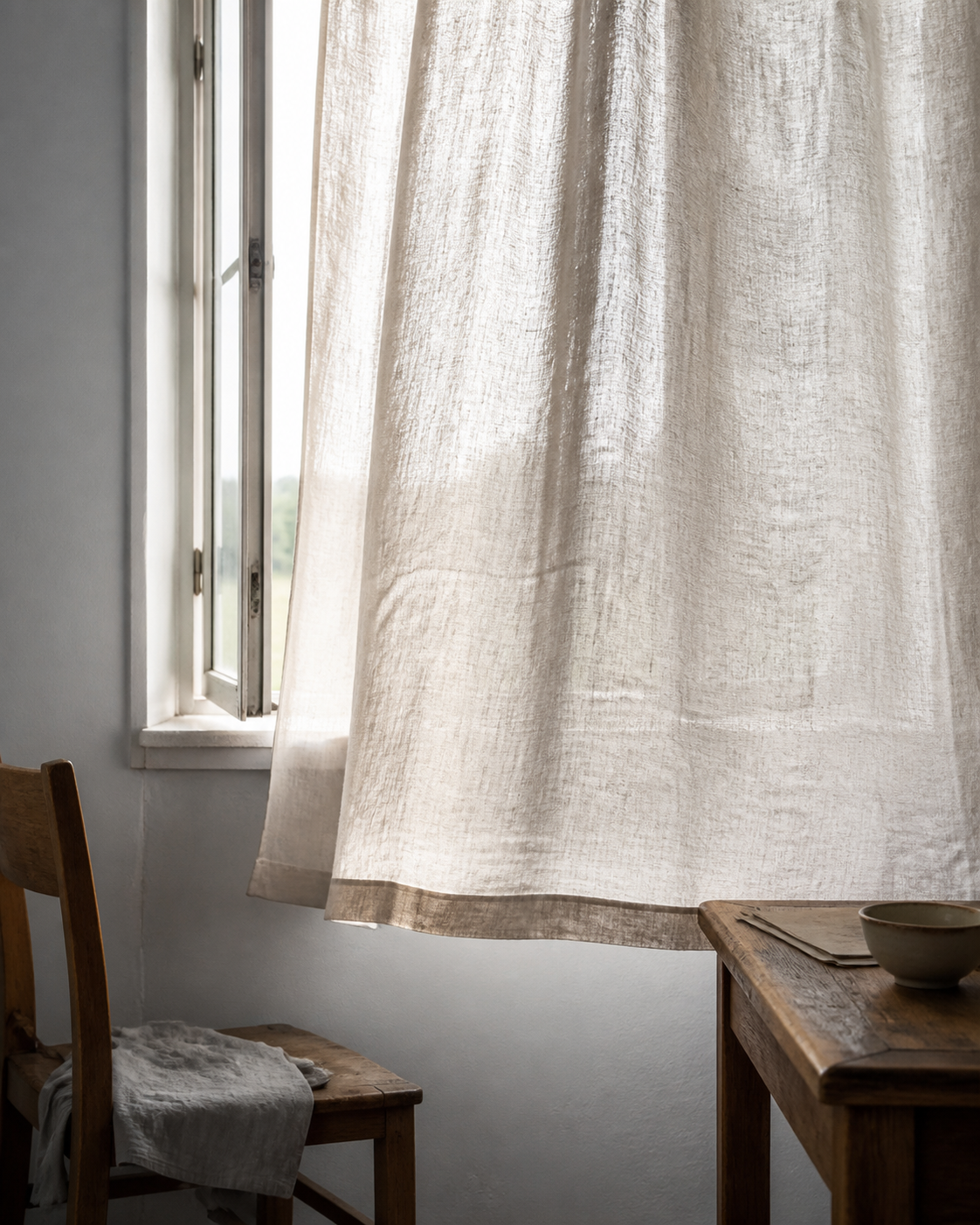
People now speak about curtains as though they were mainly decorative feelings. Fabric mood. Softness for the photograph. A good linen curtain has a more serious job. It regulates the terms on which the outside enters. Light is admitted, not worshipped. Heat is thinned, not dramatized. Privacy is kept without turning the room into a bunker. The curtain is not there to perform taste. It is there to improve the conditions under which life takes place.
Cheap domestic romanticism gets this wrong every time. One sees rooms arranged for atmosphere, with cloth hanging uselessly while glare pours across the table, the screen reflects itself into stupidity, and the air turns blunt by noon. Then somebody says the room feels calm. It does not feel calm. It feels unmanaged. Calm appears after adjustment. A linen curtain is one of those small civilizing instruments that makes adjustment possible without noise.
The best use is neither theatrical darkness nor permanent exposure. Morning asks one thing, late afternoon another. Pull it halfway to soften the vulgar hour. Open it enough to let the room breathe. Close it a little when the street begins performing itself too hard. This is not symbolism. It is proportion. Too much sun coarsens a room. Too much enclosure makes it stale. The curtain exists to keep both errors from governing the day.
Linen matters because it behaves honestly. It filters instead of sealing. It lets the light arrive with edges removed. It moves when air moves. It shows whether the window has actually been opened or whether one is merely staging the idea of freshness. Synthetic cloth can mimic the look, but not the conduct. A room does not become more grown-up because its materials are expensive. It becomes more grown-up when each material is allowed to do its proper work.
The moral lesson is small but not foolish. Most domestic disorder comes from people wanting effects without stewardship. They want brightness without glare, privacy without closure, softness without dust, atmosphere without maintenance. The linen curtain refuses this fantasy. It asks to be drawn, straightened, aired, washed, rehung. In return it gives something modest and excellent: a room whose light has been thought about by someone adult enough to intervene.
I trust houses more when their cloth is functional than when it is merely tasteful. A curtain should not beg to be admired. It should hang properly, temper the day, and leave the room easier to inhabit than it would have been without it.
Draw it for discipline, not mood. Then open the day again on purpose.