Modern interiors are overlit for the same reason modern language is overexplained: nobody trusts implication any more. Every corner must be made visible, every surface flattened, every mood sterilised into compliance. The result is a great many homes that look less like places to live than places to inspect dental equipment.
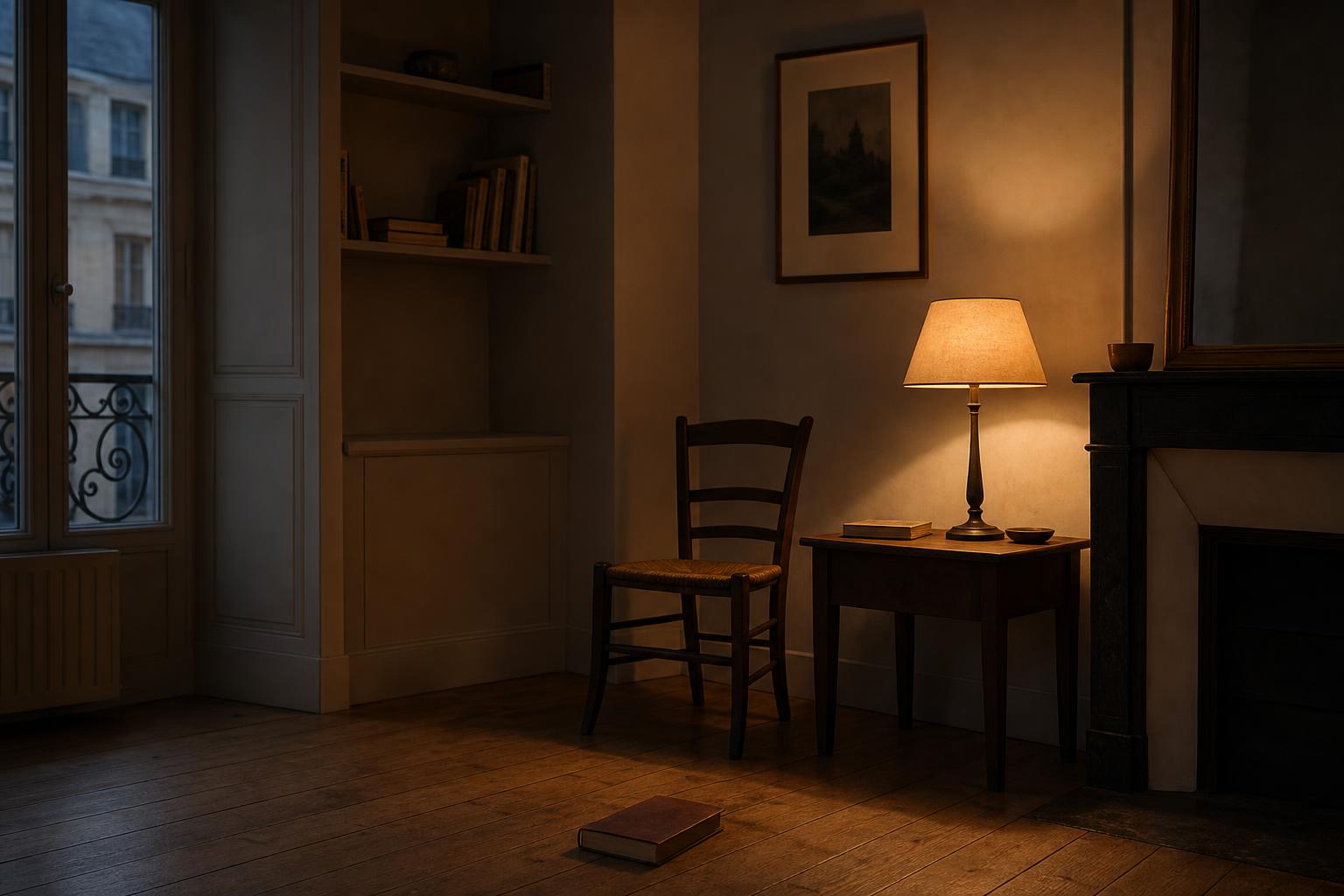
A good room at night refuses this. It does not hide itself, but it also does not submit to full interrogation. One lamp is often enough. Two, if the room is large and the company tolerable. The point is not dimness for its own sake. Bad restaurants also know how to be dark. The point is selection. Light should fall where life is actually happening: the chair, the book, the table edge, the glass, the hand reaching for something worth touching.
This is why I have a weakness for the lamp kept low. Not the designer monument to itself with a cable like a manifesto. Not the smart bulb, heaven preserve us, changing colour like a nightclub for people who say they are into wellness. I mean the ordinary domestic lamp whose shade softens the room and restores proportion. It makes reading possible without turning the walls into defendants.
Overhead light is sometimes necessary, of course. Kitchens are workshops; bathrooms are scenes of practical correction; one should not shave by candlelight unless one has a death wish or a period drama to justify. But the ceiling as default is a vulgar habit. It treats the room as a problem of coverage rather than atmosphere. Warehouses need coverage. Homes need judgment.
A lamp kept low creates hierarchy. It says: this corner matters now. This chair is occupied. This page deserves attention. It gives the room a centre without making a speech about intention. That is part of what makes it civilised. So much contemporary domestic styling is really just self-advertisement with cushions. Lamplight, when done properly, is quieter than that. It serves use before image, even when the result happens to be beautiful.
There is also a temporal intelligence in it. Daylight is democratic; it arrives for everyone and reveals whatever it pleases. Lamplight is chosen. It belongs to the evening, to return, to slowing down without collapsing. It acknowledges that night is not merely the absence of productivity but a different order of attention. A room with one low lamp and a book nearby still remembers this. A room flooded from above by cold LEDs has already joined the administrative state.
The matter is small, yes, but small things are where standards either survive or die. If a household cannot be bothered to think about its light, it usually cannot be bothered to think about sequence, silence, or the dignity of an hour. Then every evening becomes the same bright slurry: screens, glare, fatigue, snack wrappers, and conversation thin enough to pass through a mosquito net.
Keep one lamp low. Let part of the room remain in reserve. Let brightness be earned. The aim is not mood in the decorative sense. The aim is to remember that a room should help a person become more legible to himself, not less. After sunset that work begins, quite literally, with where the light falls.