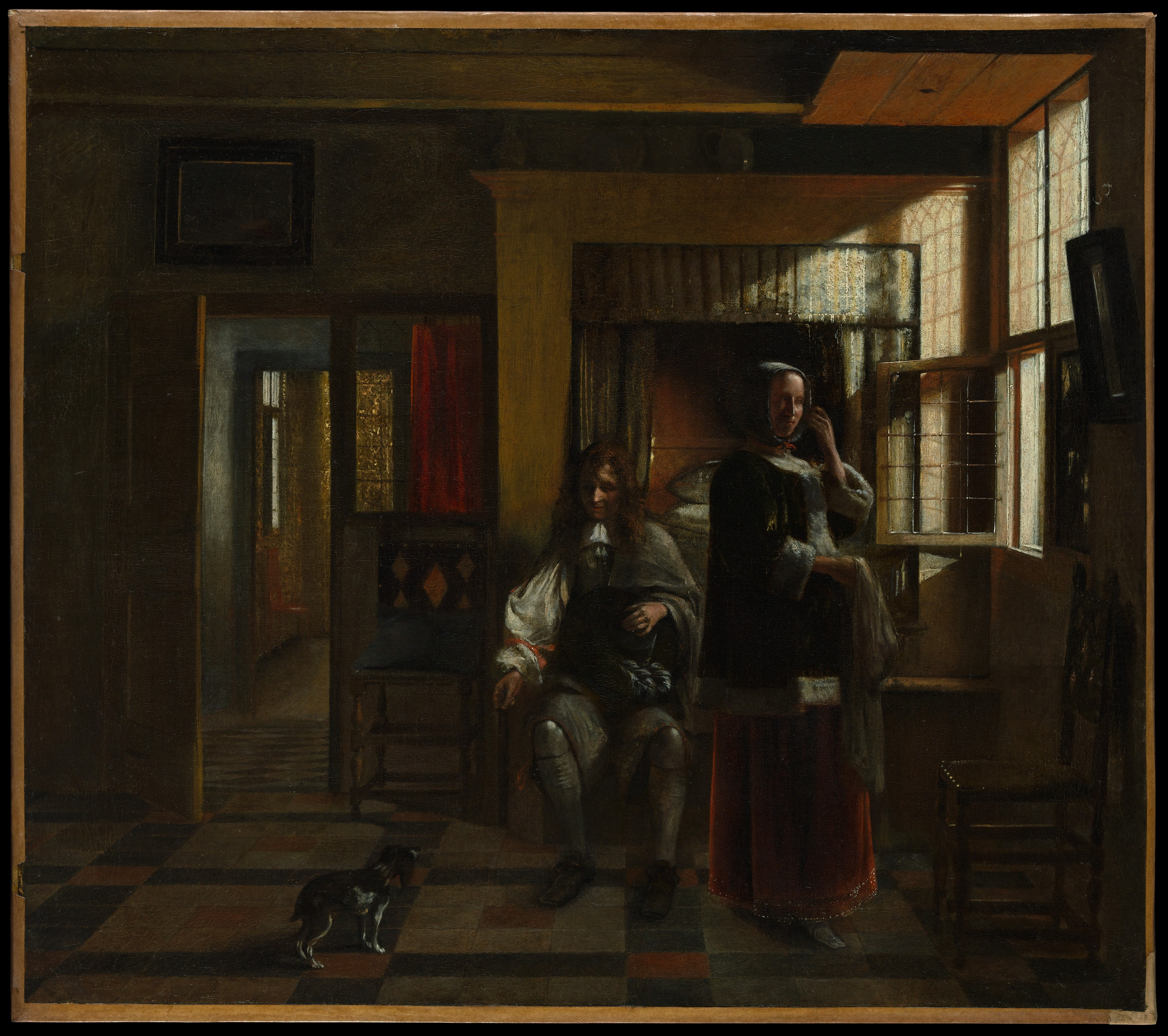
Modern domestic life is irrationally proud of removing doors. Every brochure for aspirational housing now promises flow, openness, connection, sightlines, and other words used by people who have never tried to read while someone else purees a soup, takes a call, or performs intimacy with a Bluetooth speaker. The open-plan room is sold as freedom. Very often it is merely the abolition of tact.
A good house understands that life has registers. Morning coffee is not supper. Work is not conversation. Reading is not chopping onions. One does not need a palace for this. One needs thresholds. A door, half-open or closed, says something that a square of empty architectural optimism never can: this activity has a contour. This hour belongs to itself.
The old interiors knew this instinctively. One room led to another, not as prison but as gradation. Hall, parlour, kitchen, study, bedroom: each with its own pressure, light, smell, and permissible behavior. The point was not social rigidity for its own sake, though that certainly had its tedious pageantry. The point was that space helped conduct the soul. It is easier to think when the room does not insist on being twenty things at once.
We have replaced this with the democratic swamp of the everything-room: kitchen, office, lounge, dining area, charging depot, laundry annex, cinema, nursery, and confessional, all vibrating in one visual field like a committee that has mistaken proximity for harmony. Then people wonder why they are tired, distracted, and mildly hostile by seven in the evening. Because the room never stopped asking for six incompatible versions of them.
A door between rooms does something subtle but decisive. It creates a pause. It lets one form of attention end before another begins. You leave the table and enter the kitchen. You leave the kitchen and enter the room where no appliance is permitted to whine. You close one door and the mind, grateful for even a modest frontier, starts to gather itself. Adults need this more than they admit. Most disorder now arrives not through catastrophe but through endless bleed.
This is why the finest domestic luxury is not abundance but articulation. A narrow corridor can be more civilising than a gigantic loft. A small room with a proper door can be more humane than an expensive warehouse in which every task must coexist under the same heroic ceiling. Architects and developers adore the theatrical void because it photographs well and flatters the fantasy of informal life. Real life, the poor bastard, needs concealment, interruption, and places where one sound cannot immediately colonise another.
Naturally one need not become doctrinaire. A house should breathe; it need not behave like a monastery designed by tax auditors. But some differentiation is mercy. A lamp lit in the next room. A partially seen table beyond the doorway. The sense that the evening may unfold by stages rather than detonate all at once in a single illuminated basin. These are not trivial refinements. They are forms of mental hygiene disguised as furniture and joinery.
Keep, then, the door between rooms — or if the builders have already committed their little crime, reintroduce thresholds by whatever means remain: a screen, a curtain, a shelf, a ritual of closure, some deliberate break in the visual empire of the everything-space. A home should not feel like one endlessly editable slide. It should feel like a sequence one can inhabit with dignity.