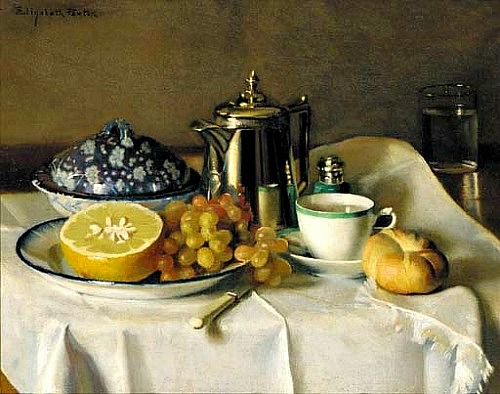
The tray is not exciting, which is one reason it remains trustworthy. It asks for neither admiration nor ideology. It simply gathers a few things that belong together and carries them from one place to another without turning the room into a refugee camp of cups, books, plates, glasses, crumbs, receipts, and minor domestic negligence. In an age that keeps confusing looseness with freedom, the tray is a small flat defence of form.
Most households would improve visibly if they owned one decent tray and used it on purpose. Not as decoration, certainly not as one more showroom prop with a candle, a book no one has read, and a bead necklace purchased by some ghastly woman in linen. I mean as an instrument. Coffee to the table. Tea to the chair by the window. Ice, glasses, and a bottle brought out at six. Breakfast moved intact instead of in four apologetic trips. The tray restores sequence to ordinary life.
What makes it civilised is not its look but its grammar. It creates a temporary whole. Objects stop behaving like unrelated little tyrants and begin acting as a set. Cup with saucer. Pot with spoon. Plate with napkin. The hand understands the arrangement before the mind bothers to make a principle of it. Good domestic objects often teach in this quiet way. They reduce friction without reducing dignity.
There is also a moral pleasure in containment. A tray gives a task edges. You can clear a corner of the room by lifting one thing. You can make a moment by assembling one thing. The breakfast tray is a cliché only because the underlying idea is sound: a meal arrives complete, with enough order around it that the morning has a chance to begin as a morning rather than as debris.
The modern interior, poor beast, has largely forgotten such distinctions. Everything is left out in the name of ease. Mugs migrate. Chargers breed. Half-read books reproduce on side tables like damp rabbits. The result is not casual abundance but low-grade visual taxation. The tray is a cheap and elegant countermeasure. It says: this cluster belongs together; that cluster may now leave the room.
I have a weakness for trays in wood, rattan, lacquer, bent metal, old hotel silver, even hard black plastic in the right setting. The material matters less than proportion and purpose. It should be large enough to hold a small world and small enough to insist on editing. That is the whole point. A tray that accepts everything has ceased to be a tray and become a horizontal alibi.
One sees versions of this intelligence everywhere serious domestic culture has existed. The Japanese tea tray, the Ottoman coffee service, the French breakfast service, the ordinary café server balancing more than dignity should permit: all understand that carrying is not merely transport but presentation. The movement from kitchen to table, sideboard to guest, shelf to chair is part of the ritual, not a neutral corridor between important things.
On a Saturday, when the week finally loosens its necktie and the house can recover some shape, the tray earns its keep again. Put coffee on it. Put cold water on it. Put olives, a knife, two small plates, and the bottle that deserves opening. Then carry the little world in properly. Life sags when nothing contains it. The tray, mercifully, still does.