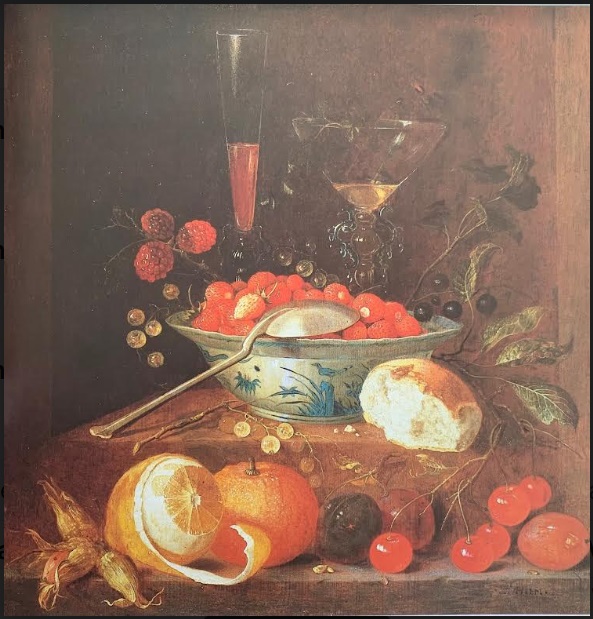
The spoon has almost no vanity left in it. This is part of its charm. Knives attract theatre. Forks arrive with little histories of etiquette and class anxiety. Cups invite design-school flirtation. The spoon simply goes on doing honest work: lifting broth, stirring coffee, carrying sauce, measuring sugar, testing a pot, feeding a child, serving an invalid, rescuing the last decent mouthful from the edge of a bowl. A civilisation that cannot manage a proper spoon is usually failing elsewhere too.
What I admire is its obedience to the mouth. The curve is not decorative. It exists because liquid needs holding and lips need meeting without incident. Good objects often carry this kind of embodied intelligence: they are shaped less by theory than by repeated acquaintance with the human animal. The spoon knows that nourishment is not an abstraction. It must cross a small distance cleanly.
There is also a quiet moral seriousness in the spoon because it teaches proportion. A spoonful is a unit of restraint. Not the whole pot, not the whole jar, not the vulgar heap that modern appetites keep mistaking for abundance. Just enough. Taste this. Add that. One more. No more. A cook learns judgment through the wrist long before he learns it through language, and the spoon is one of the wrist’s better tutors.
This is why I distrust those monstrous restaurant spoons designed to look clever on Instagram, all handle and attitude, barely usable unless one has the mouth of a decorative koi. The ordinary spoon is better because it remembers its task. It serves. It does not audition.
At home the spoon is rarely alone for long. It lives in sets, drawers, jars, cups by the stove, ceramic pots beside the sink. It belongs to the choreography of domestic life: the teaspoon against porcelain in the morning, the wooden spoon in the pan, the dessert spoon arriving after the plates have been cleared, the serving spoon that keeps the table from degenerating into clumsy reaching. It is one of the objects by which a house reveals whether it has been thought through or merely filled.
I like spoons that show use. Silver softening at the edges. Olive wood darkened by oil. Stainless steel with a faint dullness where years of washing have taken the showroom brag out of it. A spoon should not look untouched for long. Untouched domestic objects have something faintly sinister about them, like guest towels in a bad hotel or fruit arranged only for pity.
The spoon also belongs to older forms of care. One feeds the sick with a spoon. One gives medicine with a spoon. One cools soup for a child with a spoon. Even before one reaches sentiment, the object has already entered the realm of tenderness. The fork is a more martial instrument, the knife openly so. The spoon, by contrast, is cooperative. It offers rather than pierces.
Perhaps that is why it survives so well. However vulgar the century becomes, there remains some final limit beyond which food still needs carrying gently. On a Saturday, when the pace slackens and the kitchen can behave like a room again, I find that reassuring. Set out decent spoons. Stir something slowly. Taste the sauce before it goes to table. The spoon is a small curved argument for patience, and unlike most arguments now, it actually knows how to feed someone.