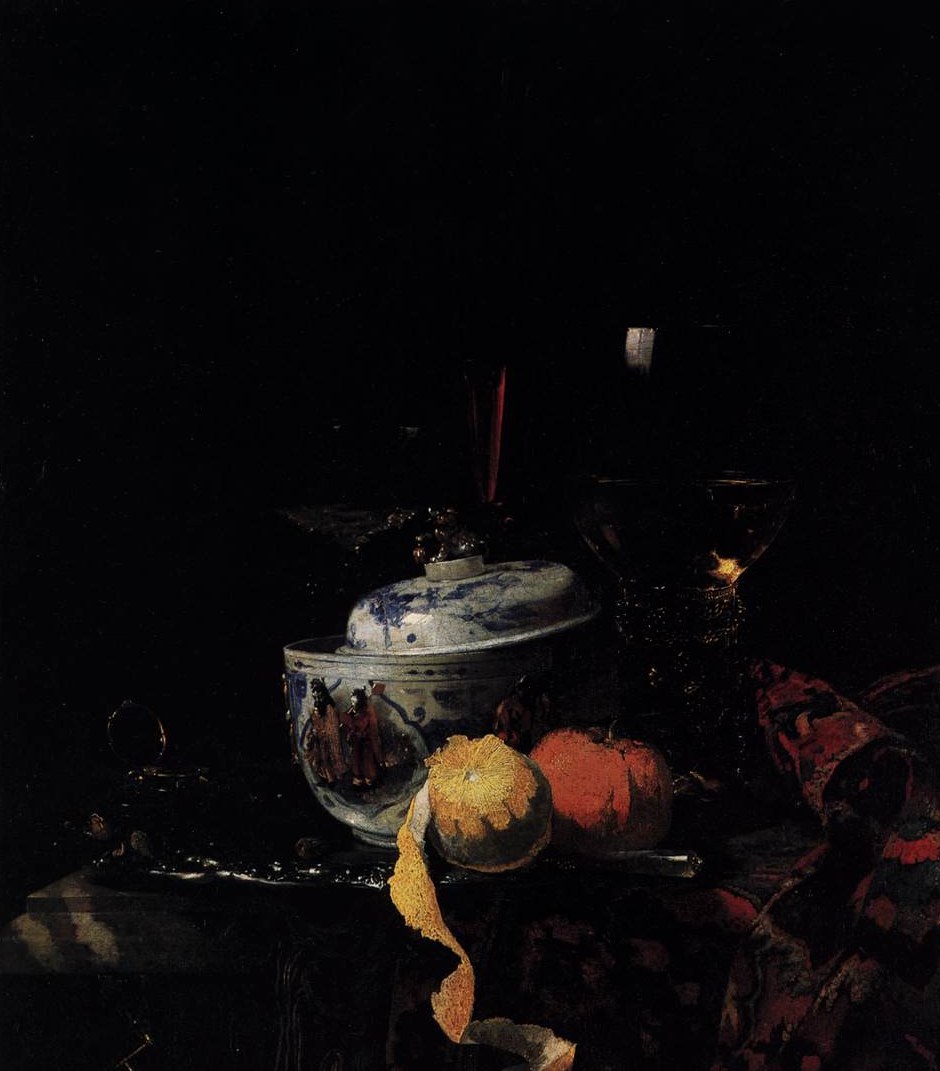
Unlike the plate, which spreads food outward into display, or the bottle, which encourages clutching and wandering, the bowl brings things back within reach. It contains without flattening. It offers without staging an event. This alone already makes it more civilised than a great many newer inventions.
What makes the bowl so enduring is not charm but correctness. It reconciles warmth, nearness, and portion with remarkable efficiency. Liquids settle in it properly. Steam rises from it properly. Hands understand it at once. A bowl can be held close to the body without absurdity. It permits eating that is neither theatrical nor hurried. Many modern objects are technically adequate but morally noisy. The bowl remains quiet.
That quiet has travelled well. East Asia gave it rice bowls, tea bowls, noodle bowls, congee bowls, the ceramic intimacy of meals designed to be lifted, steadied, and brought near. Europe kept its earthenware bowls, mixing bowls, serving bowls, monastery bowls, peasant bowls, chipped kitchen bowls that survived because they were too useful to discard and too honest to improve upon. Elsewhere came alms bowls, washing bowls, offering bowls. The point is not that many cultures happened to possess rounded containers. The point is that settled life keeps rediscovering the same shape because the shape solves a human problem at the right scale.
What I admire is the bowl's refusal of horizontal vanity. Modern plating often mistakes acreage for substance. Food is smeared, scattered, overexposed, then photographed by people who speak of curation when they mean lunch. The bowl resists this by insisting on depth. It stacks flavor instead of broadcasting it. Broth, rice, lentils, cherries, olives, morning yoghurt, late soup, a bedside handful of walnuts: everything in a bowl seems a little less foolish because the form asks the contents to cohere.
It also teaches proportion. A bowl is generous without becoming sprawling. It can hold enough, sometimes even plenty, while still preserving the outline of enoughness. This is one reason it belongs so naturally to domestic life. It disciplines abundance without making a speech about restraint. A child understands a bowl instinctively. So does an old man. So does anyone ill, tired, convalescent, or hungry in a serious rather than entertainment-seeking way. The bowl belongs to nourishment before it belongs to style, which already puts it several moral classes above most objects now marketed to the kitchen.
Naturally the age has tried to vulgarise it. We now have “bowl concepts,” health bowls, protein bowls, glow bowls, poke bowls assembled like investment portfolios, ceramic basins full of expensive confusion arranged by the sort of establishment that ruined the plate and then opened a wellness franchise. But this is not the bowl's fault. It only proves that when a form is good enough, the century will eventually drape nonsense over it. Underneath the performance, the logic survives.
A good bowl remains one of the most intimate tools of the house. It invites the two-handed gesture in winter. It receives what is mixed, simmered, washed, shelled, or shared. It sits on the table without demanding applause. Even empty, it suggests readiness. Not the aggressive readiness of a shaker bottle or the self-branding readiness of some monstrous café vessel with a matte glaze and a personal philosophy, but the ordinary readiness to hold what a day may actually require.
This is why I would trust a house sooner if I saw its bowls than if I saw its books about taste. Bowls reveal whether domestic life has any grip on reality. Are they stackable, usable, slightly worn, sized for actual eating? Do they feel good in the hands? Can they hold soup without mockery, fruit without ostentation, noodles without collapse? A civilisation may tell lies in its manifestos and still confess the truth in its kitchen cupboard.
On a Saturday, when the week loosens and the room has a chance to behave like a room again, the bowl earns its place once more. Fill one with something warm, or bright, or simple enough not to perform. Hold it properly. Eat without spectacle. The bowl is a small round argument for containment in an age that spills everything. Unlike most arguments now, it can still be put to useful work before the sentence is even finished.