The fresh walnut arrives without ceremony. A friend brings a small paper bag from a garden in Limburg, or one finds a modest pile at the Saturday market for less than the price of a bad coffee, and the shell is still faintly damp against the fingers, still smells of the outer husk, still carries a residue of the tree it fell from a week ago. This is not the winter walnut — that older, drier thing, well-travelled, oxidised, the kernel gone the colour of a smoker’s ceiling. The new walnut is pale, milky, almost sweet, with only the beginning of that bitterness at the skin that older nuts wear like a habit.
The correct instrument is not a nutcracker. A nutcracker is a piece of theatre, invented for households that want to be seen cracking walnuts. In a real kitchen the tool is already on the table: the butt of a small knife, applied to the seam of the shell, one honest tap, and the walnut opens in two clean halves. If it does not open, the walnut is not ready, or the tap was ashamed of itself. Try again with slightly more conviction. The walnut, unlike most modern objects, rewards a small unashamed act.
What comes out is not much: two pale lobes, a whisper of pith, a suggestion of oil where the kernel meets the shell. But taken with a shard of hard cheese — an old comté, a proper aged gouda, a piece of parmesan broken rather than grated — the walnut turns from a nut into a small argument for northern autumn. The cheese carries the salt the walnut lacks; the walnut carries the faint green oil the cheese has forgotten. Two things that spent the summer waiting for each other.
A piece of pear finishes the small triad. Not sliced, not fanned, not arranged: torn in half at the table, the flesh grainy and cold, still smelling faintly of the crate it came in. A pear at this hour of the year is the honest cousin of the fig two weeks ago — sweeter than it looks, softer than it pretends, embarrassed only by refrigeration. Put a corner of pear on the tongue, then a piece of the walnut, then a splinter of cheese, in that order, and the northern year suddenly stops arguing with the calendar.
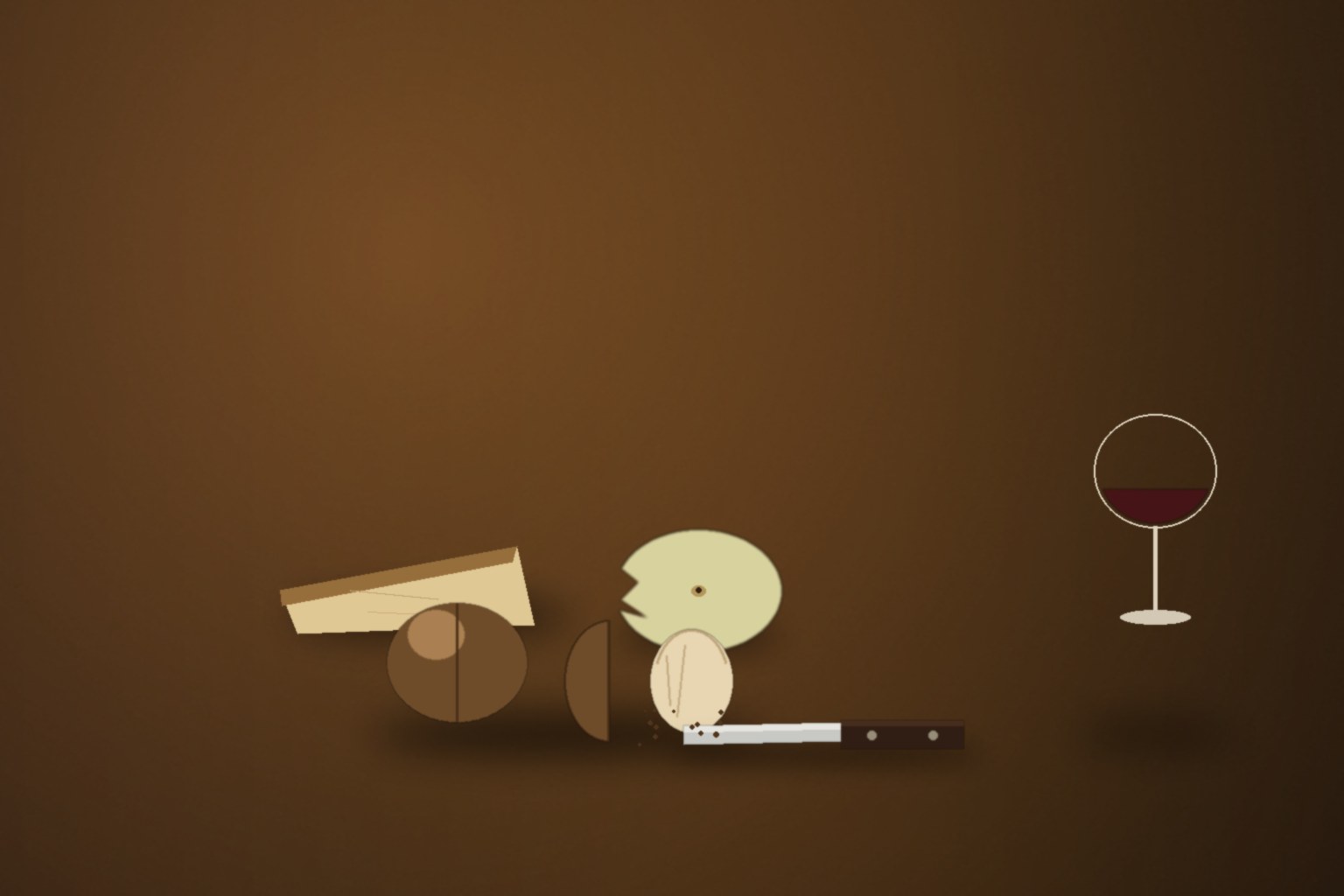
I do not believe in food photography, particularly of a walnut. There is no dish here. There is a dark table, a small square of cloth if one is being formal, a paring knife with a handle worn to the wood, two walnuts, a piece of cheese unwrapped from its paper, a pear torn by hand, and a plain glass of a wine that has no ambitions. A young Bourgueil, a decent Dolcetto, a cheap Portuguese red from the Douro that costs less than a taxi — anything with more earth than fruit. The wine is not the point. The wine is the small dark line under the sentence.
What I like about this meal is what it refuses. It refuses the plate. It refuses the pairing chart. It refuses the recipe. It refuses the photograph and the caption and the small applause of the feed. A walnut cracked at the table cannot be scaled. It cannot be delivered. It cannot be reduced to a step-by-step. In an age that has quietly turned every meal into a document, the fresh walnut is a small privacy: a food that will not sit still long enough to be branded.
There is also, if one is honest, a mild memento in it. The walnut in September is already reminding the room that the year is beginning to close its books. The fig, two weeks ago, was still borrowing warmth from an ended summer. The walnut is already keeping some in reserve. That is why the meal wants darker company: an older cheese, a slower wine, a pear rather than a peach, a lamp turned a little lower than one would have turned it in August. Wu wei at the table is not doing less; it is letting the season set the tempo, and refusing to force July onto a September evening.
Buy a small bag of the new walnuts the next time they appear. Do not decant them into a jar. Do not photograph them next to a linen runner. Put them on the corner of the table where you already eat. When someone comes in, unannounced and slightly cold, tap one open with the knife you already have in your hand, cut a piece of the cheese you already own, tear a pear in half, and pour two small glasses of the wine that was already open. The evening will do the rest, and by the time the second walnut is on the table, whatever needed to be said between you will have started to say itself.