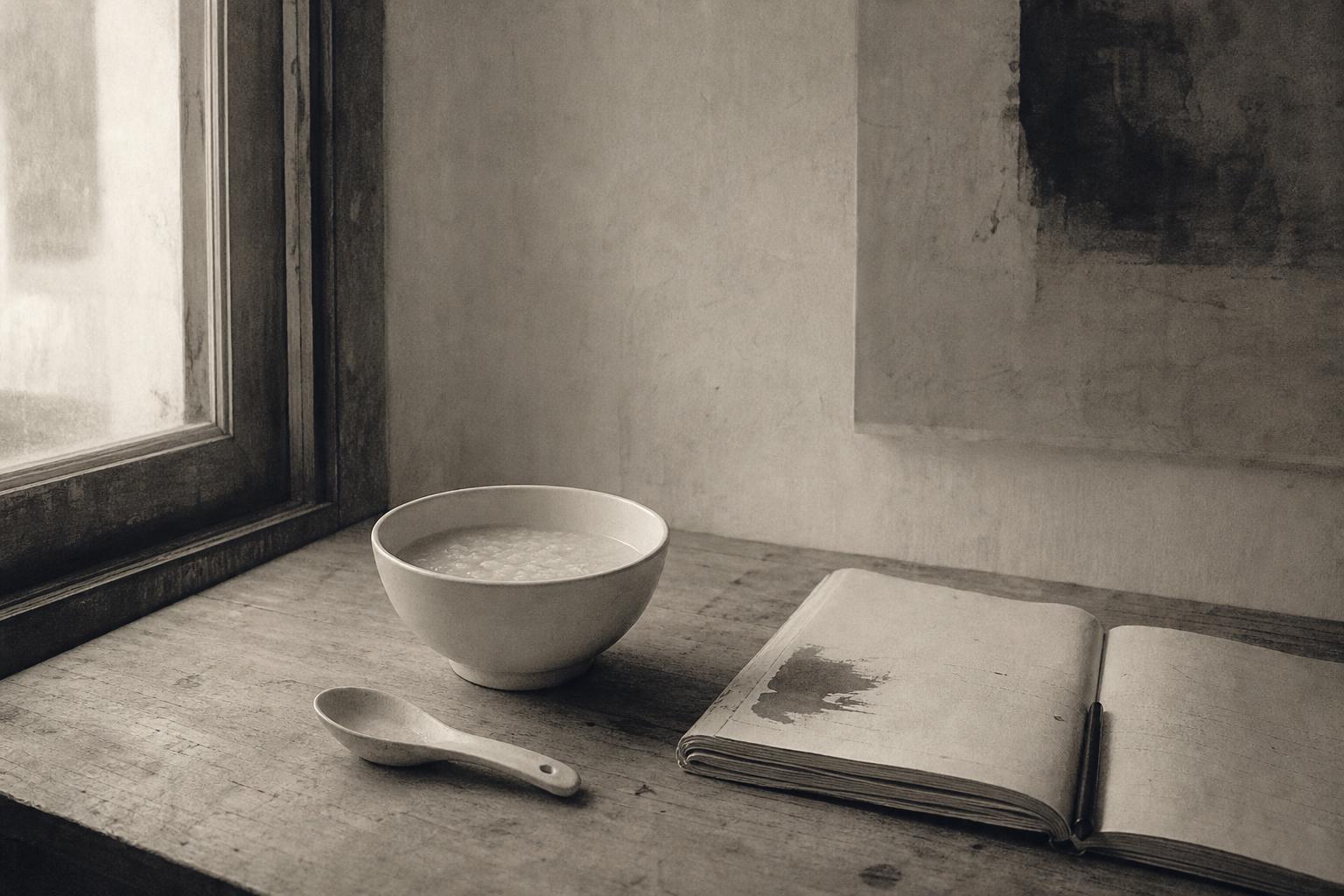
There are meals built for display and meals built for repair. The first category now dominates the public imagination: lacquered brunches, architectural sandwiches, plates assembled as if they were applying for cultural grants. They photograph beautifully and often nourish like gossip. Congee belongs to the second category. It is one of the great repair foods of civilisation.
Rice, water, time. That is the grammar. Everything else is dialect. Across China, Hong Kong, Taiwan, Korea, Vietnam, Singapore, Thailand and beyond, the form persists because the intelligence behind it is deeper than fashion. Grain is stretched without insult. Heat is used patiently. The stomach is given something kind rather than exciting. A culture that knows how to make porridge properly usually knows a few other important things as well.
What I admire in congee is not only comfort but restraint. It does not try to seduce you. It assumes that nourishment is reason enough. In a civilisation increasingly run by stimuli merchants, this is almost morally moving. The dish says: calm yourself, reduce the noise, begin again with something soft enough to receive thought.
Good congee is not baby food, still less hospital slurry. That is what careless people say when their tongues have been wrecked by excess. Proper congee has structure. The rice should surrender without disappearing. The liquid should carry body, not just moisture. Ginger should sharpen, not dominate. Spring onion should wake the bowl without turning it into a salad. A little soy, sesame oil, white pepper, perhaps shredded chicken or mushrooms if the day asks for ballast. Nothing in it should shout. The whole point is that it knows how to speak quietly.
It is also, incidentally, a lesson in economics. Congee understands how to produce abundance from modest means. It is anti-waste without becoming a sermon, frugal without theatrical deprivation, generous without vulgarity. Yesterday’s rice can re-enter the world with dignity. Bones can become stock. Scraps can become topping. The meal carries an old household truth modern affluence keeps forgetting: luxury is often just matter arranged by patience.
On Sunday morning this matters more than usual. The week has usually done some damage by then. Too many messages, too much coffee taken standing, too much language produced by people who should have been told to go lie down in 2019. One needs a meal that lowers the internal volume without lowering standards. Congee does exactly this. It restores without flattering the eater.
I would make it in a heavy pot, slowly, until the spoon begins to move through it with that small ceremonial drag that tells you the rice has finally given up its pride. Finish with ginger, spring onion, a thread of sesame oil, and something pickled on the side if the morning is especially grey. Serve it in a warm bowl. Sit down properly. No phones on the table. A newspaper if you insist, a notebook if you are serious.
This is the part the West keeps misunderstanding about so many Asian domestic forms. The refinement is not decorative. It lies in sequence, proportion, heat, texture, and the refusal to waste force. Congee is humble only to people who cannot read technique. To everyone else, it is what civilisation looks like when it has nothing to prove.