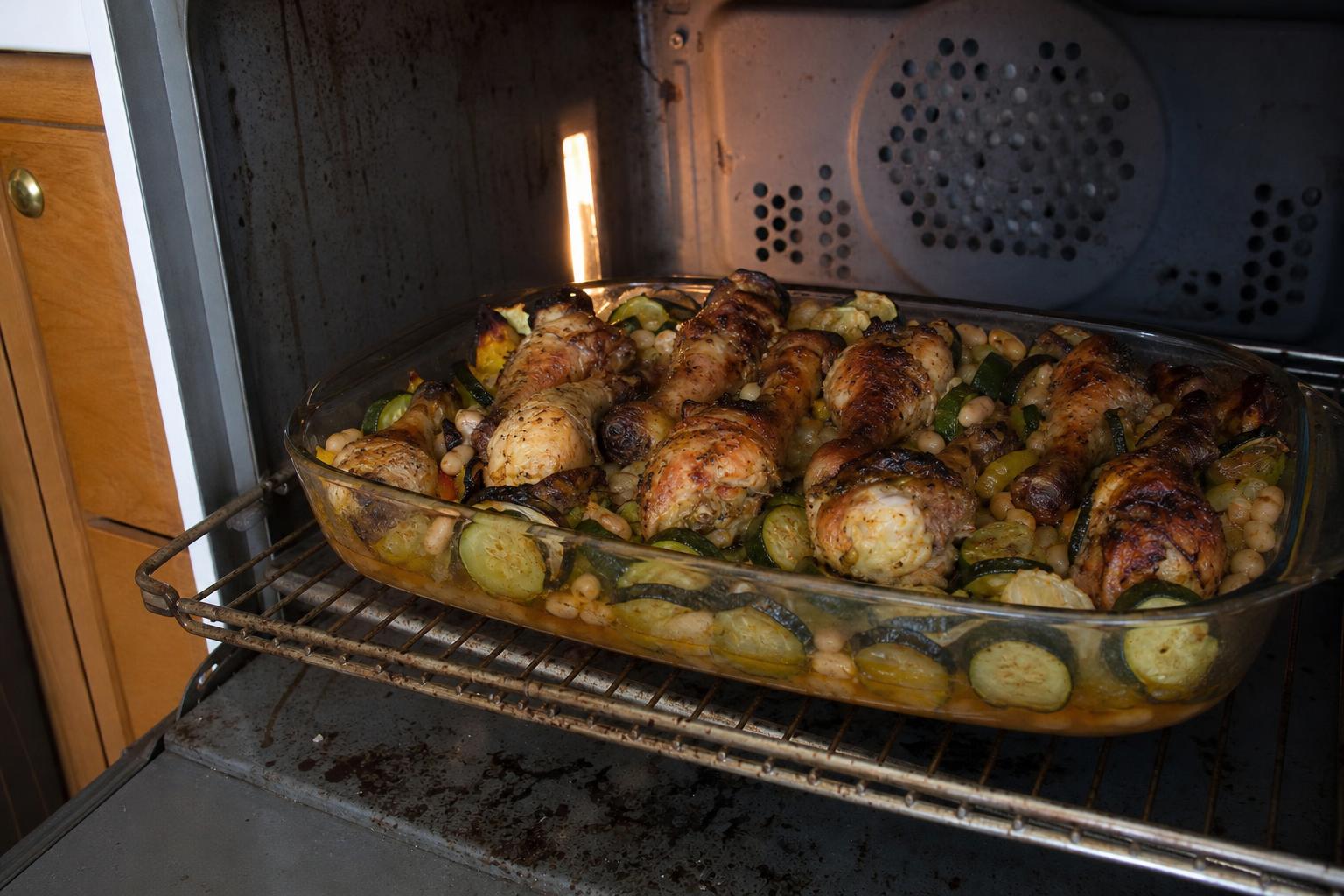
There is a vulgar modern habit of treating recipes as if they were assembly manuals for edible content. Everything must be flattened into equal steps, equal timing, equal importance. This is why so much everyday cooking now tastes like administrative procedure with paprika. A proper traybake, by contrast, is hierarchical. The chicken must be seasoned more aggressively than the beans. The beans must sit in enough liquid to soften and absorb. The vegetables must collapse without turning to swamp. And the potatoes, if one has any self-respect left, should not be thrown in from the start like conscripts.
This one begins with chicken drumsticks rubbed in garlic, paprika, thyme, rosemary, balsamic, mustard, salt, and pepper. That matters. The dish does not become serious because someone sprinkled herbs over a pan at the end. It becomes serious because the meat is asked to carry its own flavour and then leak it downward with dignity.
Underneath sit the quieter parts: one carrot, two leeks, two courgettes, two peppers, and two drained tins of white beans, all mixed with salt, pepper, a little balsamic, one stock cube, and about 400 millilitres of water. The point is not to drown the tray but to give the beans and vegetables enough broth to become a proper lower register. They should end up supple, savoury, and faintly stained by the chicken above them.
The tray goes in hot first, fifteen minutes at 200 degrees, then settles for another hour and a half at 180. During that time the jus should be spooned back over the chicken now and then so the skin browns with some intelligence instead of merely drying out in public. If the top starts getting too dark, cover it with foil and continue. The goal is braised and roasted at once: tenderness below, proper colour above.
The best part comes later. When the tray has yielded more liquid than the beans need, ladle some of that excess into a small pan, reduce it, and turn in a knob of butter so it becomes a proper jus rather than mere cooking runoff. Give part of that to the potatoes: quarter them, cook them in the jus with a lid on, then let the moisture reduce away until they start catching colour in the same concentrated liquid. They are not a side dish in the usual stupid sense. They are the afterlife of the chicken.
This is what I admire in the dish: not novelty, certainly not presentation, but sequence. One ingredient prepares the way for the next. The chicken seasons the beans. The tray yields the jus. The jus is tightened with butter. The jus finishes the potatoes and can be spooned back over the chicken. A household that still knows how to cook like this has not yet surrendered entirely to the age of flattened options and bland simultaneousness.
What goes in
Chicken drumsticks; one carrot; two leeks; two courgettes; two peppers; two 400-gram tins of white beans, drained; potatoes, quartered; balsamic; one stock cube; 400 millilitres of water; salt; pepper; and for the chicken rub: garlic, paprika, thyme, rosemary, mustard, more balsamic, salt, and pepper.
How it goes
Rub the chicken thoroughly. Mix the beans and sliced vegetables with seasoning, a little balsamic, the stock cube, and the water in an oven dish. Lay the chicken on top. Roast fifteen minutes at 200 degrees, then one hour and thirty minutes at 180, spooning jus over the chicken from time to time and covering with foil when the colour gets ahead of itself. Lift out some excess liquid, reduce it in a small pan, and whisk in a knob of butter to make a proper jus. Cook the quartered potatoes in part of that jus with the lid on, then let the remaining liquid evaporate so the potatoes can catch and brown in what is left; spoon the rest back over the chicken or serve it alongside.
Serve it without theatrics. The dish has already done enough.