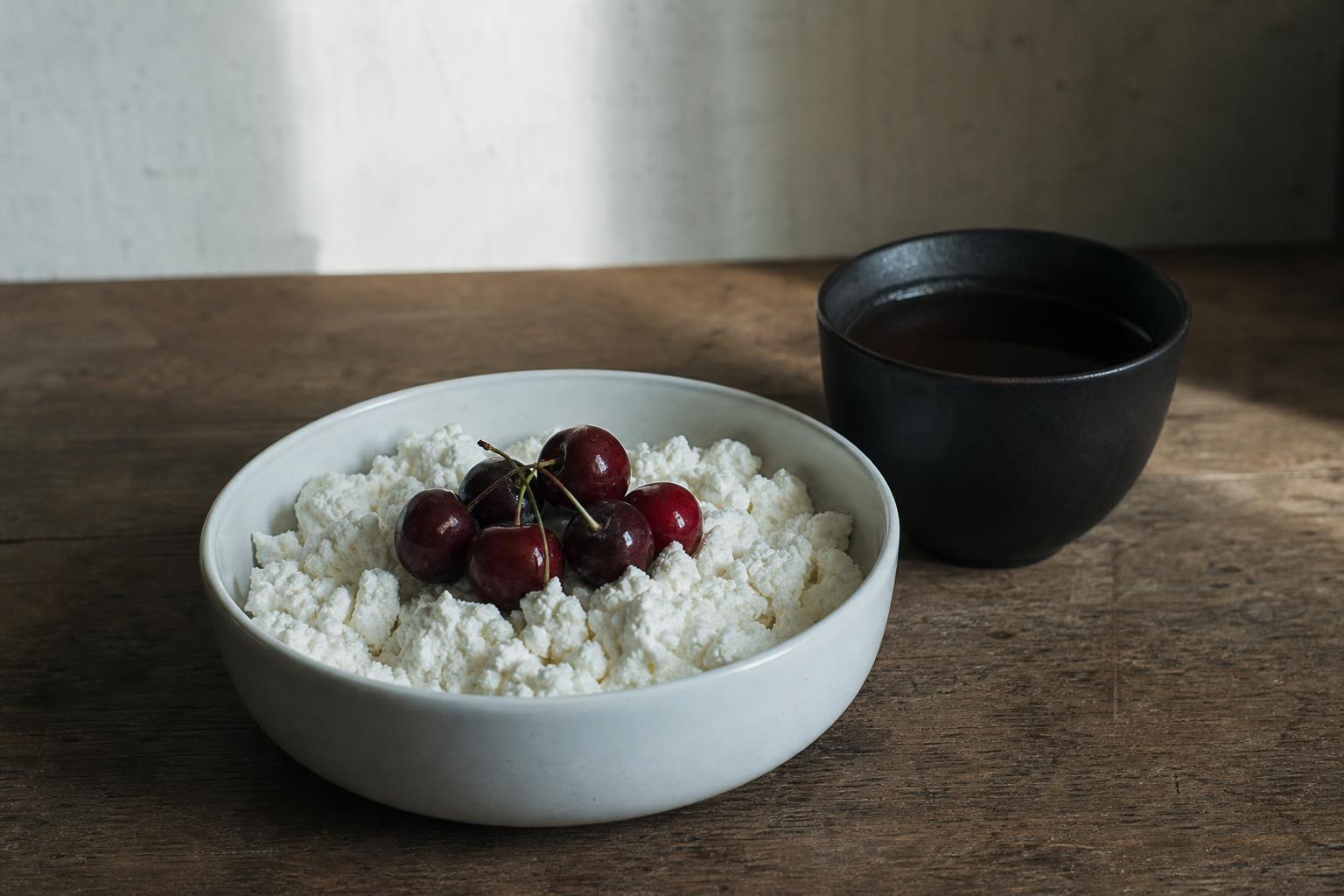
Cherries, ricotta, and black tea make a breakfast for mornings that would like a little dignity rather than stimulation. No syrup, no tower, no buffet psychology, no act of self-expression disguised as nourishment. Just a cool bowl, a little fruit, and a cup severe enough to keep sweetness from becoming sentimentality.
Ricotta is one of those ingredients that improves when left free of modern ambition. It does not need to be whipped into mousse, sweetened into childishness, or buried beneath granola rubble assembled by people who use the word ritual when they mean branding. Good ricotta already contains the point: mildness, body, and the faint lactic calm of something that has not been overworked.
Cherries do the opposite work. Ricotta settles; cherries sharpen. They bring acid, dark sugar, and a little resistance from the skin. Torn open by hand or halved with a knife, they keep the bowl from drifting into dairy piety. The point is not dessert at breakfast. The point is contrast, and contrast is one of the oldest forms of good sense.
Then black tea, which is there to save the whole affair from becoming too soft in character. I distrust breakfasts that contain no edge. A morning should begin with at least one note of discipline in it, and tea supplies it beautifully: tannin, heat, a little bitterness, and the old civilised message that pleasure does not have to slobber.
The practical arrangement is hardly worthy of a recipe. Spoon the ricotta into a bowl. Add cherries, stoned if you are feeling conscientious, bitten from the pit if you are not. A little honey is permitted when the fruit is sour, though one ought not rush toward sweetness out of cowardice. A crack of black pepper is surprisingly good. So is a little lemon zest, used with restraint. But restraint is the whole moral question here.
What I like most is the scale of the thing. It is breakfast for one or two people who still believe a table can be quiet. No pans. No heroic cleanup. No smell of oil hanging over the room like a failed promise. The bowl is eaten, the tea is poured, the spoon is rinsed, and the morning remains intact.
There is also something seasonally exact about cherries at this stage of the year. They arrive not as luxury but as a brief correction. Their abundance is temporary, their stain unavoidable, their sweetness earned by weather. Ricotta receives them without ceremony. Tea watches from the side, dark and patient. Between the three of them, breakfast remembers proportion.
That, finally, is why I would keep this meal. It does not ask to be photographed before it is eaten, though naturally the century will try. It asks only to be assembled, tasted, and then cleared away before the day gets theatrical. Cherries, ricotta, black tea: enough colour, enough quiet, enough edge. More than that, on a Sunday morning, is usually vulgarity.