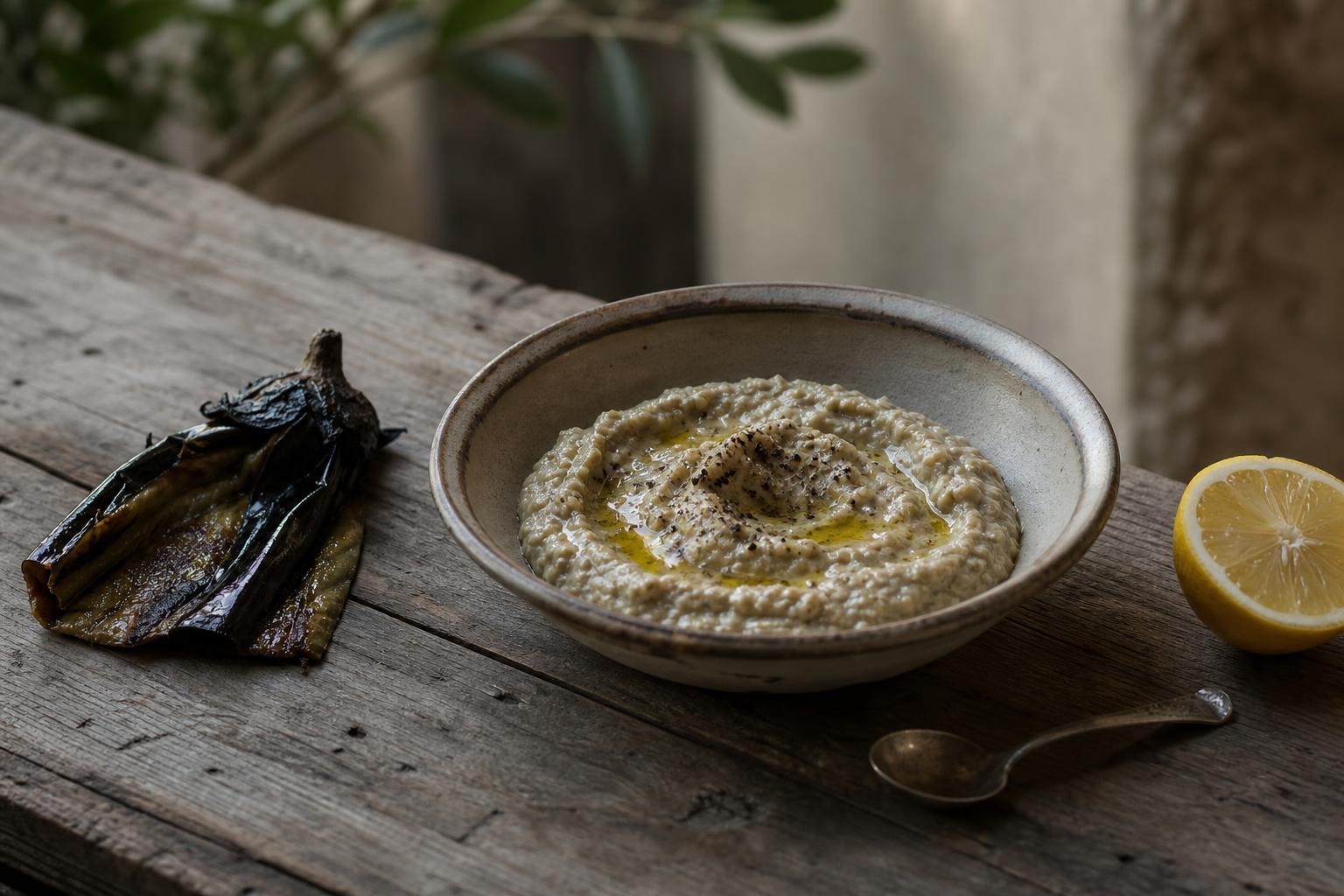
Baba ganoush belongs to that old and honourable class of dishes that improve as modern people shut up around them. One vegetable, burnt properly. A paste of sesame. Lemon for brightness, garlic for edge, olive oil for body. The rest is judgment. When the aubergine has already met flame, the cook’s job is no longer invention but editing.
This is one reason I like it. Too much contemporary cooking has the temperament of a brand presentation: six condiments, ornamental herbs, little speeches of colour, and a camera angle waiting nearby like a bailiff. Baba ganoush is smarter than that. Its seduction lies in what it leaves alone. Smoke stays smoke. The flesh keeps a little roughness. Tahini rounds the bitterness without civilising it to death.
The aubergine should be roasted until the skin collapses and the inside goes completely soft. Not gently warmed. Ruined, almost. This is a dish that begins with destruction. Scoop out the flesh, let it drain for a moment if it is too wet, then give it only the company it deserves.
For one large aubergine, I would use 1 to 2 tablespoons of tahini, 1 small clove of garlic, the juice of half a lemon, 1 to 2 tablespoons of olive oil, and enough salt to wake the whole thing up. A little cumin is welcome if you like the earthier register. If it wants more softness than silk, a spoon of Greek yoghurt or a trickle of ice water will loosen it without turning it into beige nonsense.
Then blend, but not into cosmetic smoothness. Baba ganoush should still look as though it once belonged to an actual plant. Taste it carefully. Nearly always it needs one more correction: more lemon, more salt, or a little more tahini. Those are the three proper levers. Everything else is theatre.
I like it finished with olive oil, black pepper, perhaps parsley, perhaps pomegranate if the table can carry a touch of brightness without becoming a Levantine mood board assembled by a concept store. A pinch of smoked paprika or chilli works too, though sparingly. The point is not garnish as self-expression. The point is that the bowl should taste deep, cool, and faintly singed, as though the fire has been persuaded rather than erased.
Eat it with warm flatbread, or with cucumbers if the day asks for mercy. Put it beside lamb if you must. Put it on the table before everything else if you are wise. It is the sort of thing that makes people crowd a bowl and go quiet for a moment, which is still one of the better tests of a meal.
There is a larger lesson in it. Many of the best domestic foods begin where force ends: after the roast, after the boil, after the knife has done its damage. Then comes calibration. Baba ganoush understands this beautifully. Burn first. Refine second. Stop while the thing still remembers where it came from.