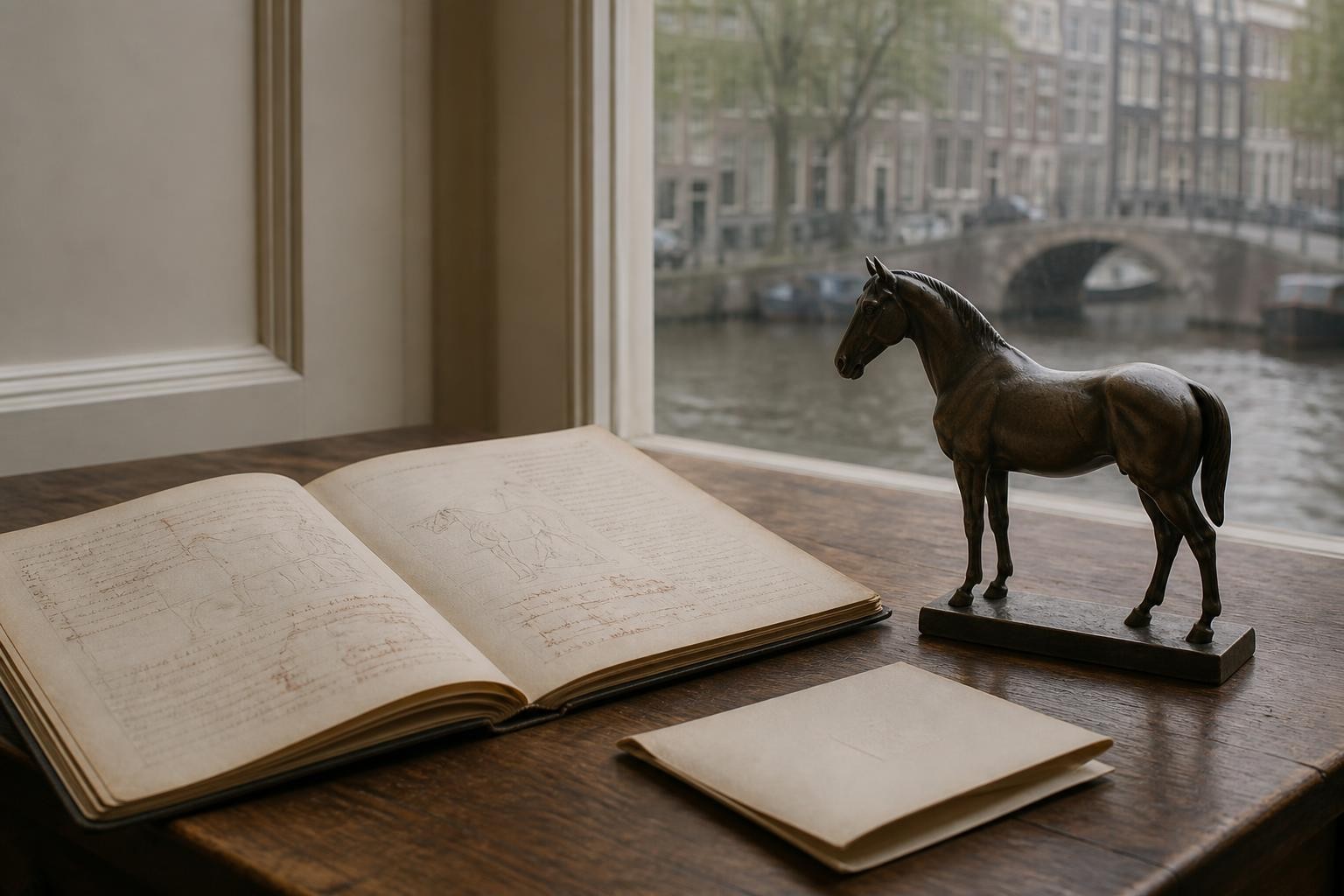
1. Ars Notoria, or the very old dream of learning without learning
Anne Lawrence-Mathers, in The Public Domain Review, has written a fine piece on the Ars Notoria and the promise of instant knowledge. The Ars Notoria is a medieval magical manual that offered its user grammar, rhetoric, arithmetic, geometry, music, and astronomy without the tedious labour of studying any of them. One gazed at complex diagrams, whispered the correct prayers, and the disciplines were supposed to descend as if by post. The Church, unsurprisingly, disapproved. Aquinas smelled demons in the wiring.
The piece is not really a curiosity. It is a mirror. Our own century has invented, in slightly cleaner metaphysics, the same dream: sit before a glowing surface, murmur the correct prompt, receive the disciplines. The pattern is older than any of our devices. Read the essay slowly. It is a quiet argument that the shortcut is one of civilization's most persistent temptations, and one of its most reliably comic failures.
2. Parodies of pedantry, or the eternal comedy of the man who has read one book too many
A companion piece from the same journal, Worthless Idiot, Donkey Head: Parodies of Pedantry on the Renaissance Stage, restores the stock character of the pompous humanist as he actually appeared to his contemporaries: overdressed in Latin, hollow in argument, and always the last to notice the audience laughing. The commedia dell'arte called him il Dottore. Every era grows him back, in slightly different tailoring. Ours has him too, though he now writes threads and gives keynotes. It is useful to remember he has always been a figure of comedy before he was a figure of authority.
3. The ultimate horse, and the price of selecting for a single virtue
Works in Progress has published The ultimate horse, on what centuries of breeding have done to an animal that was once, simply, a horse. Thoroughbreds now run near a physiological ceiling. Their hearts, their bones, their tendons are strung to a tension the species did not evolve to hold. The economic logic that shaped them is elegant. The animal at the end of it is not. Read as a case study in what happens when a system optimises hard for a single measurable virtue and lets everything else quietly break. There are versions of this story elsewhere — in schools, in cities, in bodies of men and women trained for one outcome — and they rarely age well.
Amsterdam: one reason to leave the house
The Grachtenfestival opens tonight and runs until 16 August. It is, for once, the sort of festival that has not forgotten what a festival is for: intimate classical and jazz programmes tucked into canal houses, courtyards, the ARTIS Planetarium, and, when the weather cooperates, a pontoon on the water. There are more than a hundred concerts. Some are free, some are small enough that the room becomes an instrument, and the better ones offer that increasingly rare condition — a small audience, a serious ensemble, an evening in a city that still remembers how to listen. Look at the programme, pick something you have never heard of, and go.
Read one manuscript that promises knowledge without labour, laugh at one man who thinks he already has it, look with pity at the animal we made too fast, then walk out into the city and let a string quartet in a canal house put the week back in order.