1. The Endangered Alphabets Project, or the writing systems the century is quietly killing
Of the roughly one hundred and forty living scripts on earth, fewer than twenty carry the daily weight of administration, schooling, and screen. The rest are drifting toward exit under the same slow pressure that empties villages: officialdom, keyboards, the impatience of the modern hour. The Endangered Alphabets Project, run for nearly two decades out of Vermont by Tim Brookes, is one of the few serious efforts to slow the loss — a growing digital atlas of scripts like N’Ko, Balinese, Cham, Baybayin, Vai, Hanifi Rohingya, Osage, and dozens more, each with its own carved-wood specimen, a short history, and, crucially, the names and contacts of the human beings still writing in them. Brookes carves the same fourteen-word sentence — “These are our words, shaped by our hands, and they will not die” — into board after board. Twenty minutes on the site is a quiet lesson in how much of the world’s intelligence still lives outside Latin ASCII, and how narrow the aperture of “the internet” actually is.
2. The UCSB Cylinder Audio Archive, or how the last century first heard itself
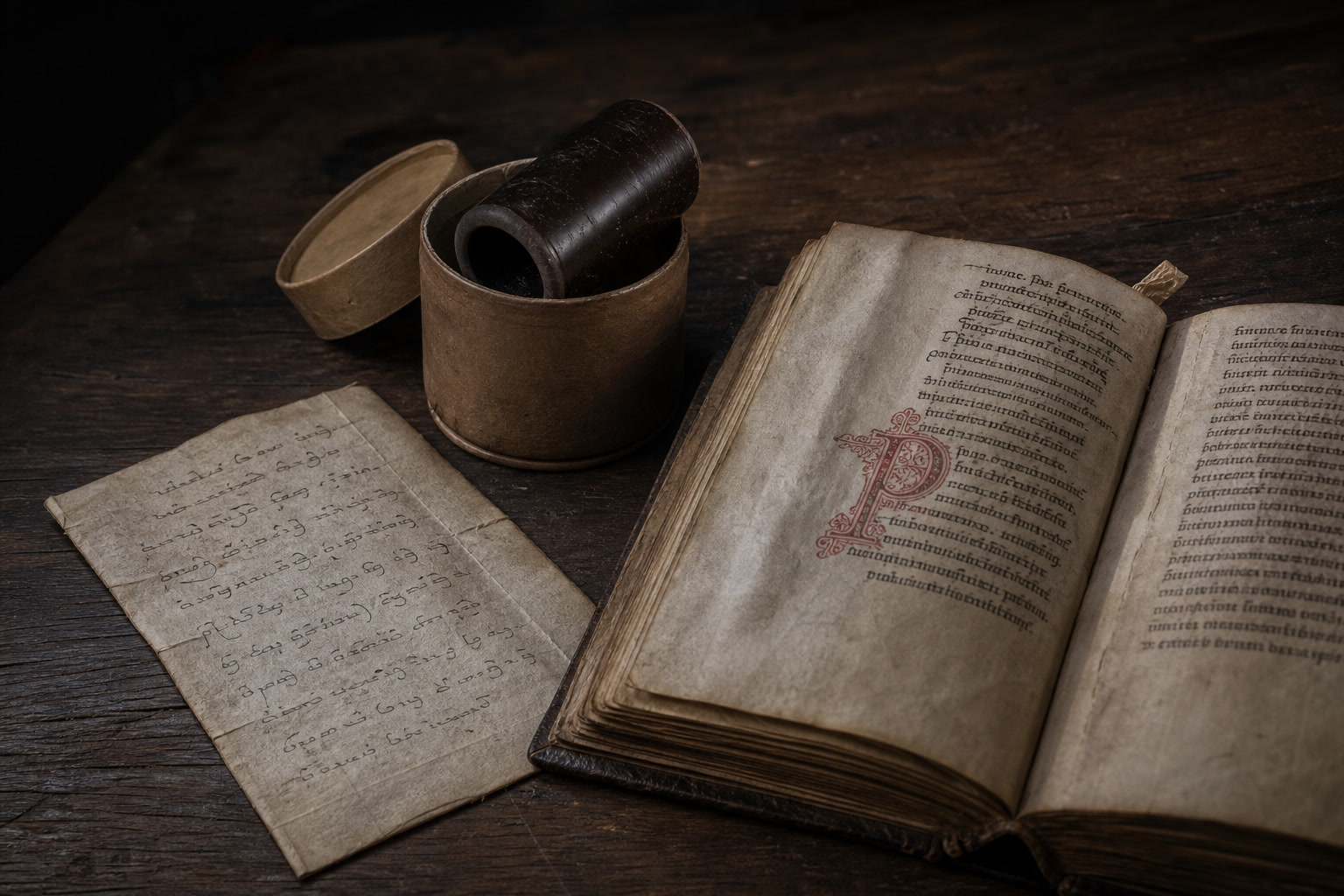
Before the LP, before the 78, there was a small brown wax tube you dropped into a spring-driven box and let scrape a needle. The UC Santa Barbara Cylinder Audio Archive has digitised and made freely streamable over ten thousand Edison and competitor cylinders from between about 1890 and 1929: Neapolitan tenors, Serbian brass bands, Yiddish vaudeville sketches, Meiji-era Japanese naniwa-bushi, Ottoman clarinet, Cuban danzón, Hawaiian steel guitar recorded when the instrument itself was new, sermons, comic monologues, presidential speeches, unnamed household dance tunes recorded in someone’s parlour and never issued commercially. The audio is thin, roomy, and eerily present. A century separates you from a Milanese soprano and yet she is manifestly annoyed at the conductor. This is the earliest recorded human sound available in bulk, and the site is engineered for slow browsing: by genre, by ethnic label, by language, by year. A long weekend is not enough.
3. e-codices, or Switzerland quietly puts its monasteries online
e-codices, run out of the University of Fribourg, is the Virtual Manuscript Library of Switzerland: high-resolution digitisations of nearly three thousand medieval and early-modern codices held in Swiss monastic and cantonal libraries — St Gallen, Einsiedeln, Engelberg, Sion, Schäffhausen, the Beinecke of the Alps. Carolingian Gospels, a ninth-century plan for an ideal monastery, an eleventh-century medical manuscript with a diagram of the veins, illuminated Bibles, chant books whose square notation still looks operational, marginal grotesques doodled by monks half asleep. All free, all in an IIIF viewer that lets you zoom to the pigment. There are English translations for the descriptions; the manuscripts themselves are in whatever tongue their scribe knew. It is quietly one of the more civilised things a small country has done with its patrimony — not fenced, not ticketed, not curated into a “user journey.” Simply: here are the books; read them.
Amsterdam: three reasons to leave the house
On Saturday evening the terrace of the Muziekgebouw aan ’t IJ hosts the Agus Fulka Kwintet with a programme called Aletheia — a Greek word for the un-forgotten, the un-hidden, which for Heidegger meant truth as disclosure rather than correctness. Bring the word to a piano-led quintet on the water at 20:00 and see whether it survives contact with an actual reed. Free with reservation; if the wind is off the IJ, take a jacket.
On Sunday afternoon at 15:00, the same terrace gives itself to the young pianist Mattias Spee, playing a beloved ballet in an intimate solo reading. Spee is one of the more serious of the current Dutch generation — light-fingered, unhurried, indifferent to virtuosity as a display sport. A cheap way to end a summer weekend on your feet rather than on a beach towel.
And if you cannot bear another indoors weekend, De Parade is in its closing days at Martin Luther King Park (through Sunday 26 July) — a Dutch summer institution of small theatre tents, spoken word, short chamber concerts, and food. Yes, it has a fairground skin. Go anyway, but go in the late afternoon and choose two tents in advance rather than drifting: there are half a dozen fifteen-minute pieces genuinely worth the ticket, and roughly forty that are not. The signal is in the small hand-lettered plays, not the big-tent lineups.
Enough. Look at a script the officials have almost forgotten, listen to someone sing into a horn in 1902, turn the page of a Carolingian Gospel with a mouse wheel, and then walk out to a terrace on the IJ where a stranger is trying to open something with a piano. Let the weekend do the rest.