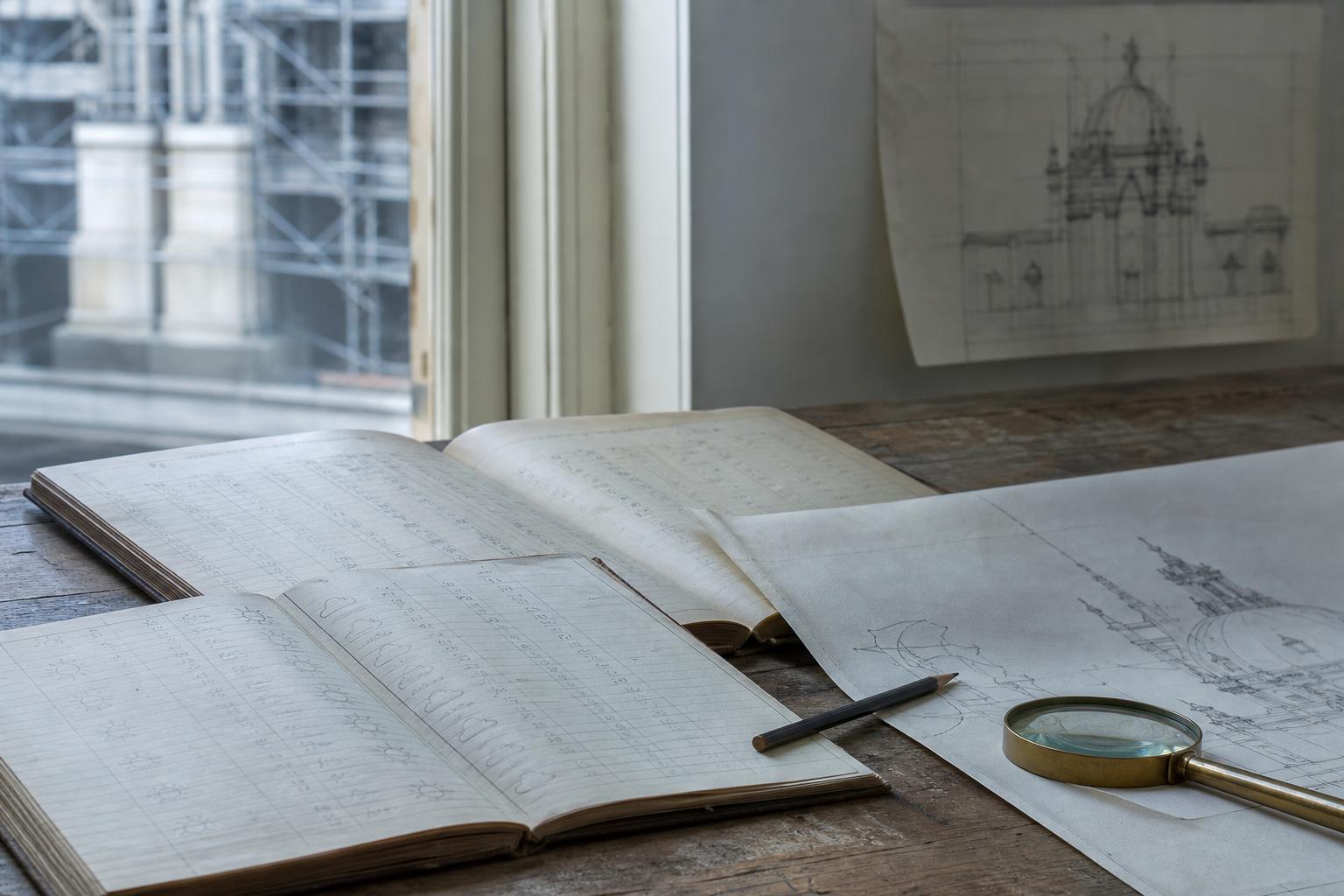
1. Weather ledgers, newly opened
The Royal Society has just opened a remarkable meteorological archive through its Science in the Making platform. Tens of thousands of observations are now visible there: temperatures, tides, rainfall, wind, and barometric habits gathered across continents and oceans, including Antarctic records and London dock measurements. One of the quiet dignities of the thing is that it restores weather to the status of written attention. Before climate turned into dashboard pornography, it was also ledger, patience, sequence, and the habit of looking properly at the sky.
2. Leonardo, restored at scaffold height
Milan is allowing visitors unusually close to Leonardo’s long-hidden mural in the Sala delle Asse at Sforza Castle while the restoration continues. The useful part is not merely that the work survives, but that one can see it in process: paint, salt, damage, scaffolding, and the labor of repair all at once. The Associated Press report is a reminder that restoration is one of civilization’s more serious arts. Not culture as event, but culture as maintenance under pressure.
3. Humane rooms for thought
The Dynamicland archive remains one of the more interesting rebukes to flat digital life. It is incomplete, which makes it more trustworthy, and it still points back to a better ambition: thought made spatial, social, physical, and legible among people in the same room. In an age of sealed laptops and private prompt boxes, that ambition feels almost indecently healthy. One should wander it slowly, not “use” it in the vulgar modern sense.
Amsterdam: two rooms worth the walk
At W139, flour, water, soil runs through 12 July. It is one of the better current titles in the city because it already knows matter comes before messaging. Soil, labor, fermentation, memory, repair: the show appears to understand that care and violence are often braided together in the same ground.
At Framer Framed, Wild Waters: Dams and Deltas After Modernity runs through 30 August. Water here is treated not as soft scenery but as infrastructure, force, extraction, and political design. That alone puts it a step above most contemporary exhibition weather.
Read one ledger, look once at repair, spend ten minutes in a humane room, then leave the house before culture turns back into upholstered self-congratulation.