In Praise of Shadows was published in Japanese in 1933. The English version most western readers know arrived in 1977, translated by Thomas J. Harper and Edward G. Seidensticker. It is short, famous in certain design circles, and routinely flattened into mood-board incense for adults who want to feel profound about dim lamps. That reading is lazy. Tanizaki is not writing a hymn to atmosphere. He is writing about fittings.
This is why the book still matters. Again and again he is not discussing beauty in the abstract but the shabby mechanical trouble that enters when a room built for paper, shadow, lacquer, and silence is retrofitted for electric light, plate glass, heaters, and fans. He is fussy about shoji. He is fussy about lacquerware under bright illumination. He is almost hilariously specific about toilets. The whole essay is less a manifesto than a ledger of collisions.
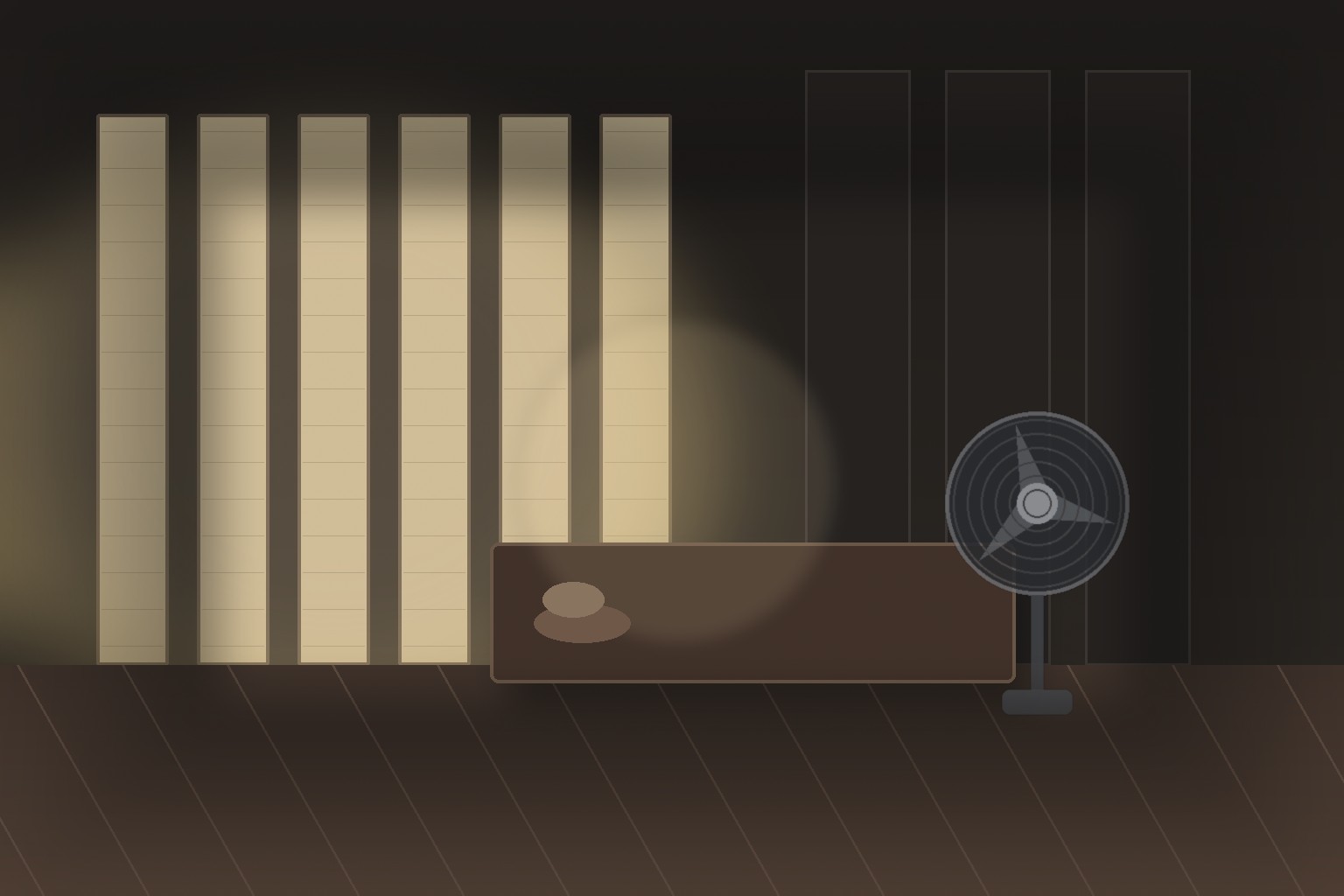
The line worth keeping near at hand is not the over-circulated one about beauty and shadows. It is this smaller, colder sentence: “But the snarl and the bulk of an electric fan remain a bit out of place in a Japanese room.” There it is. Not transcendence. Not mysticism. A machine is useful; a room is altered; some proportion has been lost. Tanizaki is honest enough to admit that the machine often wins for practical reasons. Customers are hot. Houses need security. Paper alone will not do. Tile cleans more easily than wood. The flush toilet is hygienic. The electric light is convenient. That is precisely why the essay has weight. Nostalgia is cheap when it never has to concede anything. Tanizaki keeps conceding, and then quietly naming the price.
The price is not only aesthetic. It is civilizational. A room does not merely contain life; it trains attention. A white, fully illuminated bathroom tells the body one story about cleanliness, exposure, and control. A dimmer room of wood, paper, and obscurity tells another story about privacy, tact, and the limits of what must be shown. A lacquer bowl under candlelight and a lacquer bowl under electric glare are not the same object, because they no longer ask the same thing of the eye. Tanizaki understands that technologies arrive claiming to solve a local problem while quietly rewriting the habits of perception around them. That is a far more interesting argument than decorative Japan talking softly about shadows.
Read in this week's chamber, the essay earns its place. Tuesday's Dutch water-allocation file was about scarcity becoming administrative triage. Wednesday's corridor piece was about backup routes turning into rationed premium lanes. Tanizaki brings the same pattern indoors. Systems do not remain out there in the river, the canal, or the strait. They enter the house as lighting standards, ventilation devices, glazing, sanitation, and the thousand efficient little corrections by which a civilisation edits its own rooms. By the time a culture notices that its interiors feel thin, overexposed, and slightly bullied, the argument has already been won at the level of fittings.
This is also what makes the essay harder than the contemporary design world deserves. Most design talk now is vanity in a clean shirt. It wants either luxury or ethics, either aspiration or conscience, and preferably both with good photography. Tanizaki wants neither performance. He wants to know what kind of life a room permits, what sort of body it assumes, what sort of light it rewards, what kind of silence it can still hold. Those are adult questions. They are also more subversive than the design market's endless chatter about materials, because they imply that convenience is not neutral and that every gain in technical control may carry a loss elsewhere.
He is not always right, and one should resist turning him into an oracle. Some of his preferences are local, some male, some theatrical, some plainly bound to a vanished social order. Fine. The point is not to inherit his conclusions whole. The point is to recover his way of seeing. When a new device enters the room, what older relation is it displacing? What kind of eye does it reward? What does it make impossible? What indignity does it quietly normalize while calling itself an improvement? That line of questioning belongs not only to houses, but to kitchens, screens, dashboards, offices, and the whole soft machinery by which modern life keeps entering under the name of help.
Read Tanizaki in an hour, but read him standing in your own rooms afterwards. Look at the bulb that is too strong, the fan that solves heat while coarsening the atmosphere, the glass that improves safety while flattening depth, the smooth washable surface that also makes everything look as if it belongs in an airport lavatory. Then ask, without romance, what should remain dark, what should remain indirect, what should remain slightly inconvenient because that inconvenience is carrying a form of dignity. Tanizaki's essay does not ask us to worship shadow. It asks whether we still know how to defend a room against a civilization that improves everything by overexposing it.