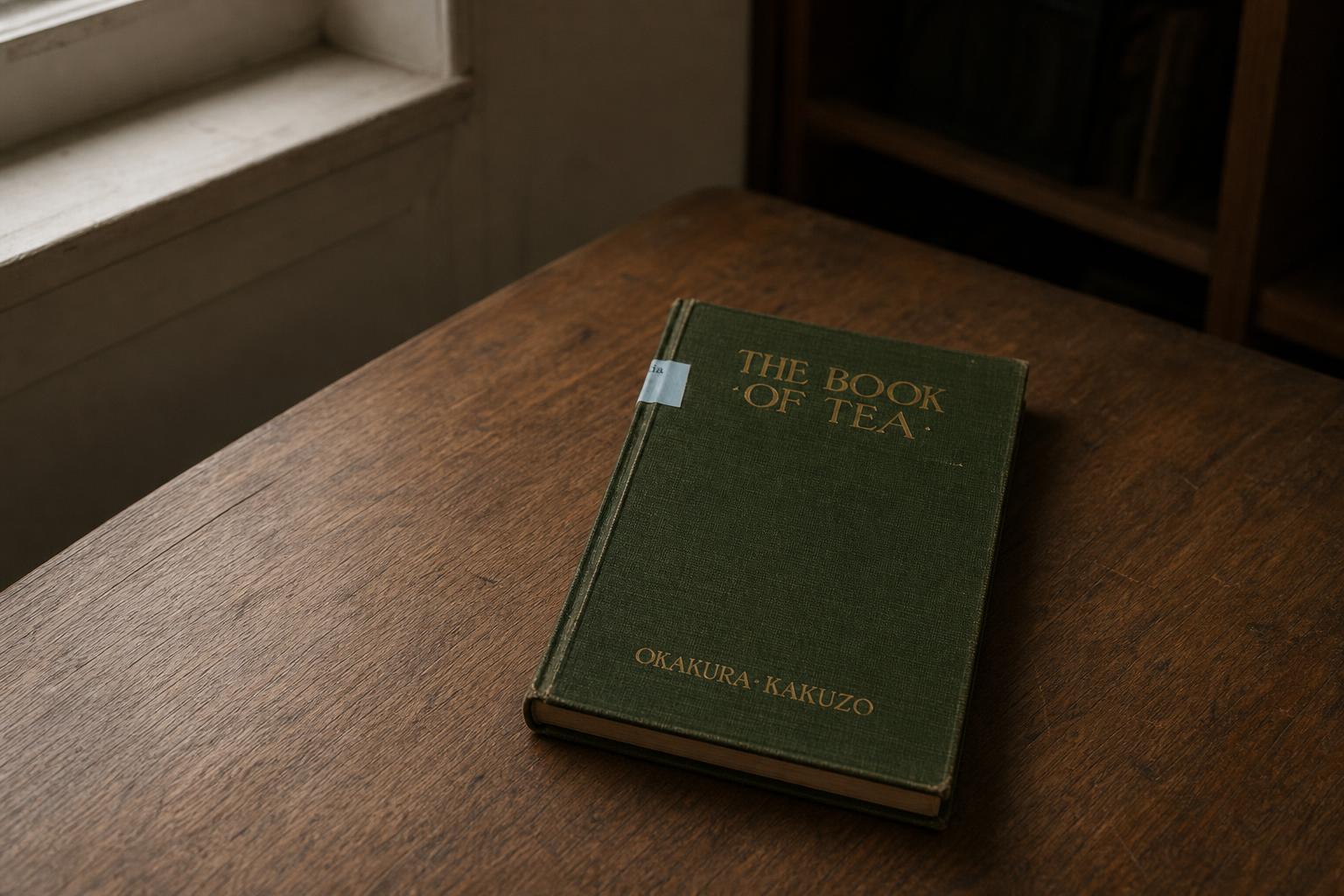
The Book of Tea, first published in 1900, is usually misfiled as a charming little East-meets-West curio, the sort of book people buy when they want the perfume of refinement without the burden of changing their habits. That is a mistake. Okakura is not selling atmosphere. He is defending an entire discipline of perception.
One line says nearly everything: “It is consecrated to the worship of the Imperfect, purposely leaving some thing unfinished for the play of the imagination to complete.”
That is from his description of the tea-room, but it applies far beyond architecture. The room matters because it trains a person in proportion. Nothing is shouted. Nothing is over-explained. Beauty is allowed to arrive through restraint, sequence, surface, gesture, and silence. In other words: through adulthood.
This is why the book deserves oxygen now. We live inside systems that cannot leave anything alone. Interfaces crowd the eye. Brands explain themselves before they have earned the right. Institutions treat frictionless access as an unquestioned good, then wonder why attention has become thin and coarse. Okakura understood that omission can be a form of respect, and that incompletion is not negligence but an invitation to participate.
Read him, too, as an early warning against aesthetic vulgarity masquerading as progress. Teaism for Okakura is not decorative Japanese essence for export. It is a civilisational argument about how ordinary rituals shape the mind that inhabits them. How one pours, places, pauses, and receives is not trivial. It is the local grammar of seriousness.
Read The Book of Tea before the next tasteless brute tries to sell you mindfulness with push notifications. A culture that cannot honour the unfinished will soon be unable to honour anything at all.