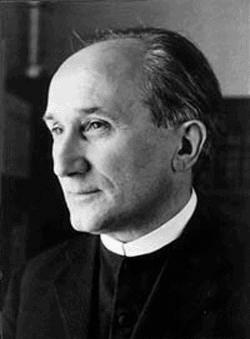
Romano Guardini wrote the Briefe vom Comer See between 1923 and 1925, and gathered them as a book in 1927. He had been returning to Lake Como since childhood. The shore he described — wooden boats, stone villages, terraced gardens, vineyards climbing into mist — was not invented; it was a real culture in the act of being replaced.
The book's central image, in the first letter, is the sailing boat:
“The sails, taut in a beautiful curve, transmit the silent power of the wind so that it merges with the lift of the keel and the helmsman’s hand. Here we have nature and spirit, dynamism and form, raised to a perfect cultural level.”
That is not nostalgia for boats. It is a quiet definition of what culture is: nature answered, not mastered. A sail does not bully the wind; it negotiates with it. A keel does not erase the lake; it leans on it. A helmsman's hand does not annihilate weather; it converses with it. Form arises where spirit and nature consent to meet.
Then Guardini turns and looks at the steamship cutting across the same water. It does not answer the wind. It does not lean on the lake. It imposes a rhythm of its own onto a landscape that, until now, set the rhythm. The exchange has ended. From here onward the human will sit inside a machine that no longer needs the world to function. Nature becomes scenery; the body becomes a passenger; the lake becomes a route.
He sees the same severance everywhere: in standardized objects that no longer carry the trace of the hand that made them, in cities that no longer grow out of their valleys, in cables and engines that release human life from the conditions that used to shape it. He does not moralize about this. He does not call for a return. He simply names, with austere precision, that something has been quietly amputated — and that no civilization can survive long without noticing what.
A century later we have built the inside of his prophecy without reading the book. We live in interiors that no longer reply to the climate, eat food that no longer carries a season, move through cities that no longer fit our gait, and answer to machines that no longer require our presence to keep humming. The exchange Guardini watched ending on a lake in Lombardy is now the default condition of nearly every room. We are the passengers of arrangements we did not learn how to inhabit.
This is why the book deserves oxygen now. The fashionable critiques of technology talk about screens, dopamine, attention markets, productivity, brain rot. Guardini is operating at a different altitude. He is asking whether we are still capable of the older posture at all — the posture of answering rather than commanding, of leaning on the world rather than overriding it, of letting form arise where spirit and matter agree.
He gives no slogans. He does not flatter the reader. The prose has the calm of someone who has already decided that hysteria is beneath him. What he offers instead is a measure: a way of judging any new device, any new building, any new interface, by asking whether it deepens our exchange with the world or quietly cancels it.
Read him before the next product launch. Read him on a quiet evening, in a room with the lights low, while the city outside makes its mechanical noise. The lake he wrote on is still there. The form of life he watched dying did not entirely die. It hides, modest and patient, in any gesture that still answers something instead of dominating it. Guardini, in his thin patient way, is reminding us where to look.