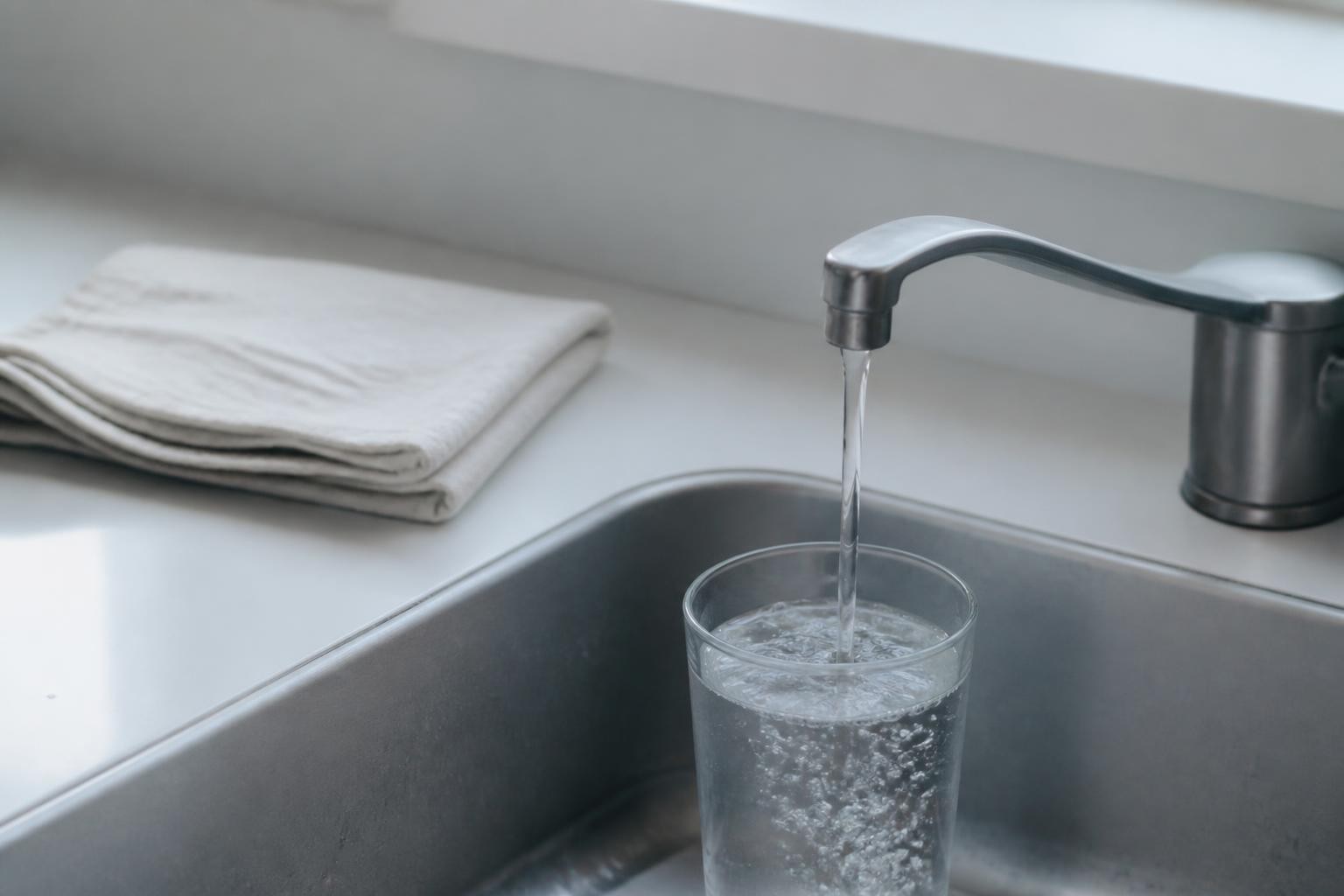
It is one o'clock, the flat has warmed by two degrees since breakfast, and the street outside is doing that particular August thing where nothing moves faster than it has to. I walk to the kitchen. I do not sit. I open the cold tap, let it run for a count of five so the water forgets the pipe, hold a plain glass under it until the meniscus lifts a hair above the rim, and drink it standing, in one long unhurried pull, looking at nothing in particular. Then I set the glass on the drainer, upside down, and go back to whatever I was doing. The whole matter has taken less than two minutes and refuses, absolutely, to be improved.
This is a small thing, and I know it. But small things are exactly what a summer like this one is testing. There is now an entire economy addressed to precisely this two-minute interval: the chilled bottle, the mineral brand, the electrolyte sachet, the alkaline dispenser, the reverse-osmosis appliance on the counter that costs more than the sink it stands in. Each of them promises to make the glass of water into a small purchase, a small optimisation, a small identity. Each of them is, in the older and more exact sense of the word, an insult to the tap.
The tap does not require you. It does not want to be your ally. It does not have a story about your body's electrolyte balance or its own artesian source. It has cold water. It has always had cold water. In a Dutch flat in August, cold means honestly cold, not the aspirational cold of a machine that has been humming since April in order to make ice cubes that no one asked for. You take the water; the water is what it is; you go on with the afternoon. There is nothing to unbox, nothing to rate, nothing to feel improved by. This is precisely why it is worth doing.
I have come to think of these two minutes as a small daily audit. If a person can no longer take a glass of water at their own sink without reaching for something branded, chilled beyond need, or ritualised into content, that person is, at some quiet level, no longer at home in their own house. They have let the economy install a small paying gate between themselves and a pleasure that costs nothing. Multiply by a life, and you have the shape of most modern unfreedom: not the great chains, but a hundred small subscriptions to what used to be given.
The counter-move is not austerity. It is not virtue. It is not a lecture. It is simply: notice that the pleasure is already there, and refuse to let it be sold back to you. Drink the water standing, out of the plain glass, at your own sink, in the middle of your own afternoon. Do not photograph it. Do not measure it. Do not tell anyone. Put the glass upside down on the drainer and let the small satisfaction stay where it belongs, inside the room in which it happened.
The linen tea towel is folded, the light is slanting, the tap has gone quiet, and August is unchanged by all of this and does not need to be changed. That is the point. A life is largely made of intervals like these, and a person is, in the end, the one who has learned which of them not to hand over.