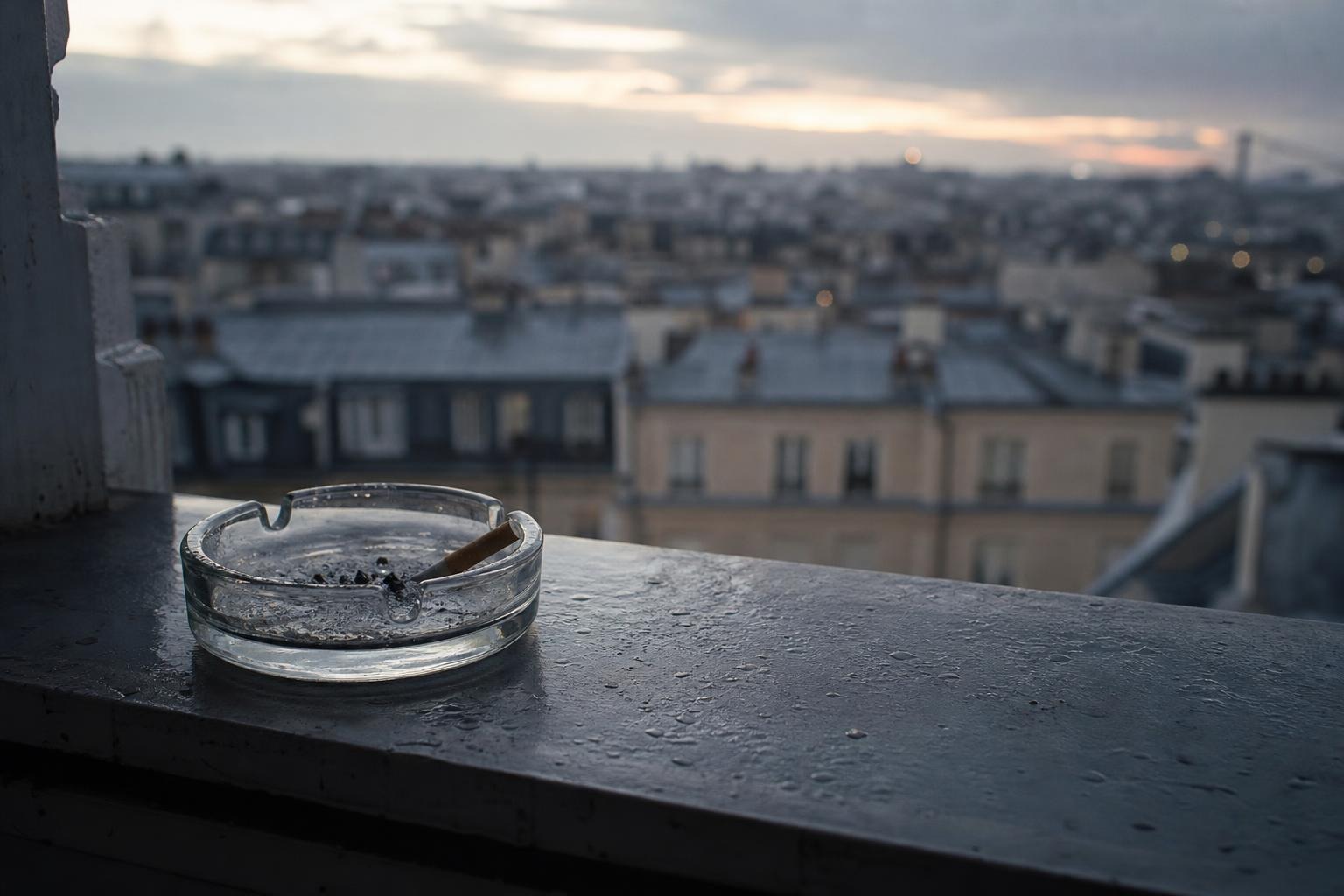
The ashtray on the balcony is not a romantic object. That is precisely its dignity. It does not ask to be admired. It merely remains, catching rain, ash, a little stale tobacco, perhaps the bent filter of a cigarette finished more for company than for pleasure. By morning it has become what certain domestic things become when no one is performing around them: truthful.
Night always leaves a residue. Most of modern life is arranged to conceal that fact. The glass is whisked away, the table wiped too quickly, the room perfumed, the message softened, the face restored by electric light and cosmetic alibi. But the balcony keeps poorer books. The ashtray receives what could not be persuaded into elegance. It sits there in the grey air like a minor accountant of appetite, boredom, hesitation, and the small desire to remain outside a little longer.
What I like is not smoking itself, which is mostly a shabby pact between nerves and ritual. What I like is the object's refusal to flatter the story afterward. In daylight the performance collapses. The ember is gone. The glamour, such as it was, has leaked out into the weather. What remains is a glass dish with a little soot in it and a city beginning again whether one deserves it or not.
This is why the ashtray belongs to the same moral family as the unmade coffee cup, the folded newspaper left on a chair, the plate with two olive stones on it, the coat still on the back of the dining-room chair. Such things are rarely beautiful in the vulgar sense. They are legible. They show that a life passed through here and did not entirely sand away its edges for the camera.
Leave the ashtray there a little longer, then. Let the morning see it. Let the balcony hold the last word of the night before the house resumes its manners.