The seventy-ninth Cannes opens tonight, with twenty-two films in competition and Pierre Salvadori's The Electric Kiss on the red carpet. Almodóvar, Kore-eda, Mungiu, Pawlikowski. Five women directing in competition. The DJ rosters at Silencio went out before some of the official lineups did.[1]
The festival is in fine health. The cinema is not.
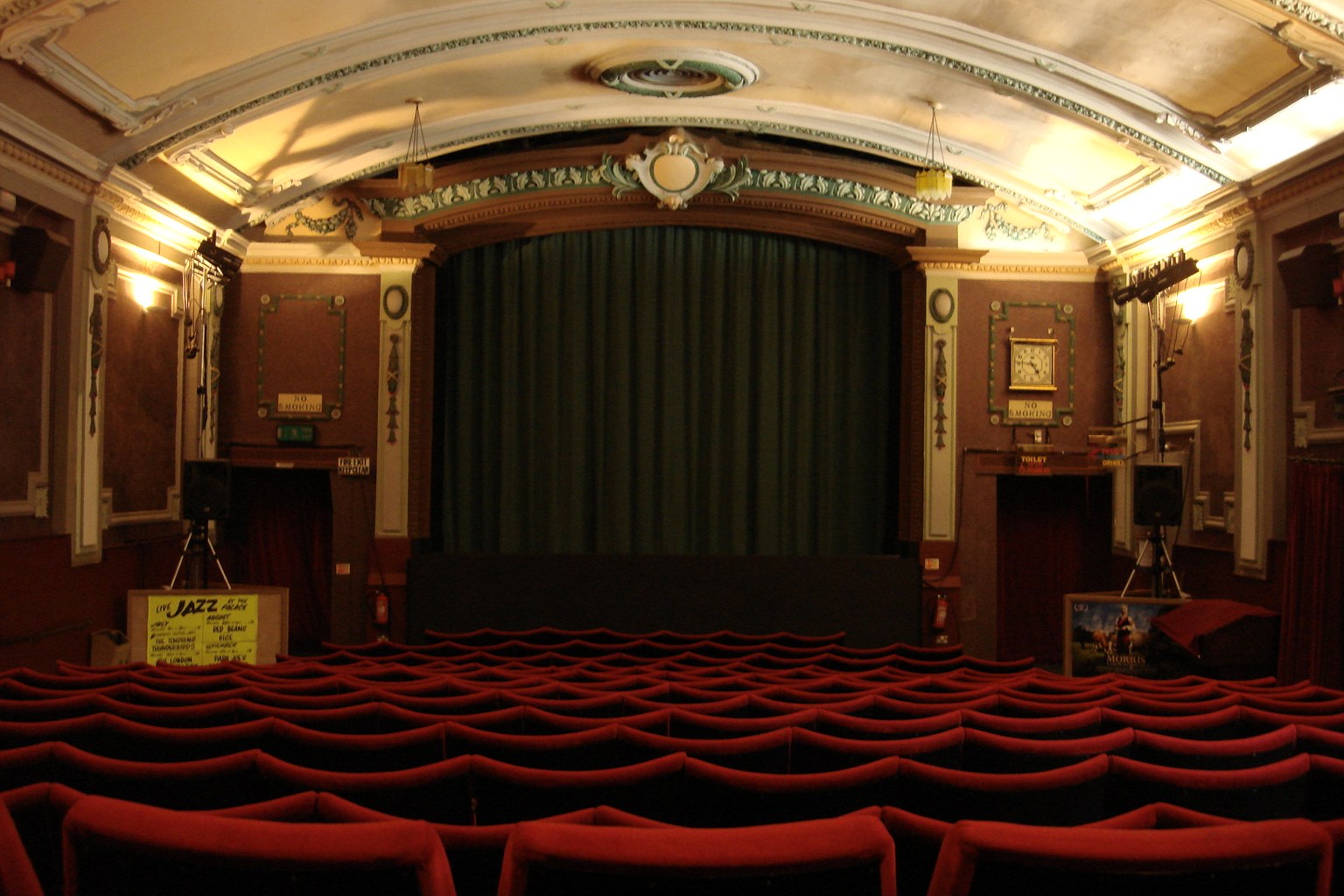
In 2025 European cinema admissions fell by 5.5 per cent, from 843 million to 796 million — the lowest figure since the pandemic year 2022. France alone shed twenty-four million tickets in twelve months. In Paris, supposedly the capital of arthouse, attendance at independent cinemas fell something like fifteen per cent year-on-year, and operators speak openly about never returning to pre-pandemic levels. Gross revenue stayed flat only because the average ticket price climbed from €7.6 to €8.1: a smaller room paying more to sit in it.[2] We have invented the cinematic equivalent of paying more to be alone.
Inside the Palais des Festivals, none of this is visible. The Marché du Film — the trade fair sitting underneath the festival — books well over twelve thousand industry attendees, with multiple sources putting the 2025 figure closer to fifteen thousand.[3] Acquisition deals close within fifteen minutes of the credits. The press wall holds. There is no sign at all, from inside Cannes, that anything is wrong.
The festival has decoupled from the industry it pretends to celebrate
This is the structural contradiction worth naming. Cannes thrives as a closed market — buyers, sellers, journalists, sponsors, a few hundred photographers — while the screens downstream of it, the cinemas where the films are eventually meant to be received, are emptying out.
Consider the recent record. Justine Triet's Anatomy of a Fall won the Palme in 2023 and broke through, doing more than ten million euros in France alone, distributed by Le Pacte with the kind of patient release pattern that used to be standard.[4] That is now the exception. Sean Baker's Anora, the 2024 winner, opened well per screen in North America and then made roughly $2.4 million across nineteen international markets in its first weekend abroad — a respectable indie number, and a rounding error against any film the same festival used to crown.[5] We are now in the part of the cycle where a Palme guarantees a few weeks of arthouse runs in two or three European capitals and a streaming home shortly after. Outside the festival cities, in the towns and suburban multiplexes where cinema once lived as a habit, most of these films are functionally invisible.
Distribution has lost its middle
The mechanism is not mysterious. Streamers buy festival prestige and then, more often than not, let the film sink quietly — the algorithm has more enthusiastic uses for a procedural. Independent distributors who once took risks on subtitled work cannot match streamer money and cannot match Disney's marketing spend either. Multiplex programmers, themselves running a thinner room, cling tighter to whatever has a franchise tail. Local critics — the people who once told a town when to leave the house — are largely gone, replaced by aggregator scores and the same press releases the publicists were already going to send. The Palme used to be the beginning of a route. Now it tends to be the end of one.
Cannes itself does not feel this loss, because Cannes was never quite an audience event. It was built in 1939, and properly from 1946, as a state-backed counter to Mussolini's Venice; its institutional life has always rested less on the public than on the great prestige economies — national delegations, broadcast rights, French cultural-exception spending, the steady drip of sponsorship. It is a club of producers, distributors and journalists performing a theatre of public reception. As long as a private buyer in Burbank is willing to put a few million on the table for a film without a normal opening weekend, Cannes' commercial logic survives. The audience is not strictly required to keep the engine warm.
Cannes is partly its own accomplice
There is an uncomfortable second-order question, which the festival is unlikely to ask of itself. Cannes is not merely a victim of arthouse collapse; it is partly its accomplice. The festival's prestige inflates the price of films whose theatrical lives are now too short to recover it. The closed market trains a generation of producers to make films for the Marché rather than for an audience. Films arrive shaped to win at Cannes — long, cool, internationally legible, with the visual grammar of festival-funded co-production. The system thrives. The form starves.
The deeper question is what the festival is now for. In its postwar form, Cannes worked because it sat on top of a functioning ecology: a continent of cinemas with cinephile programming, a press of full-time critics, distributors who could sustain a slow-burn release, audiences habituated to subtitled work. Each of those layers has thinned. What remains is the spectacular top floor of a building whose stairs have been removed.
The bargain Europe is no longer able to avoid
This is the part where the polite reflex is to call for "more support". I would prefer the harder question. Europe cannot indefinitely fund both the festival circuit and the screens that were the point of it. There is no equivalent growth on the exhibition side, where actual money meets actual chairs. Either Europe decides to defend the cinema as physical infrastructure — the way it occasionally remembers to defend museums or libraries — or it admits that its great festival has begun to host a form most Europeans no longer watch.
There is precedent for the harder bargain. France's Art et Essai label kept thousands of small screens alive for decades. Italy's network of cineteche and provincial cinemas once made foreign film a normal part of municipal life. The Netherlands' Eye and the German Kommunales Kino tradition built audiences slowly, by habit, in spaces no producer would call glamorous. None of those systems photographs well on the Croisette. All of them are, materially, more important to the survival of European cinema than another year of Variety's buzz from the Riviera.
The Cannes that opens tonight is not, on its own evidence, in trouble. The trouble is the same one Venice faced after the Atlantic routes opened: the ceremony at the lagoon went on, and the trade had already left.
Sources
[1] 2026 Cannes Film Festival, 12–23 May 2026: official selection and opening film (Salvadori, The Electric Kiss).
https://en.wikipedia.org/wiki/2026_Cannes_Film_Festival
[2] European Audiovisual Observatory, "European cinema attendance dropped by 5.5% in 2025, with stable box-office figures" (figures for the EU-plus-UK perimeter; ticket-price and country-level data from the same release).
https://www.obs.coe.int/en/web/observatoire/-/european-cinema-attendance-dropped-by-5.5-in-2025-with-stable-box-office-figures
Paris arthouse attendance: AFP-syndicated reporting on independent operators in 2025.
https://www.insidenova.com/news/national/pariss-arthouse-cinemas-adapt-to-battle-decline/article_fa3bd074-2f37-5261-8d3c-bb5ccf189742.html
[3] Marché du Film, official facts and figures (12,000–15,000 industry attendees in recent editions).
https://www.marchedufilm.com/about/facts-figures/
[4] Anatomy of a Fall French box office, distributed by Le Pacte, August 2023 onward; cross-European releases via Lionsgate, Picturehouse, and others.
https://variety.com/2023/film/box-office/palme-dor-oscar-anatomy-of-a-fall-french-box-office-1235706312/
[5] Anora international opening, expansion into nineteen overseas markets in November 2024.
https://deadline.com/2024/10/indie-film-box-office-sean-baker-anora-we-live-in-time-1236121361/