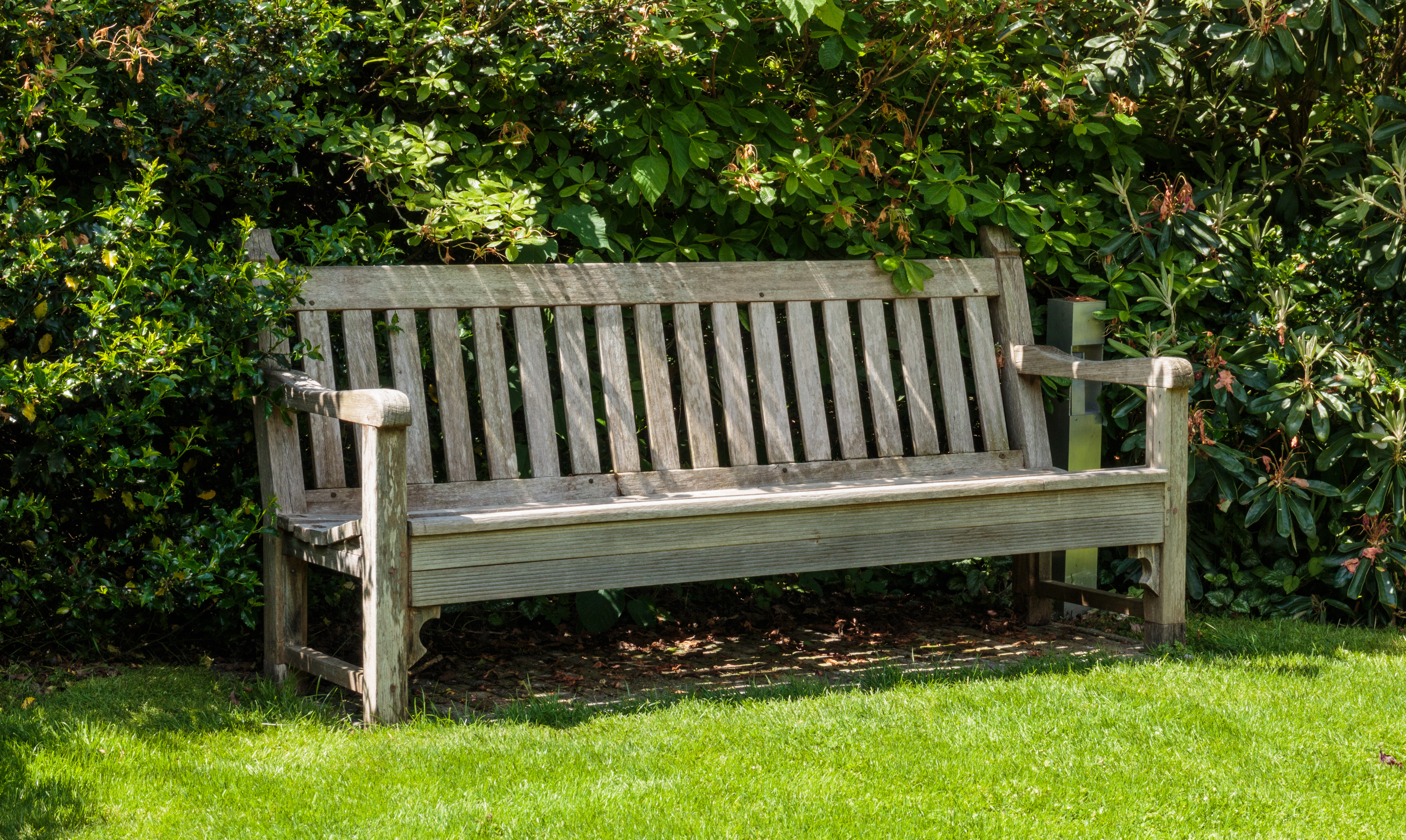

The bench has no dashboard. It does not collect behavioural data, gamify proximity, optimise a delivery route, or tell a councillor that a citizen has completed a moment of wellbeing. It does something much more difficult: it leaves room for an unpriced human body. This is why it so often disappears first when the management class gets nervous.
Consider what a good bench permits. A person may stop before the destination. Two people may meet without booking a table. Someone may watch rather than transact. The very young may test the world at a sensible distance from home; the very old may divide a walk into possible pieces. A worker may eat an apple. A tourist may become briefly less idiotic. Nothing much happens, which is the point. Public life is not a sequence of events. It is the background condition in which events can happen without needing a ticket.
The body has a vote
Urban policy enjoys the aerial view. It speaks of flows, activation, safety, footfall, density, turnover. These words are not false; they are merely incomplete in the way a tax return is incomplete. A city is also a collection of knees, hips, lungs, shopping bags, pregnancies, blisters, bad nights, private griefs and people who have missed the tram. The body experiences distance before the planning department does.
This is why the World Health Organization’s age-friendly cities guide begins with outdoor spaces and buildings. It is not sentimentality toward the elderly. It is a hard test of whether the city works for anyone whose speed is not that of a healthy man in a hurry. A resting place on a route is a small piece of public health; it lets the errand, the promenade and the visit remain possible.
Jan Gehl spent a career insisting that cities should be read at eye level and at walking speed. This sounds almost embarrassingly obvious until one notices how much urban decision-making still proceeds from a rendering, a traffic model, or the back seat of a car. A bench cannot be understood from either. You have to notice the wind around it, whether the sun reaches it at four, whether it faces another person rather than a blank wall, and whether it gives the sitter the slight dignity of an edge and a back. The city arrives as atmosphere before it arrives as policy.
Hospitality without a receipt
There is a bleak commercial logic in the contemporary removal of places to sit. If sitting is scarce, the cafe table becomes the only legal way to rest. If the cafe table is full, the body is moved along. The street becomes a corridor between transactions: work, purchase, home. People who cannot or do not wish to perform consumption are made to look suspicious merely by remaining.
One should be exact here. A city does need order. A bench is not a magic spell against loneliness, addiction, harassment or neglect. But the answer to difficult public life cannot be to abolish public life’s furniture and then congratulate oneself on cleanliness. Armrests designed only to prevent lying down do not solve poverty. Spikes do not solve disorder. A polished square with nowhere to rest is often just a lobby that has forgotten to admit what it is.
There is also a class insult concealed in the phrase “loitering.” The rich have always loitered beautifully. They call it a terrace, a lobby, a members’ club, a summer house, a museum café. The poor, the young and the merely unhurried are asked to keep moving. The bench modestly refuses this hierarchy. It gives a person the right to be visible without making a purchase or an excuse.
A place to watch the world
The best benches do not isolate; they compose. They look onto a path, a square, a playground, water, a market, a row of trees. They provide enough company for a person alone and enough slack for two people who have something to say. The worst face a car park with the air of punishment. A bench is a tiny piece of theatre architecture: it decides what the citizen is invited to witness.
That is why gardens understand the matter better than so many redevelopment schemes. In the Mien Ruys Gardens the bench in the English garden does not announce an experience. It waits among the planting. It gives the visitor a reason to notice duration: grass moving, weather arriving, another person walking slowly enough to see. Mien Ruys’s work was never interested in the garden as a catalogue of costly effects. Its authority lies in rooms, materials, sequence and use. The bench is part of that grammar: a pause written into the design rather than added afterward as municipal compliance.
We have become embarrassed by the pause. The phone teaches us to fill it. The developer teaches us to monetise it. The anxious city manager teaches us to police it. But a civilisation that cannot offer an unbought place to sit is announcing, rather plainly, that it has mistaken circulation for life.
Put the bench back
The prescription is not grand. Put benches on walking routes, not only at destinations. Give them backs. Let some face one another. Let some face the sun, some the water, some the children, some the world. Maintain them. Do not design every surface as a deterrent. Ask the oldest resident to walk the route before declaring it accessible. Ask the teenager where one can wait without being treated as a problem. These are not expensive questions. They are merely inconvenient to a culture that has confused optimisation with care.
There are nations that announce their values in constitutional prose and cities that announce theirs in timber, shade and a length of cast iron. The latter may be the more honest document. A bench says: you may be here; you may take your time; you need not earn the right to pause. For a public object, it is nearly radical.
Sources and further reading: the World Health Organization’s Global age-friendly cities: a guide; Jan Gehl, Life Between Buildings; and the Mien Ruys Gardens.